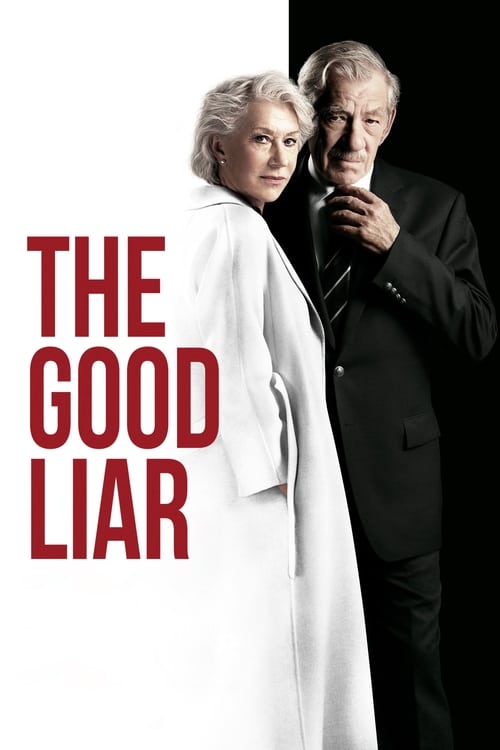
The Good Liar
Career con man Roy sets his sights on his latest mark: recently widowed Betty, worth millions. And he means to take it all. But as the two draw closer, what should have been another simple swindle takes on the ultimate stakes.
Despite its limited budget of $10.0M, The Good Liar became a box office success, earning $33.9M worldwide—a 239% return. The film's innovative storytelling resonated with audiences, showing that strong storytelling can transcend budget limitations.


Plot Structure
Story beats plotted across runtime


Narrative Arc
Emotional journey through the story's key moments
Story Circle
Blueprint 15-beat structure
Arcplot Score Breakdown
Weighted: Precision (70%) + Arc (15%) + Theme (15%)
The Good Liar (2019) exemplifies meticulously timed plot construction, characteristic of Bill Condon's storytelling approach. This structural analysis examines how the film's 15-point plot structure maps to proven narrative frameworks across 1 hour and 49 minutes. With an Arcplot score of 6.7, the film balances conventional beats with creative variation.
Characters
Cast & narrative archetypes

Roy Courtnay
Betty McLeish
Vincent
Stephen
Lili Schroeder
Hans Taub
Main Cast & Characters
Roy Courtnay
Played by Ian McKellen
A sophisticated career con artist who targets wealthy women through online dating, hiding a dark past and vengeful agenda.
Betty McLeish
Played by Helen Mirren
A wealthy widow who meets Roy online, appearing vulnerable but harboring secrets of her own from wartime Berlin.
Vincent
Played by Jim Carter
Roy's longtime criminal partner who assists in elaborate financial scams and provides technical expertise.
Stephen
Played by Russell Tovey
Betty's protective grandson who works in IT security and immediately distrusts Roy's intentions.
Lili Schroeder
Played by Lily Dodsworth-Evans
A young woman from Roy's past in wartime Berlin whose fate ties directly to his present-day vendetta.
Hans Taub
Played by Ian McKellen
Roy's true identity as a former German soldier who betrayed and murdered his fellow soldiers for money during WWII.
Structural Analysis
The Status Quo at 1 minutes (1% through the runtime) establishes Roy Courtnay and Betty McLeish meet online and arrange their first date, both appearing as lonely seniors seeking companionship. Roy is a practiced con artist living a double life.. The analysis reveals that this early placement immediately immerses viewers in the story world.
The inciting incident occurs at 14 minutes when Betty reveals she has significant financial assets worth over £2 million, making her an irresistible target for Roy's long con. The stakes are raised beyond his usual small-time schemes.. At 12% through the film, this Disruption aligns precisely with traditional story structure. This beat shifts the emotional landscape, launching the protagonist into the central conflict.
The First Threshold at 28 minutes marks the transition into Act II, occurring at 26% of the runtime. This indicates the protagonist's commitment to Roy moves into Betty's home, crossing the threshold into her world completely. He commits fully to the long con, abandoning his separate life to become her companion., moving from reaction to action.
At 55 minutes, the Midpoint arrives at 51% of the runtime—precisely centered, creating perfect narrative symmetry. The analysis reveals that this crucial beat Betty agrees to join her accounts with Roy and travel to Berlin together, appearing to be his greatest victory. However, Steven's investigation intensifies, and subtle clues suggest Betty may know more than she reveals., fundamentally raising what's at risk. The emotional intensity shifts, dividing the narrative into clear before-and-after phases.
The Collapse moment at 82 minutes (75% through) represents the emotional nadir. Here, Betty reveals she has known Roy's true identity all along—he is Hans Taub, a Nazi collaborator who betrayed her family. Roy's entire con has been reversed; he is the victim of her elaborate revenge scheme., demonstrates the protagonist at their lowest point. This beat's placement in the final quarter sets up the climactic reversal.
The Second Threshold at 87 minutes initiates the final act resolution at 80% of the runtime. Roy attempts to escape but realizes he is completely trapped. Betty and Steven have orchestrated everything, including eliminating Vincent. Roy understands there is no way out of his past., demonstrating the transformation achieved throughout the journey.
Emotional Journey
The Good Liar's emotional architecture traces a deliberate progression across 15 carefully calibrated beats.
Narrative Framework
This structural analysis employs systematic plot point analysis that identifies crucial turning points. By mapping The Good Liar against these established plot points, we can identify how Bill Condon utilizes or subverts traditional narrative conventions. The plot point approach reveals not only adherence to structural principles but also creative choices that distinguish The Good Liar within the crime genre.
Bill Condon's Structural Approach
Among the 10 Bill Condon films analyzed on Arcplot, the average structural score is 7.0, reflecting strong command of classical structure. The Good Liar takes a more unconventional approach compared to the director's typical style. For comparative analysis, explore the complete Bill Condon filmography.
Comparative Analysis
Additional crime films include The Bad Guys, Rustom and The Whole Ten Yards. For more Bill Condon analyses, see Kinsey, The Twilight Saga: Breaking Dawn - Part 1 and Dreamgirls.
Plot Points by Act
Act I
SetupStatus Quo
Roy Courtnay and Betty McLeish meet online and arrange their first date, both appearing as lonely seniors seeking companionship. Roy is a practiced con artist living a double life.
Theme
Betty's grandson Steven warns her about online dating dangers and that "people aren't always who they seem to be," establishing the film's central theme of deception and hidden identities.
Worldbuilding
Roy's elaborate con operations are revealed, including his partnership with Vincent and their stock market scam. Betty's wealthy, sheltered life is established, along with her protective grandson Steven who distrusts Roy.
Disruption
Betty reveals she has significant financial assets worth over £2 million, making her an irresistible target for Roy's long con. The stakes are raised beyond his usual small-time schemes.
Resistance
Roy carefully cultivates Betty's trust through romantic gestures while planning the con. He navigates obstacles including Steven's suspicion and his own partner Vincent's demands for money from their stock scam.
Act II
ConfrontationFirst Threshold
Roy moves into Betty's home, crossing the threshold into her world completely. He commits fully to the long con, abandoning his separate life to become her companion.
Mirror World
Betty opens up about her past trauma during the war, creating genuine emotional intimacy. This relationship begins to mirror and challenge Roy's assumptions about trust and vulnerability.
Premise
Roy executes his con, manipulating Betty toward giving him access to her money while maintaining the charade of romance. The audience enjoys watching the intricate deception unfold as Roy appears to be succeeding.
Midpoint
Betty agrees to join her accounts with Roy and travel to Berlin together, appearing to be his greatest victory. However, Steven's investigation intensifies, and subtle clues suggest Betty may know more than she reveals.
Opposition
The Berlin trip reveals deeper layers of Betty's past. Steven uncovers disturbing information about Roy's true identity. Roy's old war injury and violent history surface, while Betty's behavior becomes increasingly enigmatic.
Collapse
Betty reveals she has known Roy's true identity all along—he is Hans Taub, a Nazi collaborator who betrayed her family. Roy's entire con has been reversed; he is the victim of her elaborate revenge scheme.
Crisis
Roy processes the devastating revelation as Betty methodically exposes the full extent of her knowledge and planning. His entire world collapses as he realizes he has been outplayed from the beginning.
Act III
ResolutionSecond Threshold
Roy attempts to escape but realizes he is completely trapped. Betty and Steven have orchestrated everything, including eliminating Vincent. Roy understands there is no way out of his past.
Synthesis
Betty executes her final revenge, confronting Roy with the full horror of his past crimes. Roy is physically and emotionally destroyed, left helpless as Betty ensures he faces consequences for his wartime atrocities.
Transformation
Betty walks away from Roy's broken form, finally free from decades of planning for this moment. The "good liar" title is revealed to belong to Betty, not Roy—she has transformed from victim to architect of justice.