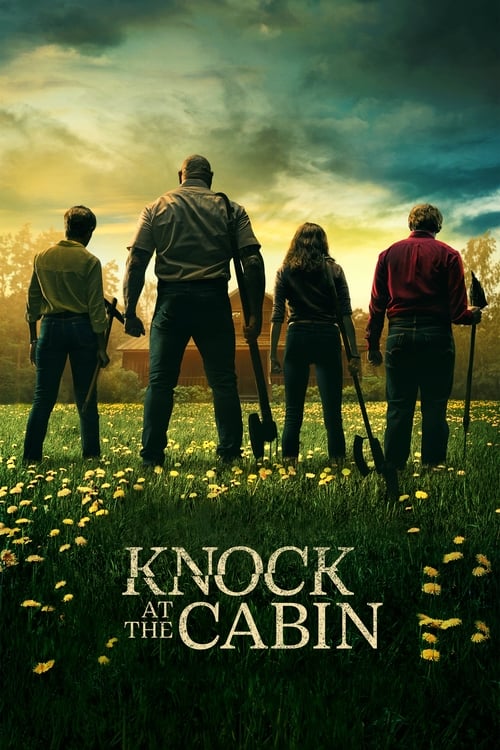
Knock at the Cabin
While vacationing at a remote cabin, a young girl and her two fathers are taken hostage by four armed strangers who demand that the family make an unthinkable choice to avert the apocalypse. With limited access to the outside world, the family must decide what they believe before all is lost.
Despite a moderate budget of $20.0M, Knock at the Cabin became a financial success, earning $54.7M worldwide—a 174% return.


Plot Structure
Story beats plotted across runtime


Narrative Arc
Emotional journey through the story's key moments
Story Circle
Blueprint 15-beat structure
Arcplot Score Breakdown
Weighted: Precision (70%) + Arc (15%) + Theme (15%)
Knock at the Cabin (2023) reveals strategically placed plot construction, characteristic of M. Night Shyamalan's storytelling approach. This structural analysis examines how the film's 15-point plot structure maps to proven narrative frameworks across 1 hour and 40 minutes. With an Arcplot score of 7.5, the film showcases strong structural fundamentals.
Characters
Cast & narrative archetypes

Eric
Andrew
Wen
Leonard
Sabrina
Adriane
Redmond
Main Cast & Characters
Eric
Played by Jonathan Groff
One of two fathers vacationing with his daughter when four strangers arrive with an apocalyptic message. Struggles between protecting his family and confronting an impossible choice.
Andrew
Played by Ben Aldridge
Eric's husband, a protective and skeptical lawyer who believes the intruders are targeting them due to homophobia. Determined to save his family through rational action.
Wen
Played by Kristen Cui
The young adopted daughter of Eric and Andrew. Her innocence and capture by the strangers becomes the emotional center of the family's ordeal.
Leonard
Played by Dave Bautista
A gentle elementary school teacher who leads the group of strangers. Compassionate but resolute in his belief that the family must make a terrible sacrifice to prevent the apocalypse.
Sabrina
Played by Nikki Amuka-Bird
A nurse and one of the four strangers who arrives at the cabin. Caring and empathetic, struggling with the horrific task she believes she must complete.
Adriane
Played by Abby Quinn
A line cook and one of the four strangers. Tough and direct, she believes fully in the visions and the mission they must complete.
Redmond
Played by Rupert Grint
An unstable member of the group of four strangers. Has a violent past connection to Andrew, which fuels Andrew's belief this is a targeted hate crime.
Structural Analysis
The Status Quo at 1 minutes (1% through the runtime) establishes Wen catches grasshoppers in the idyllic woods near a remote cabin, establishing the peaceful family vacation of Eric, Andrew, and their adopted daughter in nature.. The analysis reveals that this early placement immediately immerses viewers in the story world.
The inciting incident occurs at 12 minutes when The four strangers break into the cabin and take the family hostage at gunpoint, shattering their peaceful retreat with sudden violence and terror.. At 12% through the film, this Disruption aligns precisely with traditional story structure. This beat shifts the emotional landscape, launching the protagonist into the central conflict.
The First Threshold at 24 minutes marks the transition into Act II, occurring at 24% of the runtime. This demonstrates the protagonist's commitment to Redmond is killed by the group as the first sacrifice after the family refuses to choose. The family witnesses the first death and the arrival of the first plague (tsunami coverage on TV), forcing them into the reality of the situation., moving from reaction to action.
At 51 minutes, the Midpoint arrives at 51% of the runtime—precisely centered, creating perfect narrative symmetry. Of particular interest, this crucial beat Sabrina is sacrificed and a third global plague arrives (disease outbreak on news). The evidence becomes overwhelming. Eric suffers a concussion-induced vision that suggests the prophecy might be real, shifting from certain disbelief to doubt., fundamentally raising what's at risk. The emotional intensity shifts, dividing the narrative into clear before-and-after phases.
The Collapse moment at 73 minutes (73% through) represents the emotional nadir. Here, Andrew shoots and kills Leonard, the last remaining stranger and the gentlest soul. The family is free to leave, but the apocalypse continues. Eric has a vision of global annihilation and realizes the prophecy is real - they are not saved, only doomed., demonstrates the protagonist at their lowest point. This beat's placement in the final quarter sets up the climactic reversal.
The Second Threshold at 80 minutes initiates the final act resolution at 80% of the runtime. Eric makes the choice: he asks Andrew to sacrifice him. Andrew accepts his husband's decision. They embrace with Wen. Eric finds peace in believing his death will save the world and protect his family's future., demonstrating the transformation achieved throughout the journey.
Emotional Journey
Knock at the Cabin's emotional architecture traces a deliberate progression across 15 carefully calibrated beats.
Narrative Framework
This structural analysis employs systematic plot point analysis that identifies crucial turning points. By mapping Knock at the Cabin against these established plot points, we can identify how M. Night Shyamalan utilizes or subverts traditional narrative conventions. The plot point approach reveals not only adherence to structural principles but also creative choices that distinguish Knock at the Cabin within the horror genre.
M. Night Shyamalan's Structural Approach
Among the 14 M. Night Shyamalan films analyzed on Arcplot, the average structural score is 7.0, reflecting strong command of classical structure. Knock at the Cabin represents one of the director's most structurally precise works. For comparative analysis, explore the complete M. Night Shyamalan filmography.
Comparative Analysis
Additional horror films include Thinner, A Nightmare on Elm Street and Mary Reilly. For more M. Night Shyamalan analyses, see Signs, Unbreakable and The Sixth Sense.
Plot Points by Act
Act I
SetupStatus Quo
Wen catches grasshoppers in the idyllic woods near a remote cabin, establishing the peaceful family vacation of Eric, Andrew, and their adopted daughter in nature.
Theme
Leonard approaches Wen and says, "Your dads won't understand at first, but you'll have to help them" - stating the theme of belief, understanding, and the burden of impossible choices.
Worldbuilding
Introduction of the family dynamic: Eric and Andrew's protective love for Wen, their experiences with homophobia, their isolation at the remote cabin. Leonard's gentle but unsettling presence grows ominous as three more strangers arrive with makeshift weapons.
Disruption
The four strangers break into the cabin and take the family hostage at gunpoint, shattering their peaceful retreat with sudden violence and terror.
Resistance
Leonard explains the impossible prophecy: one family member must be sacrificed to prevent the apocalypse. Eric and Andrew resist, debate, assume it's a home invasion or hate crime. The family tries to understand, negotiate, and escape.
Act II
ConfrontationFirst Threshold
Redmond is killed by the group as the first sacrifice after the family refuses to choose. The family witnesses the first death and the arrival of the first plague (tsunami coverage on TV), forcing them into the reality of the situation.
Mirror World
Flashback to Eric and Andrew's earlier life shows them facing homophobic violence at a bar involving Redmond, creating a mirror to the current situation and questioning whether this is revenge or divine prophecy.
Premise
The escalating horror of the apocalyptic prophecy unfolds. News reports show global catastrophes. Andrew searches for rational explanations while Eric begins to waver. Adriane is sacrificed. The family experiences the psychological torture of the choice.
Midpoint
Sabrina is sacrificed and a third global plague arrives (disease outbreak on news). The evidence becomes overwhelming. Eric suffers a concussion-induced vision that suggests the prophecy might be real, shifting from certain disbelief to doubt.
Opposition
Eric and Andrew are torn between logic and faith. Leonard reveals his own visions and pain. Andrew escapes briefly, finds evidence suggesting conspiracy, but also evidence supporting the prophecy. The couple faces their deepest fears and the reality of losing each other or their daughter.
Collapse
Andrew shoots and kills Leonard, the last remaining stranger and the gentlest soul. The family is free to leave, but the apocalypse continues. Eric has a vision of global annihilation and realizes the prophecy is real - they are not saved, only doomed.
Crisis
Eric grapples with the impossible truth: to save the world, he or Andrew must die. Andrew still resists. Eric processes that his love for his family and humanity requires the ultimate sacrifice. The dark night of accepting fate.
Act III
ResolutionSecond Threshold
Eric makes the choice: he asks Andrew to sacrifice him. Andrew accepts his husband's decision. They embrace with Wen. Eric finds peace in believing his death will save the world and protect his family's future.
Synthesis
Andrew shoots Eric as an act of love and faith. The apocalyptic signs immediately cease - the skies clear on the news broadcasts. Andrew and Wen leave the cabin, driving away as survivors carrying the weight of sacrifice and salvation.
Transformation
Andrew and Wen stop at a diner, where Wen sees the clear skies and asks if Daddy is in heaven. Andrew says yes. The image mirrors the opening innocence but transformed by loss, faith, and the burden of having saved the world through love's ultimate sacrifice.