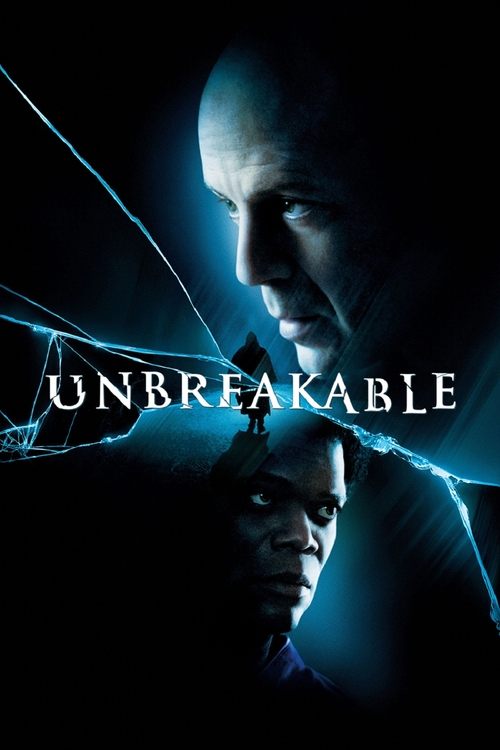
Unbreakable
An ordinary man makes an extraordinary discovery when a train accident leaves his fellow passengers dead — and him unscathed. The answer to this mystery could lie with the mysterious Elijah Price, a man who suffers from a disease that renders his bones as fragile as glass.
Despite a significant budget of $75.0M, Unbreakable became a box office success, earning $248.1M worldwide—a 231% return.
2 wins & 16 nominations


Plot Structure
Story beats plotted across runtime


Narrative Arc
Emotional journey through the story's key moments
Story Circle
Blueprint 15-beat structure
Arcplot Score Breakdown
Weighted: Precision (70%) + Arc (15%) + Theme (15%)
Unbreakable (2000) showcases carefully calibrated dramatic framework, characteristic of M. Night Shyamalan's storytelling approach. This structural analysis examines how the film's 15-point plot structure maps to proven narrative frameworks across 1 hour and 46 minutes. With an Arcplot score of 7.0, the film balances conventional beats with creative variation.
Characters
Cast & narrative archetypes

David Dunn
Elijah Price
Audrey Dunn
Joseph Dunn
Main Cast & Characters
David Dunn
Played by Bruce Willis
A security guard who discovers he has superhuman abilities after being the sole survivor of a train crash.
Elijah Price
Played by Samuel L. Jackson
A comic book art dealer with brittle bone disease who believes comic book mythology reflects reality.
Audrey Dunn
Played by Robin Wright
David's wife, a physical therapist struggling to save her deteriorating marriage.
Joseph Dunn
Played by Spencer Treat Clark
David and Audrey's young son who idolizes his father and believes in his emerging powers.
Structural Analysis
The Status Quo at 1 minutes (1% through the runtime) establishes David Dunn sits alone on a train, removed wedding ring in hand, attempting to flirt with a woman - showing a man disconnected from his marriage, isolated, and searching for meaning in his mundane existence as a security guard.. Structural examination shows that this early placement immediately immerses viewers in the story world.
The inciting incident occurs at 13 minutes when David's train derails in a catastrophic accident. He awakens in the hospital without a scratch - the sole survivor of a disaster that killed 131 people. A mysterious note on his car windshield asks: "How many days of your life have you been sick?".. At 12% through the film, this Disruption aligns precisely with traditional story structure. This beat shifts the emotional landscape, launching the protagonist into the central conflict.
The First Threshold at 27 minutes marks the transition into Act II, occurring at 25% of the runtime. This illustrates the protagonist's commitment to David admits to Audrey he cannot remember ever being sick, and he tests his strength in his basement with weights, discovering he can bench press 350 pounds with ease. He chooses to explore Elijah's theory rather than dismiss it., moving from reaction to action.
At 53 minutes, the Midpoint arrives at 50% of the runtime—precisely centered, creating perfect narrative symmetry. The analysis reveals that this crucial beat David ventures into a crowd at the train station, deliberately using his tactile psychometry to hunt for criminals. He identifies a terrorist carrying a bomb and a janitor who has murdered a family. The stakes are raised - he is truly a hero, and evil is truly out there. He must act., fundamentally raising what's at risk. The emotional intensity shifts, dividing the narrative into clear before-and-after phases.
The Collapse moment at 80 minutes (75% through) represents the emotional nadir. Here, After his near-death by drowning, David is physically and emotionally depleted. He has faced his mortality and his limitation. The burden of his secret identity and his inability to share the truth with Audrey weighs on him. He is the hero, but isolated and uncertain., reveals the protagonist at their lowest point. This beat's placement in the final quarter sets up the climactic reversal.
The Second Threshold at 84 minutes initiates the final act resolution at 79% of the runtime. David shakes Elijah's hand at the gallery and receives a devastating vision: Elijah orchestrated the train crash, the hotel fire, and the plane bombing - killing hundreds to find his opposite, to find David, to give his own suffering meaning. The mentor is the villain., demonstrating the transformation achieved throughout the journey.
Emotional Journey
Unbreakable's emotional architecture traces a deliberate progression across 15 carefully calibrated beats.
Narrative Framework
This structural analysis employs structural analysis methodology used to understand storytelling architecture. By mapping Unbreakable against these established plot points, we can identify how M. Night Shyamalan utilizes or subverts traditional narrative conventions. The plot point approach reveals not only adherence to structural principles but also creative choices that distinguish Unbreakable within the thriller genre.
M. Night Shyamalan's Structural Approach
Among the 14 M. Night Shyamalan films analyzed on Arcplot, the average structural score is 7.0, reflecting strong command of classical structure. Unbreakable takes a more unconventional approach compared to the director's typical style. For comparative analysis, explore the complete M. Night Shyamalan filmography.
Comparative Analysis
Additional thriller films include The Warriors, Thunderball and Rustom. For more M. Night Shyamalan analyses, see Signs, The Sixth Sense and The Last Airbender.
Plot Points by Act
Act I
SetupStatus Quo
David Dunn sits alone on a train, removed wedding ring in hand, attempting to flirt with a woman - showing a man disconnected from his marriage, isolated, and searching for meaning in his mundane existence as a security guard.
Theme
Elijah Price's mother tells young Elijah: "There are two reasons why people don't like things: they're scared of them, or they don't understand them" - establishing the film's exploration of how extraordinary people are treated by ordinary society.
Worldbuilding
We meet David Dunn, a security guard in a failing marriage, living a life of quiet desperation with his wife Audrey and son Joseph. Parallel narrative introduces Elijah Price, a comic book art dealer with brittle bone disease who believes comic books depict a mythologized version of historical reality.
Disruption
David's train derails in a catastrophic accident. He awakens in the hospital without a scratch - the sole survivor of a disaster that killed 131 people. A mysterious note on his car windshield asks: "How many days of your life have you been sick?"
Resistance
Elijah seeks out David, proposing an extraordinary theory: if Elijah represents the extreme fragility end of human spectrum, perhaps David represents the opposite - the unbreakable. David resists, considering Elijah delusional, while tension grows in his marriage and his son begins to worship him as potentially superhuman.
Act II
ConfrontationFirst Threshold
David admits to Audrey he cannot remember ever being sick, and he tests his strength in his basement with weights, discovering he can bench press 350 pounds with ease. He chooses to explore Elijah's theory rather than dismiss it.
Mirror World
Elijah becomes David's guide into understanding his purpose, serving as the thematic mirror - the fragile man who has spent his life searching for meaning in his suffering now helps the invulnerable man discover meaning in his gifts. Their relationship explores destiny, purpose, and acceptance of one's true nature.
Premise
David explores his abilities: discovering he has visions of people's crimes when he touches them, testing his invulnerability, and realizing he has instinctively avoided water his entire life (his only weakness). He becomes a reluctant hero, pushed by Elijah and his own son to accept his extraordinary nature.
Midpoint
David ventures into a crowd at the train station, deliberately using his tactile psychometry to hunt for criminals. He identifies a terrorist carrying a bomb and a janitor who has murdered a family. The stakes are raised - he is truly a hero, and evil is truly out there. He must act.
Opposition
David follows the serial killer to his home, where he discovers the murdered family and two children being held captive. During the rescue, David struggles with his fear of water when pushed into a pool, nearly drowning (his weakness exploited). He saves the children but faces his vulnerability. His marriage remains strained as he cannot reveal the truth.
Collapse
After his near-death by drowning, David is physically and emotionally depleted. He has faced his mortality and his limitation. The burden of his secret identity and his inability to share the truth with Audrey weighs on him. He is the hero, but isolated and uncertain.
Crisis
David processes his near-death experience and contemplates what being a hero truly costs. He is celebrated in the news as an anonymous hero who saved the children, but he sits alone with the knowledge of what he is, unable to fully embrace it or share it with those he loves.
Act III
ResolutionSecond Threshold
David shakes Elijah's hand at the gallery and receives a devastating vision: Elijah orchestrated the train crash, the hotel fire, and the plane bombing - killing hundreds to find his opposite, to find David, to give his own suffering meaning. The mentor is the villain.
Synthesis
David confronts the horrific truth: Elijah is Mr. Glass, a mass murderer who created David's origin story through tragedy. David must accept his role as hero and Elijah's role as villain. The revelation recontextualizes everything - their relationship, the meaning of heroism, and the cost of destiny.
Transformation
David stands with his son Joseph, having reconciled with Audrey and revealed his true nature to his family. Text reveals Elijah is institutionalized and nicknamed "Mr. Glass." David has transformed from isolated and purposeless to a protector who understands his place in the world - the hero to Elijah's villain.