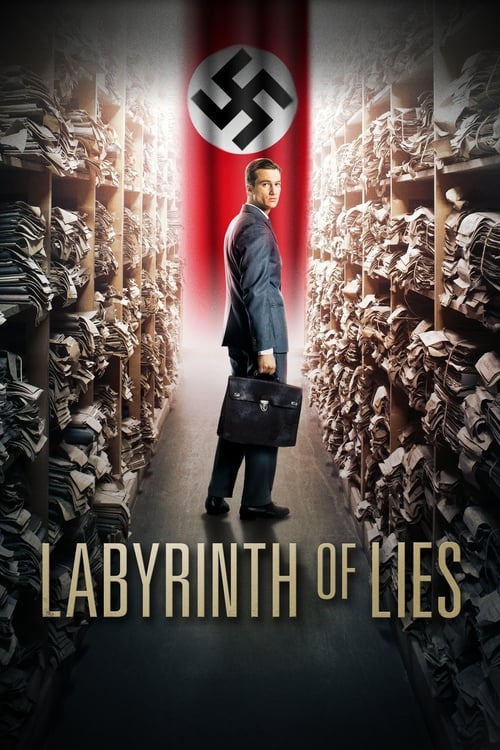
Labyrinth of Lies
A young prosecutor in postwar West Germany investigates a massive conspiracy to cover up the Nazi pasts of prominent public figures.
The film earned $4.6M at the global box office.
6 wins & 18 nominations


Plot Structure
Story beats plotted across runtime


Narrative Arc
Emotional journey through the story's key moments
Story Circle
Blueprint 15-beat structure
Arcplot Score Breakdown
Weighted: Precision (70%) + Arc (15%) + Theme (15%)
Labyrinth of Lies (2014) demonstrates meticulously timed narrative design, characteristic of Giulio Ricciarelli's storytelling approach. This structural analysis examines how the film's 15-point plot structure maps to proven narrative frameworks across 2 hours and 2 minutes. With an Arcplot score of 7.4, the film balances conventional beats with creative variation.
Characters
Cast & narrative archetypes

Johann Radmann
Thomas Gnielka
Fritz Bauer
Marlene Wondrak
Simon Kirsch
Paul Holtermann
Josef Schulz
Main Cast & Characters
Johann Radmann
Played by Alexander Fehling
A young, idealistic prosecutor who discovers that Auschwitz perpetrators are living freely in Germany and becomes obsessed with bringing them to justice.
Thomas Gnielka
Played by André Szymanski
A tenacious journalist and Holocaust survivor who guides Radmann toward uncovering the truth about Nazi war criminals.
Fritz Bauer
Played by Gert Voss
The Attorney General of Hesse who supports Radmann's investigation and fights against institutional resistance to prosecute former Nazis.
Marlene Wondrak
Played by Friederike Becht
A fashion designer and Radmann's love interest who becomes conflicted when her family's Nazi past is revealed.
Simon Kirsch
Played by Johannes Krisch
A concentration camp survivor whose testimony becomes crucial to Radmann's case against the perpetrators.
Paul Holtermann
Played by Hansi Jochmann
A senior prosecutor who opposes Radmann's investigation and represents the institutional desire to move past Germany's Nazi history.
Josef Schulz
Played by Götz Schubert
A former SS officer and one of the Auschwitz perpetrators that Radmann pursues, now living as a respected schoolteacher.
Structural Analysis
The Status Quo at 2 minutes (2% through the runtime) establishes Johann Radmann works as a junior prosecutor in Frankfurt, 1958, handling minor traffic violations. He is ambitious but relegated to mundane cases, living in a Germany that has moved on from its recent past.. Structural examination shows that this early placement immediately immerses viewers in the story world.
The inciting incident occurs at 14 minutes when Gnielka brings a Holocaust survivor to the prosecutor's office, identifying a former Auschwitz guard now working as a teacher. Johann learns that most Germans, including himself, know almost nothing about Auschwitz or that such crimes went unpunished.. At 12% through the film, this Disruption aligns precisely with traditional story structure. This beat shifts the emotional landscape, launching the protagonist into the central conflict.
The First Threshold at 30 minutes marks the transition into Act II, occurring at 25% of the runtime. This demonstrates the protagonist's commitment to Johann makes the active choice to fully commit to investigating Auschwitz crimes, accepting Bauer's offer to lead the investigation. He crosses into a new world of confronting Germany's suppressed past, knowing it will consume him., moving from reaction to action.
At 61 minutes, the Midpoint arrives at 50% of the runtime—precisely centered, creating perfect narrative symmetry. Of particular interest, this crucial beat Johann discovers that his own father may have been involved with the Nazi regime. This false defeat personalizes the investigation—it's no longer just about justice, but about his own identity and family. The stakes fundamentally shift from external to internal., fundamentally raising what's at risk. The emotional intensity shifts, dividing the narrative into clear before-and-after phases.
The Collapse moment at 91 minutes (75% through) represents the emotional nadir. Here, Johann confronts his father and learns painful truths about his family's complicity. Simultaneously, Marlene leaves him when she discovers her father was also implicated. Everything Johann built—his case, his relationship, his sense of identity—collapses. His idealism dies., illustrates the protagonist at their lowest point. This beat's placement in the final quarter sets up the climactic reversal.
The Second Threshold at 97 minutes initiates the final act resolution at 80% of the runtime. Bauer reminds Johann that the trials aren't about revenge or even justice—they're about creating a historical record so future generations will know the truth. This reframing gives Johann new purpose: he's not prosecuting for the present, but for the future., demonstrating the transformation achieved throughout the journey.
Emotional Journey
Labyrinth of Lies's emotional architecture traces a deliberate progression across 15 carefully calibrated beats.
Narrative Framework
This structural analysis employs proven narrative structure principles that track dramatic progression. By mapping Labyrinth of Lies against these established plot points, we can identify how Giulio Ricciarelli utilizes or subverts traditional narrative conventions. The plot point approach reveals not only adherence to structural principles but also creative choices that distinguish Labyrinth of Lies within the drama genre.
Comparative Analysis
Additional drama films include After Thomas, South Pacific and Dirty Dancing: Havana Nights.
Plot Points by Act
Act I
SetupStatus Quo
Johann Radmann works as a junior prosecutor in Frankfurt, 1958, handling minor traffic violations. He is ambitious but relegated to mundane cases, living in a Germany that has moved on from its recent past.
Theme
Journalist Thomas Gnielka tells Johann: "People don't want to remember. They want to forget." This establishes the film's central question: What is the cost of refusing to confront the past?
Worldbuilding
Johann's daily routine in the prosecutor's office is established. We see post-war Germany's collective amnesia about Nazi crimes, the judicial system's reluctance to pursue war criminals, and Johann's romance with Marlene. The world is one of willful forgetting.
Disruption
Gnielka brings a Holocaust survivor to the prosecutor's office, identifying a former Auschwitz guard now working as a teacher. Johann learns that most Germans, including himself, know almost nothing about Auschwitz or that such crimes went unpunished.
Resistance
Johann debates whether to pursue the case against institutional resistance. His superior, Attorney General Fritz Bauer, becomes his mentor, encouraging him to investigate. Johann grapples with the enormity of what he's discovering and the professional risk of pursuing it.
Act II
ConfrontationFirst Threshold
Johann makes the active choice to fully commit to investigating Auschwitz crimes, accepting Bauer's offer to lead the investigation. He crosses into a new world of confronting Germany's suppressed past, knowing it will consume him.
Mirror World
Johann's relationship with Marlene deepens as she represents normalcy and innocence—the Germany that doesn't know and doesn't want to know. She is his connection to the ordinary world he's leaving behind, and will come to embody the film's thematic tension.
Premise
Johann immerses himself in building the case, interviewing survivors, gathering evidence, and identifying perpetrators. The investigation expands as he discovers the scope of who knew and participated. This is the "detective story" the audience came for—uncovering hidden truth.
Midpoint
Johann discovers that his own father may have been involved with the Nazi regime. This false defeat personalizes the investigation—it's no longer just about justice, but about his own identity and family. The stakes fundamentally shift from external to internal.
Opposition
Resistance intensifies from all sides: witnesses recant, officials obstruct, former Nazis threaten him. Johann becomes obsessed, alienating Marlene. His investigation into his father strains his relationship with his mother. The personal and professional pressures converge.
Collapse
Johann confronts his father and learns painful truths about his family's complicity. Simultaneously, Marlene leaves him when she discovers her father was also implicated. Everything Johann built—his case, his relationship, his sense of identity—collapses. His idealism dies.
Crisis
Johann processes his dark night, questioning whether exposing the past is worth destroying the present. He contemplates abandoning the case. He sits with the impossible truth: nearly everyone was complicit, including those he loves.
Act III
ResolutionSecond Threshold
Bauer reminds Johann that the trials aren't about revenge or even justice—they're about creating a historical record so future generations will know the truth. This reframing gives Johann new purpose: he's not prosecuting for the present, but for the future.
Synthesis
Johann prepares for the Frankfurt Auschwitz Trials with renewed determination. He compiles evidence, coordinates witnesses, and builds the case that will force Germany to confront its past. The finale is the beginning of the trial itself—history being made.
Transformation
The trials begin in December 1963. Johann sits in the courtroom as survivors testify, no longer the naive young prosecutor who knew nothing of Auschwitz. He has transformed from someone seeking simple justice to someone who understands the complex burden of historical truth.