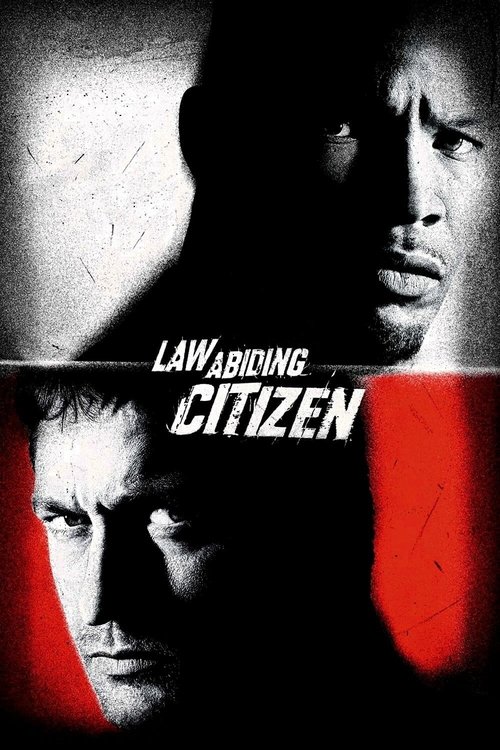
Law Abiding Citizen
A frustrated man decides to take justice into his own hands after a plea bargain sets one of his family's killers free. He targets not only the killer but also the district attorney and others involved in the deal.
Despite a moderate budget of $53.0M, Law Abiding Citizen became a commercial success, earning $127.9M worldwide—a 141% return.
3 wins & 5 nominations


Plot Structure
Story beats plotted across runtime


Narrative Arc
Emotional journey through the story's key moments
Story Circle
Blueprint 15-beat structure
Arcplot Score Breakdown
Weighted: Precision (70%) + Arc (15%) + Theme (15%)
Law Abiding Citizen (2009) showcases carefully calibrated dramatic framework, characteristic of F. Gary Gray's storytelling approach. This structural analysis examines how the film's 15-point plot structure maps to proven narrative frameworks across 1 hour and 49 minutes. With an Arcplot score of 7.5, the film showcases strong structural fundamentals.
Characters
Cast & narrative archetypes

Clyde Shelton
Nick Rice
Jonas Cantrell
Sarah Lowell
Bray
Garza
Main Cast & Characters
Clyde Shelton
Played by Gerard Butler
A brilliant engineer whose family is murdered, who seeks revenge against a corrupt justice system through elaborate traps and manipulation.
Nick Rice
Played by Jamie Foxx
An ambitious Philadelphia prosecutor who prioritizes conviction rates over justice, forced to confront his moral compromises.
Jonas Cantrell
Played by Bruce McGill
The principled district attorney who oversees Nick Rice and represents institutional authority.
Sarah Lowell
Played by Leslie Bibb
A dedicated attorney working with Nick who becomes one of Clyde's victims.
Bray
Played by Michael Irby
A tactical operations specialist and detective working to stop Clyde's revenge plot.
Garza
Played by Gregory Itzin
An FBI agent brought in to assist with the investigation into Clyde's attacks.
Structural Analysis
The Status Quo at 1 minutes (1% through the runtime) establishes Clyde Shelton is working happily in his workshop, a loving father and husband in a peaceful suburban home with his wife and daughter.. The analysis reveals that this early placement immediately immerses viewers in the story world.
The inciting incident occurs at 13 minutes when Ten years later: Clyde watches helplessly as the plea deal he opposed is executed - Darby (who actually committed the murders) receives only a few years while Ames faces death. The execution of Ames becomes the catalyst.. At 12% through the film, this Disruption aligns precisely with traditional story structure. This beat shifts the emotional landscape, launching the protagonist into the central conflict.
The First Threshold at 27 minutes marks the transition into Act II, occurring at 25% of the runtime. This indicates the protagonist's commitment to Clyde is arraigned and refuses bail. He tells Nick, "I'm gonna pull the whole thing down. I'm gonna bring the whole fuckin' diseased corrupt temple down on your head." He actively chooses to wage war on the justice system from inside prison., moving from reaction to action.
At 54 minutes, the Midpoint arrives at 50% of the runtime—precisely centered, creating perfect narrative symmetry. Notably, this crucial beat Clyde orchestrates a massive car bomb that kills multiple people including the mayor's assistant. The stakes escalate from individual murders to mass casualties. Nick realizes Clyde's reach extends far beyond what they imagined - a false defeat as the system appears powerless., fundamentally raising what's at risk. The emotional intensity shifts, dividing the narrative into clear before-and-after phases.
The Collapse moment at 81 minutes (74% through) represents the emotional nadir. Here, Clyde reveals he has planted a bomb at City Hall set to explode during a critical meeting. Nick must choose between evacuating (giving Clyde what he wants) or staying. The system has completely failed - Clyde has won and proven the justice system is broken., demonstrates the protagonist at their lowest point. This beat's placement in the final quarter sets up the climactic reversal.
The Second Threshold at 88 minutes initiates the final act resolution at 81% of the runtime. Nick discovers the tunnel system Clyde has been using to leave his cell. He realizes how Clyde has been operating and formulates a plan. He chooses to bend the rules - not for his conviction rate this time, but for actual justice., demonstrating the transformation achieved throughout the journey.
Emotional Journey
Law Abiding Citizen's emotional architecture traces a deliberate progression across 15 carefully calibrated beats.
Narrative Framework
This structural analysis employs structural analysis methodology used to understand storytelling architecture. By mapping Law Abiding Citizen against these established plot points, we can identify how F. Gary Gray utilizes or subverts traditional narrative conventions. The plot point approach reveals not only adherence to structural principles but also creative choices that distinguish Law Abiding Citizen within the drama genre.
F. Gary Gray's Structural Approach
Among the 10 F. Gary Gray films analyzed on Arcplot, the average structural score is 7.3, reflecting strong command of classical structure. Law Abiding Citizen represents one of the director's most structurally precise works. For comparative analysis, explore the complete F. Gary Gray filmography.
Comparative Analysis
Additional drama films include After Thomas, South Pacific and Dirty Dancing: Havana Nights. For more F. Gary Gray analyses, see Lift, Friday and Set It Off.
Plot Points by Act
Act I
SetupStatus Quo
Clyde Shelton is working happily in his workshop, a loving father and husband in a peaceful suburban home with his wife and daughter.
Theme
After the plea deal is announced, Nick Rice states "It's not what you know, it's what you can prove in court" - establishing the theme of justice versus the law.
Worldbuilding
Clyde's idyllic life is shattered when home invaders murder his wife and daughter. We see prosecutor Nick Rice prioritize his conviction rate over justice, making a deal that sends one killer to death row while the other gets a light sentence. Clyde is powerless and devastated.
Disruption
Ten years later: Clyde watches helplessly as the plea deal he opposed is executed - Darby (who actually committed the murders) receives only a few years while Ames faces death. The execution of Ames becomes the catalyst.
Resistance
Clyde executes an elaborate plan to kidnap and torture Darby to death. Nick Rice investigates, discovering Clyde's involvement. Clyde surrenders voluntarily and begins making demands from his cell, revealing he has prepared for this confrontation for a decade.
Act II
ConfrontationFirst Threshold
Clyde is arraigned and refuses bail. He tells Nick, "I'm gonna pull the whole thing down. I'm gonna bring the whole fuckin' diseased corrupt temple down on your head." He actively chooses to wage war on the justice system from inside prison.
Mirror World
Nick's relationship with his wife and daughter is introduced more deeply as he misses his daughter's cello recital - mirroring what Clyde lost and highlighting the thematic cost of Nick's career obsession.
Premise
The promise of the premise: Clyde systematically dismantles the justice system from his cell. He kills his cellmate, orchestrates the death of the judge, and eliminates Nick's assistant DA - all while appearing to be locked in solitary confinement. Nick and the system scramble to understand how he's doing it.
Midpoint
Clyde orchestrates a massive car bomb that kills multiple people including the mayor's assistant. The stakes escalate from individual murders to mass casualties. Nick realizes Clyde's reach extends far beyond what they imagined - a false defeat as the system appears powerless.
Opposition
Pressure intensifies as Clyde continues killing from his cell. Nick struggles between playing by the rules and stopping Clyde. The mayor threatens to federalize the case. Nick's mentor is killed. The body count rises and Nick's methods become increasingly desperate and legally questionable.
Collapse
Clyde reveals he has planted a bomb at City Hall set to explode during a critical meeting. Nick must choose between evacuating (giving Clyde what he wants) or staying. The system has completely failed - Clyde has won and proven the justice system is broken.
Crisis
Nick grapples with the reality that following the law hasn't worked. He evacuates City Hall, seemingly conceding to Clyde. He processes that to stop Clyde, he may have to become like him - operating outside the law he's sworn to uphold.
Act III
ResolutionSecond Threshold
Nick discovers the tunnel system Clyde has been using to leave his cell. He realizes how Clyde has been operating and formulates a plan. He chooses to bend the rules - not for his conviction rate this time, but for actual justice.
Synthesis
Nick moves Clyde to a different cell without legal authority, disrupting his plan. He finds the bomb in Clyde's original cell and places it under Clyde's new bunk. Nick synthesizes what he learned - sometimes justice requires breaking the rules, but for the right reasons, not selfish ones.
Transformation
Nick is shown attending his daughter's cello recital, present with his family. Unlike the opening where he was a by-the-book prosecutor who prioritized stats, he's now a man who understands that true justice sometimes requires difficult moral choices and that family matters most.