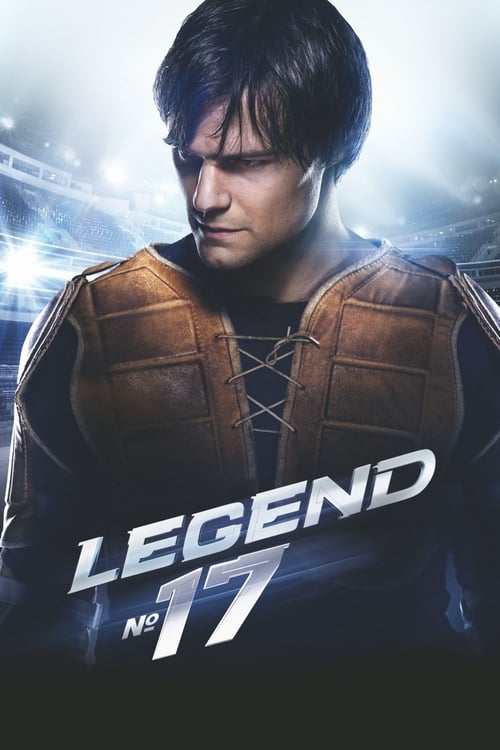
Legend No. 17
Biopic of Russian ice hockey legend Valeri Kharlamov from early childhood, rising to the pinnacle of the sport and his untimely death
Despite its limited budget of $7.7M, Legend No. 17 became a commercial success, earning $29.5M worldwide—a 282% return. The film's unique voice found its audience, confirming that strong storytelling can transcend budget limitations.
Plot Structure
Story beats plotted across runtime


Narrative Arc
Emotional journey through the story's key moments
Story Circle
Blueprint 15-beat structure
Arcplot Score Breakdown
Weighted: Precision (70%) + Arc (15%) + Theme (15%)
Legend No. 17 (2013) exhibits carefully calibrated story structure, characteristic of Nikolay Lebedev's storytelling approach. This structural analysis examines how the film's 15-point plot structure maps to proven narrative frameworks across 2 hours and 14 minutes. With an Arcplot score of 6.7, the film balances conventional beats with creative variation.
Structural Analysis
The Status Quo at 2 minutes (1% through the runtime) establishes Young Valeri Kharlamov struggles as an outsider in Soviet hockey, bullied and underestimated due to his small size and mixed heritage, dreaming of greatness but trapped in mediocrity.. The analysis reveals that this early placement immediately immerses viewers in the story world.
The inciting incident occurs at 15 minutes when Kharlamov is cut from the junior team and told he'll never make it as a professional hockey player due to his size and perceived weakness, crushing his dreams.. At 12% through the film, this Disruption aligns precisely with traditional story structure. This beat shifts the emotional landscape, launching the protagonist into the central conflict.
The First Threshold at 33 minutes marks the transition into Act II, occurring at 25% of the runtime. This reveals the protagonist's commitment to Kharlamov accepts Tarasov's brutal training regimen and commits fully to becoming a champion, leaving behind his old life and entering the merciless world of elite Soviet hockey., moving from reaction to action.
At 66 minutes, the Midpoint arrives at 49% of the runtime—precisely centered, creating perfect narrative symmetry. The analysis reveals that this crucial beat Kharlamov is selected for the 1972 Summit Series against Canada and scores brilliantly in early games, achieving his dream of international recognition and appearing unstoppable—a false victory before the fall., fundamentally raising what's at risk. The emotional intensity shifts, dividing the narrative into clear before-and-after phases.
The Collapse moment at 99 minutes (74% through) represents the emotional nadir. Here, Kharlamov's ankle injury worsens catastrophically during a crucial game; he collapses on the ice in agony, his Olympic dreams seemingly shattered, facing the death of his identity as a player., demonstrates the protagonist at their lowest point. This beat's placement in the final quarter sets up the climactic reversal.
The Second Threshold at 107 minutes initiates the final act resolution at 80% of the runtime. Kharlamov synthesizes Tarasov's lessons about endurance with his own will to prove himself, realizing his legacy isn't just about winning but about refusing to surrender. He chooses to return to the ice., demonstrating the transformation achieved throughout the journey.
Emotional Journey
Legend No. 17's emotional architecture traces a deliberate progression across 15 carefully calibrated beats.
Narrative Framework
This structural analysis employs systematic plot point analysis that identifies crucial turning points. By mapping Legend No. 17 against these established plot points, we can identify how Nikolay Lebedev utilizes or subverts traditional narrative conventions. The plot point approach reveals not only adherence to structural principles but also creative choices that distinguish Legend No. 17 within the drama genre.
Comparative Analysis
Additional drama films include Eye for an Eye, South Pacific and Kiss of the Spider Woman.
Plot Points by Act
Act I
SetupStatus Quo
Young Valeri Kharlamov struggles as an outsider in Soviet hockey, bullied and underestimated due to his small size and mixed heritage, dreaming of greatness but trapped in mediocrity.
Theme
Coach Tarasov tells young players, "A true champion isn't born from talent alone, but from the willingness to endure what others won't." The film's exploration of relentless dedication over natural ability.
Worldbuilding
Establishment of 1960s Soviet hockey culture, Kharlamov's difficult childhood with absent father, prejudice against his Spanish heritage, and the brutal competitiveness of Soviet sports training system.
Disruption
Kharlamov is cut from the junior team and told he'll never make it as a professional hockey player due to his size and perceived weakness, crushing his dreams.
Resistance
Kharlamov debates giving up but encounters legendary coach Anatoli Tarasov, who sees potential and offers him a chance with CSKA Moscow, though warning him the path will require complete sacrifice and transformation.
Act II
ConfrontationFirst Threshold
Kharlamov accepts Tarasov's brutal training regimen and commits fully to becoming a champion, leaving behind his old life and entering the merciless world of elite Soviet hockey.
Mirror World
Kharlamov meets Irina, a figure skater who becomes his love interest and represents the softer, human side that contrasts with Tarasov's dehumanizing training philosophy.
Premise
Kharlamov endures Tarasov's extreme training methods, develops his signature speed and skill, rises through the ranks, and experiences the thrill of becoming a hockey star, earning respect and recognition.
Midpoint
Kharlamov is selected for the 1972 Summit Series against Canada and scores brilliantly in early games, achieving his dream of international recognition and appearing unstoppable—a false victory before the fall.
Opposition
Canadian player Bobby Clarke deliberately injures Kharlamov with a slash to the ankle, threatening his career. Kharlamov struggles with pain, doubt, and pressure from Soviet officials who demand he play through the injury.
Collapse
Kharlamov's ankle injury worsens catastrophically during a crucial game; he collapses on the ice in agony, his Olympic dreams seemingly shattered, facing the death of his identity as a player.
Crisis
In dark recovery, Kharlamov contemplates retirement and questions whether the sacrifice was worth it. Irina and his inner resolve are tested as he processes the possible end of everything he's worked for.
Act III
ResolutionSecond Threshold
Kharlamov synthesizes Tarasov's lessons about endurance with his own will to prove himself, realizing his legacy isn't just about winning but about refusing to surrender. He chooses to return to the ice.
Synthesis
Kharlamov returns to play in the final decisive game despite his injury, demonstrating extraordinary courage and skill. The Soviet team battles back against Canada in a legendary showdown.
Transformation
Kharlamov, now a proven legend, stands on the ice victorious—no longer the small, bullied outsider but a symbol of perseverance. He has become the player he always believed he could be, earning his number 17 legacy.