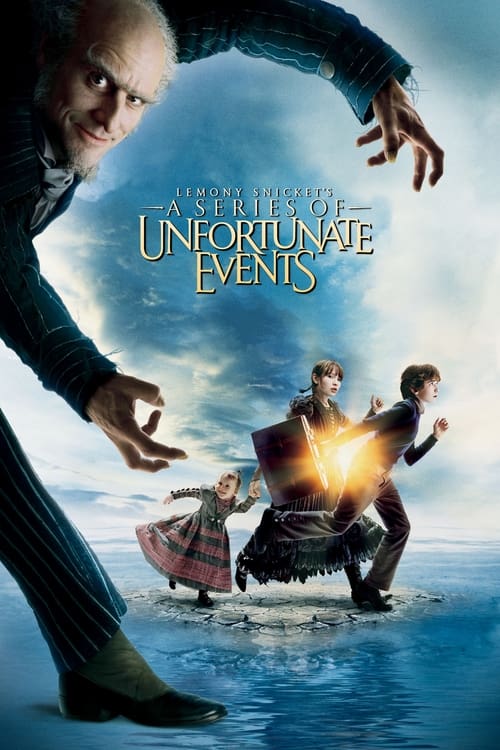
Lemony Snicket's A Series of Unfortunate Events
Three wealthy children's parents are killed in a fire. When they are sent to a distant relative, they find out that he is plotting to kill them and seize their fortune.
Working with a considerable budget of $140.0M, the film achieved a respectable showing with $209.1M in global revenue (+49% profit margin).
1 Oscar. 10 wins & 28 nominations


Plot Structure
Story beats plotted across runtime


Narrative Arc
Emotional journey through the story's key moments
Story Circle
Blueprint 15-beat structure
Arcplot Score Breakdown
Weighted: Precision (70%) + Arc (15%) + Theme (15%)
Lemony Snicket's A Series of Unfortunate Events (2004) reveals meticulously timed plot construction, characteristic of Brad Silberling's storytelling approach. This structural analysis examines how the film's 15-point plot structure maps to proven narrative frameworks across 1 hour and 48 minutes. With an Arcplot score of 7.1, the film balances conventional beats with creative variation.
Characters
Cast & narrative archetypes

Violet Baudelaire
Klaus Baudelaire
Sunny Baudelaire
Count Olaf
Lemony Snicket
Mr. Poe
Aunt Josephine
Uncle Monty
Main Cast & Characters
Violet Baudelaire
Played by Emily Browning
The eldest Baudelaire orphan, an inventive and resourceful teenager who must protect her siblings from Count Olaf's schemes.
Klaus Baudelaire
Played by Liam Aiken
The middle Baudelaire child, a bookish and intelligent boy who uses his vast knowledge to help solve problems.
Sunny Baudelaire
Played by Kara Hoffman
The youngest Baudelaire, a baby with abnormally sharp teeth and surprising resourcefulness.
Count Olaf
Played by Jim Carrey
A theatrical villain and failed actor who schemes to steal the Baudelaire fortune through elaborate disguises and murderous plots.
Lemony Snicket
Played by Jude Law
The melancholic narrator who warns viewers of the unfortunate events and serves as chronicler of the Baudelaire tragedy.
Mr. Poe
Played by Timothy Spall
The incompetent banker executor of the Baudelaire estate who repeatedly places the children in dangerous situations.
Aunt Josephine
Played by Meryl Streep
A grammar-obsessed widow plagued by irrational fears who becomes the children's guardian at Lake Lachrymose.
Uncle Monty
Played by Billy Connolly
A kind-hearted herpetologist who briefly provides the orphans with a loving home filled with reptiles.
Structural Analysis
The Status Quo at 1 minutes (1% through the runtime) establishes The Baudelaire children - Violet (inventor), Klaus (reader), and Sunny (biter) - play happily at Briny Beach, establishing their talents and close bond in their privileged, loving world before tragedy strikes.. Structural examination shows that this early placement immediately immerses viewers in the story world.
The inciting incident occurs at 12 minutes when Mr. Poe informs the children they must live with their closest relative, Count Olaf, a failed actor in a decrepit house. The children arrive at Olaf's filthy, threatening home where he immediately reveals his cruelty and obsession with their fortune.. At 11% through the film, this Disruption aligns precisely with traditional story structure. This beat shifts the emotional landscape, launching the protagonist into the central conflict.
The First Threshold at 27 minutes marks the transition into Act II, occurring at 25% of the runtime. This demonstrates the protagonist's commitment to Count Olaf announces his plan to marry Violet in a theatrical play to legally control the fortune. The children actively choose to thwart his scheme rather than passively accept their fate, entering the world of active resistance., moving from reaction to action.
At 55 minutes, the Midpoint arrives at 50% of the runtime—precisely centered, creating perfect narrative symmetry. Structural examination shows that this crucial beat False defeat: Aunt Josephine apparently commits suicide, leaving a note giving the children to "Captain Sham" (Olaf in disguise). The stakes escalate - Olaf is winning, adults won't listen, and the children seem to be running out of guardians and options., fundamentally raising what's at risk. The emotional intensity shifts, dividing the narrative into clear before-and-after phases.
The Collapse moment at 81 minutes (75% through) represents the emotional nadir. Here, Olaf feeds Aunt Josephine to the leeches (whiff of death). Back at his mansion, he traps the children in a cage suspended over train tracks, threatening their lives. The children hit rock bottom, seemingly defeated with no adult allies left., illustrates the protagonist at their lowest point. This beat's placement in the final quarter sets up the climactic reversal.
The Second Threshold at 85 minutes initiates the final act resolution at 79% of the runtime. Breakthrough: The children discover evidence proving Olaf started the fire and murdered their parents. They synthesize their individual talents (Violet invents an escape, Klaus decodes clues, Sunny's biting helps) to break free and expose Olaf., demonstrating the transformation achieved throughout the journey.
Emotional Journey
Lemony Snicket's A Series of Unfortunate Events's emotional architecture traces a deliberate progression across 15 carefully calibrated beats.
Narrative Framework
This structural analysis employs structural analysis methodology used to understand storytelling architecture. By mapping Lemony Snicket's A Series of Unfortunate Events against these established plot points, we can identify how Brad Silberling utilizes or subverts traditional narrative conventions. The plot point approach reveals not only adherence to structural principles but also creative choices that distinguish Lemony Snicket's A Series of Unfortunate Events within the adventure genre.
Brad Silberling's Structural Approach
Among the 5 Brad Silberling films analyzed on Arcplot, the average structural score is 6.7, demonstrating varied approaches to story architecture. Lemony Snicket's A Series of Unfortunate Events represents one of the director's most structurally precise works. For comparative analysis, explore the complete Brad Silberling filmography.
Comparative Analysis
Additional adventure films include The Black Stallion, The Bad Guys and Puss in Boots. For more Brad Silberling analyses, see Casper, Moonlight Mile and Land of the Lost.
Plot Points by Act
Act I
SetupStatus Quo
The Baudelaire children - Violet (inventor), Klaus (reader), and Sunny (biter) - play happily at Briny Beach, establishing their talents and close bond in their privileged, loving world before tragedy strikes.
Theme
Lemony Snicket (narrator) warns viewers to look away, stating "There is nothing but horror and inconvenience" - establishing the theme that life is full of unfortunate events, but family bonds and resourcefulness provide resilience.
Worldbuilding
Introduction to the Baudelaire orphans' world: their individual talents, their loving relationship, and Mr. Poe arriving at the beach to deliver the devastating news that their parents perished in a fire that destroyed their home.
Disruption
Mr. Poe informs the children they must live with their closest relative, Count Olaf, a failed actor in a decrepit house. The children arrive at Olaf's filthy, threatening home where he immediately reveals his cruelty and obsession with their fortune.
Resistance
The children endure Olaf's abuse and recognize his plot to steal their inheritance. They debate whether to flee, discover clues about the fire, and attempt to convince Mr. Poe of the danger, but are dismissed as dramatic children.
Act II
ConfrontationFirst Threshold
Count Olaf announces his plan to marry Violet in a theatrical play to legally control the fortune. The children actively choose to thwart his scheme rather than passively accept their fate, entering the world of active resistance.
Mirror World
After escaping Olaf, the children are sent to Uncle Monty, a herpetologist who offers warmth, enthusiasm, and genuine care. He represents the family and belonging they lost, teaching them to find wonder despite unfortunate circumstances.
Premise
The "promise of the premise" - the children use their unique talents against Olaf's schemes: foiling the marriage plot, finding hope with Uncle Monty, exposing Olaf's disguise as Stephano, then moving to Aunt Josephine at Lake Lachrymose.
Midpoint
False defeat: Aunt Josephine apparently commits suicide, leaving a note giving the children to "Captain Sham" (Olaf in disguise). The stakes escalate - Olaf is winning, adults won't listen, and the children seem to be running out of guardians and options.
Opposition
The children decode Josephine's grammar errors to find her alive in a cave, but Olaf pursues them across Lake Lachrymose with leeches attacking. Pressure intensifies as Olaf grows bolder and more dangerous, while the children's resources dwindle.
Collapse
Olaf feeds Aunt Josephine to the leeches (whiff of death). Back at his mansion, he traps the children in a cage suspended over train tracks, threatening their lives. The children hit rock bottom, seemingly defeated with no adult allies left.
Crisis
Dark night of the soul: The children face death in the cage, processing their losses and isolation. Klaus removes his glasses in despair, but this moment of vulnerability leads to clarity about their parents' research and the truth.
Act III
ResolutionSecond Threshold
Breakthrough: The children discover evidence proving Olaf started the fire and murdered their parents. They synthesize their individual talents (Violet invents an escape, Klaus decodes clues, Sunny's biting helps) to break free and expose Olaf.
Synthesis
Finale: The children execute their plan to expose Olaf publicly, use the evidence to convince Mr. Poe, burn down Olaf's house with poetic justice, and confront him. Olaf escapes but his scheme is foiled. The children accept their new reality.
Transformation
The children ride away with Mr. Poe to their next guardian. Unlike the opening where they were carefree and naive, they now face uncertainty with resilience, unity, and resourcefulness - transformed by misfortune but unbroken, their bond stronger than ever.