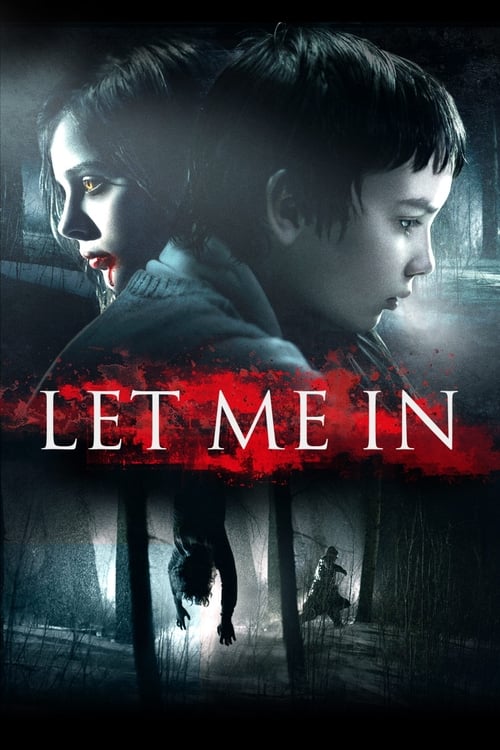
Let Me In
A bullied young boy befriends a young female vampire who lives in secrecy with her guardian. A remake of the movie “Let The Right One In” which was an adaptation of a book.
Working with a respectable budget of $20.0M, the film achieved a modest success with $24.1M in global revenue (+21% profit margin).
14 wins & 28 nominations


Plot Structure
Story beats plotted across runtime


Narrative Arc
Emotional journey through the story's key moments
Story Circle
Blueprint 15-beat structure
Arcplot Score Breakdown
Weighted: Precision (70%) + Arc (15%) + Theme (15%)
Let Me In (2010) exemplifies meticulously timed narrative architecture, characteristic of Matt Reeves's storytelling approach. This structural analysis examines how the film's 15-point plot structure maps to proven narrative frameworks across 1 hour and 56 minutes. With an Arcplot score of 7.3, the film balances conventional beats with creative variation.
Characters
Cast & narrative archetypes

Owen
Abby
The Father
Kenny
Detective Richie
Main Cast & Characters
Owen
Played by Kodi Smit-McPhee
A lonely, bullied 12-year-old boy who befriends Abby and finds courage through their relationship.
Abby
Played by Chloe Grace Moretz
A centuries-old vampire trapped in a child's body who forms a tender bond with Owen.
The Father
Played by Richard Jenkins
Abby's caretaker who procures blood for her through increasingly desperate means.
Kenny
Played by Dylan Minnette
Owen's primary school bully who relentlessly torments him.
Detective Richie
Played by Elias Koteas
A local police detective investigating the murders in Los Alamos.
Structural Analysis
The Status Quo at 1 minutes (1% through the runtime) establishes Owen, a lonely 12-year-old boy, watches through binoculars from his bedroom window, spying on neighbors in his bleak New Mexico apartment complex. He's isolated, invisible, and powerless - bullied at school and ignored by his divorcing parents.. Notably, this early placement immediately immerses viewers in the story world.
The inciting incident occurs at 13 minutes when Owen meets Abby for the first time in the snowy courtyard at night. She tells him coldly, "I can't be your friend," but the connection has been made. His isolated world is disrupted by this strange, barefoot girl who appears in the freezing night.. At 11% through the film, this Disruption aligns precisely with traditional story structure. This beat shifts the emotional landscape, launching the protagonist into the central conflict.
The First Threshold at 28 minutes marks the transition into Act II, occurring at 25% of the runtime. This demonstrates the protagonist's commitment to Owen makes the active choice to pursue a relationship with Abby. He asks, "Will you be my girlfriend?" through Morse code on the wall. She responds yes. He consciously chooses to enter her world, crossing the threshold from isolation into connection, despite the strangeness surrounding her., moving from reaction to action.
At 57 minutes, the Midpoint arrives at 49% of the runtime—precisely centered, creating perfect narrative symmetry. The analysis reveals that this crucial beat False defeat: Abby's "father" is caught during a failed murder attempt and pours acid on his face to protect her identity. Owen sees police cars and realizes the danger is escalating. The detective begins investigating the apartment complex. The stakes have raised dramatically - the fun and games are over., fundamentally raising what's at risk. The emotional intensity shifts, dividing the narrative into clear before-and-after phases.
The Collapse moment at 86 minutes (75% through) represents the emotional nadir. Here, All is lost: The detective discovers Abby is a vampire and she kills him brutally. Owen witnesses the aftermath and flees in horror. Abby, covered in blood, comes to his window saying goodbye: "I have to go away." Owen loses both his only friend and his innocence. The "whiff of death" is the death of their relationship and Owen's childhood., shows the protagonist at their lowest point. This beat's placement in the final quarter sets up the climactic reversal.
The Second Threshold at 93 minutes initiates the final act resolution at 80% of the runtime. Synthesis and realization: Owen returns home having accepted the truth - Abby is the only real connection he has, monster or not. He understands what the "father" was: someone who loved Abby and sacrificed everything for her. Owen sees his own potential future and accepts it. This is what love requires., demonstrating the transformation achieved throughout the journey.
Emotional Journey
Let Me In's emotional architecture traces a deliberate progression across 15 carefully calibrated beats.
Narrative Framework
This structural analysis employs a 15-point narrative structure framework that maps key story moments. By mapping Let Me In against these established plot points, we can identify how Matt Reeves utilizes or subverts traditional narrative conventions. The plot point approach reveals not only adherence to structural principles but also creative choices that distinguish Let Me In within the drama genre.
Matt Reeves's Structural Approach
Among the 6 Matt Reeves films analyzed on Arcplot, the average structural score is 6.8, demonstrating varied approaches to story architecture. Let Me In represents one of the director's most structurally precise works. For comparative analysis, explore the complete Matt Reeves filmography.
Comparative Analysis
Additional drama films include After Thomas, South Pacific and Dirty Dancing: Havana Nights. For more Matt Reeves analyses, see War for the Planet of the Apes, The Batman and Dawn of the Planet of the Apes.
Plot Points by Act
Act I
SetupStatus Quo
Owen, a lonely 12-year-old boy, watches through binoculars from his bedroom window, spying on neighbors in his bleak New Mexico apartment complex. He's isolated, invisible, and powerless - bullied at school and ignored by his divorcing parents.
Theme
The policeman at the hospital tells his partner about the disfigured man in the car crash: "What makes someone do something like that?" The question of what drives people to monstrous acts for love permeates the entire story.
Worldbuilding
Owen's world is established: enduring vicious bullying at school, living with an emotionally distant religious mother, practicing knife attacks alone. Meanwhile, an old man and a young girl (Abby) move into the apartment next door. A local teenager is found murdered and drained of blood.
Disruption
Owen meets Abby for the first time in the snowy courtyard at night. She tells him coldly, "I can't be your friend," but the connection has been made. His isolated world is disrupted by this strange, barefoot girl who appears in the freezing night.
Resistance
Owen is drawn to Abby despite her warnings. He witnesses strange occurrences: Abby climbing walls, her "father" hunting victims for blood. Owen debates whether to pursue this dangerous friendship while the bullying intensifies. Abby begins to let down her guard, teaching Owen to stand up for himself.
Act II
ConfrontationFirst Threshold
Owen makes the active choice to pursue a relationship with Abby. He asks, "Will you be my girlfriend?" through Morse code on the wall. She responds yes. He consciously chooses to enter her world, crossing the threshold from isolation into connection, despite the strangeness surrounding her.
Mirror World
Abby reveals a crucial truth to Owen: "I'm not a girl." The relationship that will carry the film's theme is fully introduced - a bond between two outcasts that transcends normal understanding. Their connection represents the thematic heart: what we accept in those we love.
Premise
The promise of the premise: a vampire love story. Owen and Abby's relationship deepens through coded messages and nighttime meetings. He begins to understand what she is. Meanwhile, Abby's "father" grows increasingly desperate and sloppy in his kills, drawing police attention. Owen finds courage through Abby's support.
Midpoint
False defeat: Abby's "father" is caught during a failed murder attempt and pours acid on his face to protect her identity. Owen sees police cars and realizes the danger is escalating. The detective begins investigating the apartment complex. The stakes have raised dramatically - the fun and games are over.
Opposition
Pressure intensifies from all sides: Abby's protector dies after she feeds on him in the hospital. She must hunt alone and kills a neighbor. The detective closes in on the truth. Owen faces his worst bullying yet. The father of a victim seeks revenge. Owen's two worlds - normal life and Abby - collide catastrophically.
Collapse
All is lost: The detective discovers Abby is a vampire and she kills him brutally. Owen witnesses the aftermath and flees in horror. Abby, covered in blood, comes to his window saying goodbye: "I have to go away." Owen loses both his only friend and his innocence. The "whiff of death" is the death of their relationship and Owen's childhood.
Crisis
Owen processes the horror of what Abby is and what he's lost. He's alone again but forever changed. The dark night of the soul: Owen must reconcile his love for Abby with the monster she is. He visits his father, seeking normalcy, but finds no real connection there either.
Act III
ResolutionSecond Threshold
Synthesis and realization: Owen returns home having accepted the truth - Abby is the only real connection he has, monster or not. He understands what the "father" was: someone who loved Abby and sacrificed everything for her. Owen sees his own potential future and accepts it. This is what love requires.
Synthesis
The finale: Owen faces his ultimate test at the swimming pool where bullies attempt to drown him. Submerged and helpless, Abby arrives and massacres the bullies in spectacular violence, saving Owen's life. She proves her love through brutal action, and he accepts her fully. They escape together.
Transformation
Owen sits on a train with a large trunk (containing Abby), communicating with her through Morse code knocks. He has transformed from powerless victim to protective companion - he has become the "father" figure, choosing a life of sacrifice and darkness for love. The closing mirrors the opening's isolation, but now he has chosen his connection.