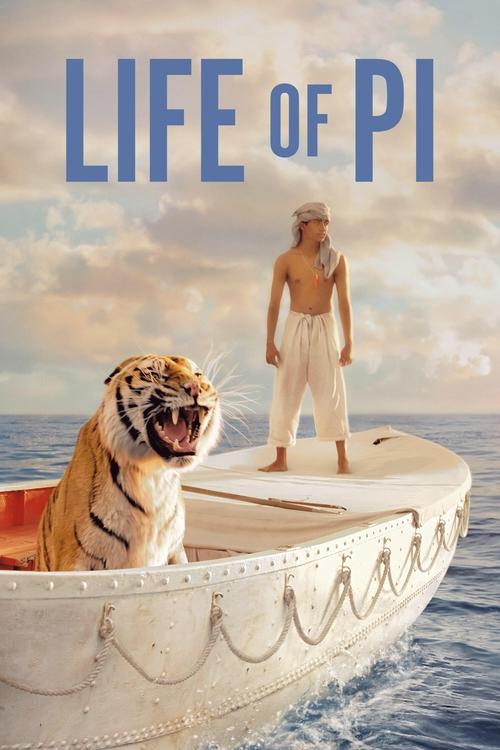
Life of Pi
A young man who survives a disaster at sea is hurtled into an epic journey of adventure and discovery. While cast away, he forms an unexpected connection with another survivor: a fearsome Bengal tiger.
Despite a considerable budget of $120.0M, Life of Pi became a commercial success, earning $609.0M worldwide—a 408% return.
4 Oscars. 81 wins & 134 nominations


Plot Structure
Story beats plotted across runtime


Narrative Arc
Emotional journey through the story's key moments
Story Circle
Blueprint 15-beat structure
Characters
Cast & narrative archetypes

Pi Patel (Adult)
Pi Patel (Teenage)
Richard Parker
Santosh Patel
Gita Patel
Writer
Main Cast & Characters
Pi Patel (Adult)
Played by Irrfan Khan
A reflective writer recounting his incredible survival story and spiritual journey to a skeptical novelist.
Pi Patel (Teenage)
Played by Suraj Sharma
A curious teenager who survives 227 days adrift at sea with a Bengal tiger after a shipwreck.
Richard Parker
Played by N/A
A Bengal tiger who becomes Pi's unlikely companion and motivation for survival during their ocean ordeal.
Santosh Patel
Played by Adil Hussain
Pi's pragmatic father who runs a zoo and teaches his son to respect the dangerous nature of wild animals.
Gita Patel
Played by Tabu
Pi's nurturing mother who encourages his spiritual exploration and provides emotional support.
Writer
Played by Rafe Spall
A Canadian novelist seeking an amazing story who listens to Pi's tale with growing wonder.
Structural Analysis
The Status Quo at 1 minutes (1% through the runtime) establishes Adult Pi in Montreal introduces himself to the writer, living a peaceful life with his family. The opening montage shows vibrant animals and zoo life, establishing Pi's harmonious relationship with nature and spirituality.. Significantly, this early placement immediately immerses viewers in the story world.
The inciting incident occurs at 15 minutes when Pi's father announces the family must leave India and sell the zoo animals. They will emigrate to Canada aboard a Japanese cargo ship, the Tsimtsum. Pi must leave behind his home, his girlfriend Anandi, and everything he knows.. At 11% through the film, this Disruption aligns precisely with traditional story structure. This beat shifts the emotional landscape, launching the protagonist into the central conflict.
The First Threshold at 31 minutes marks the transition into Act II, occurring at 25% of the runtime. This indicates the protagonist's commitment to The Tsimtsum sinks in a catastrophic storm. Pi's entire family perishes. He manages to escape on a lifeboat, only to discover he shares it with a hyena, an injured zebra, an orangutan (Orange Juice), and Richard Parker the Bengal tiger. Pi is thrust alone into the Pacific Ocean., moving from reaction to action.
At 62 minutes, the Midpoint arrives at 49% of the runtime—precisely centered, creating perfect narrative symmetry. The analysis reveals that this crucial beat Pi and Richard Parker encounter a massive school of flying fish that leap into the boat, followed by a spectacular bioluminescent sequence at night where a whale breaches beneath them. Pi experiences awe and wonder, a false victory where survival seems possible and even magical. This is the high point before reality darkens., fundamentally raising what's at risk. The emotional intensity shifts, dividing the narrative into clear before-and-after phases.
The Collapse moment at 94 minutes (74% through) represents the emotional nadir. Here, After leaving the island, Pi reaches his breaking point. Both he and Richard Parker are emaciated, dying of starvation and thirst. Pi lies in the boat, barely conscious, having lost all hope. This is the "whiff of death"—Pi is ready to give up and let the ocean take him., shows the protagonist at their lowest point. This beat's placement in the final quarter sets up the climactic reversal.
The Second Threshold at 103 minutes initiates the final act resolution at 81% of the runtime. Pi hears and sees the waves breaking on a shore. Land. After 227 days at sea, the lifeboat washes up on a beach in Mexico. Pi finds the strength to survive just a little longer. The ordeal is about to end., demonstrating the transformation achieved throughout the journey.
Emotional Journey
Life of Pi's emotional architecture traces a deliberate progression across 15 carefully calibrated beats.
Narrative Framework
This structural analysis employs systematic plot point analysis that identifies crucial turning points. By mapping Life of Pi against these established plot points, we can identify how Ang Lee utilizes or subverts traditional narrative conventions. The plot point approach reveals not only adherence to structural principles but also creative choices that distinguish Life of Pi within the adventure genre.
Ang Lee's Structural Approach
Among the 12 Ang Lee films analyzed on Arcplot, the average structural score is 6.8, demonstrating varied approaches to story architecture. Life of Pi exemplifies the director's characteristic narrative technique. For comparative analysis, explore the complete Ang Lee filmography.
Comparative Analysis
Additional adventure films include The Black Stallion, The Bad Guys and Puss in Boots. For more Ang Lee analyses, see Taking Woodstock, The Wedding Banquet and Sense and Sensibility.
Plot Points by Act
Act I
SetupStatus Quo
Adult Pi in Montreal introduces himself to the writer, living a peaceful life with his family. The opening montage shows vibrant animals and zoo life, establishing Pi's harmonious relationship with nature and spirituality.
Theme
Adult Pi tells the writer, "I suppose in the end, the whole of life becomes an act of letting go, but what always hurts the most is not taking a moment to say goodbye." This establishes the film's central theme of loss, faith, and storytelling.
Worldbuilding
Pi's childhood in Pondicherry, India. His family runs a zoo. We learn about his name (Piscine Molitor Patel), his exploration of multiple religions (Hinduism, Christianity, Islam), his father's rationalism, and his fascination with Richard Parker the tiger. Establishes family dynamics and Pi's spiritual seeking.
Disruption
Pi's father announces the family must leave India and sell the zoo animals. They will emigrate to Canada aboard a Japanese cargo ship, the Tsimtsum. Pi must leave behind his home, his girlfriend Anandi, and everything he knows.
Resistance
The family prepares for departure. Pi struggles with leaving Anandi. His father gives him a harsh lesson about Richard Parker's true nature by forcing him to watch the tiger kill a goat, warning him never to look into the tiger's eyes and see a soul. The family boards the ship with the zoo animals.
Act II
ConfrontationFirst Threshold
The Tsimtsum sinks in a catastrophic storm. Pi's entire family perishes. He manages to escape on a lifeboat, only to discover he shares it with a hyena, an injured zebra, an orangutan (Orange Juice), and Richard Parker the Bengal tiger. Pi is thrust alone into the Pacific Ocean.
Mirror World
After the hyena kills the zebra and Orange Juice, Richard Parker kills the hyena. Pi realizes he is now alone on the lifeboat with the 450-pound tiger. This relationship—predator and prey, nature and human—becomes the thematic mirror that will force Pi to confront survival, faith, and his own animal nature.
Premise
Pi learns to survive at sea. He builds a small raft tethered to the lifeboat to stay safe from Richard Parker. He discovers the survival kit, catches fish, collects rainwater, and begins training the tiger using a whistle and seasickness to establish dominance. He creates a routine and finds ways to coexist with the tiger.
Midpoint
Pi and Richard Parker encounter a massive school of flying fish that leap into the boat, followed by a spectacular bioluminescent sequence at night where a whale breaches beneath them. Pi experiences awe and wonder, a false victory where survival seems possible and even magical. This is the high point before reality darkens.
Opposition
The journey grows harder. Pi and Richard Parker face starvation, dehydration, and a massive storm. They encounter a mysterious carnivorous island that offers food but proves deadly (dissolving fish in the pools at night). Pi realizes they cannot stay and must continue. His faith is tested as suffering intensifies.
Collapse
After leaving the island, Pi reaches his breaking point. Both he and Richard Parker are emaciated, dying of starvation and thirst. Pi lies in the boat, barely conscious, having lost all hope. This is the "whiff of death"—Pi is ready to give up and let the ocean take him.
Crisis
In his darkest moment, Pi hallucinates and speaks to Richard Parker, asking for forgiveness and expressing his love. He processes his grief over his family, his loss of innocence, and accepts his fate. This is his dark night of the soul, where he surrenders completely.
Act III
ResolutionSecond Threshold
Pi hears and sees the waves breaking on a shore. Land. After 227 days at sea, the lifeboat washes up on a beach in Mexico. Pi finds the strength to survive just a little longer. The ordeal is about to end.
Synthesis
Pi crawls onto the beach, barely alive. Richard Parker emerges from the boat, walks into the jungle, pauses briefly, then disappears without looking back. Pi is rescued and hospitalized. Japanese insurance agents interview him, reject his story, and Pi tells them an alternate, brutal version with humans instead of animals. He asks the writer which story he prefers.
Transformation
Back in Montreal, adult Pi with his family. The writer chooses the story with the tiger. Pi smiles and says, "And so it goes with God." Pi has transformed from a boy who sought God in temples to a man who understands that faith is the better story we choose to believe. He has let go.