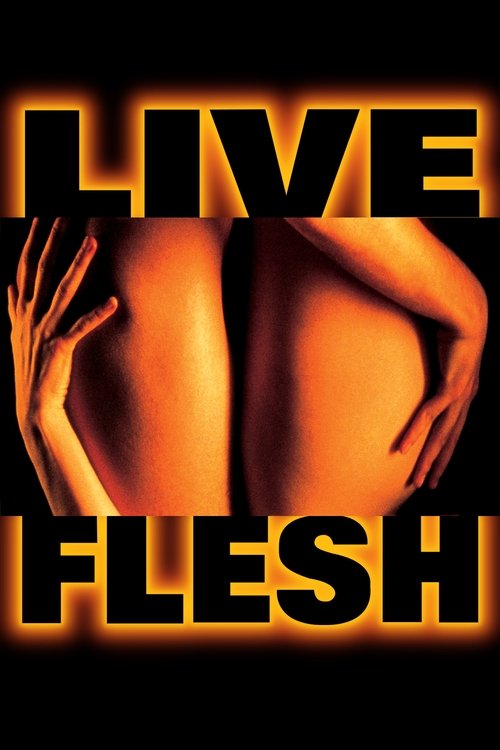
Live Flesh
When Victor attempts to seduce Elena, all he gets for his trouble is a one-way, six-year ticket to prison, where he concentrates on strengthening his mind, his body... and his desire for vengeance on the man who put him there. After his release and still madly in love with her, Victor will stop at nothing to win her over even if means revenge, for Elena has married David, the cop who sent him to prison!
Despite its tight budget of $1.0M, Live Flesh became a solid performer, earning $4.7M worldwide—a 369% return. The film's fresh perspective resonated with audiences, demonstrating that strong storytelling can transcend budget limitations.
Nominated for 1 BAFTA Award11 wins & 14 nominations


Plot Structure
Story beats plotted across runtime


Narrative Arc
Emotional journey through the story's key moments
Story Circle
Blueprint 15-beat structure
Arcplot Score Breakdown
Weighted: Precision (70%) + Arc (15%) + Theme (15%)
Live Flesh (1997) demonstrates strategically placed plot construction, characteristic of Pedro Almodóvar's storytelling approach. This structural analysis examines how the film's 15-point plot structure maps to proven narrative frameworks across 1 hour and 43 minutes. With an Arcplot score of 6.8, the film balances conventional beats with creative variation.
Characters
Cast & narrative archetypes

Víctor Plaza
Elena
David
Clara
Sancho
Main Cast & Characters
Víctor Plaza
Played by Liberto Rabal
A young man born on a bus during a transit strike who becomes obsessed with Elena after a chance encounter leads to tragedy and imprisonment.
Elena
Played by Francesca Neri
A drug-addicted woman who becomes paralyzed cop David's wife, caught between her past with Víctor and her present marriage.
David
Played by Javier Bardem
A police officer paralyzed in the shooting incident who becomes a champion wheelchair basketball player, married to Elena but haunted by the past.
Clara
Played by Ángela Molina
Sancho's unhappy wife who becomes romantically involved with Víctor after his release from prison, seeking escape from her troubled marriage.
Sancho
Played by José Sancho
David's former police partner who shot and paralyzed him during the confrontation with Víctor, now an alcoholic consumed by guilt.
Structural Analysis
The Status Quo at 1 minutes (1% through the runtime) establishes Victor is born on a bus during a transit strike in 1970, unwanted and into poverty - his mother abandons him immediately, establishing his status as someone who starts life at a disadvantage.. Structural examination shows that this early placement immediately immerses viewers in the story world.
The inciting incident occurs at 12 minutes when A confrontation erupts when Elena's boyfriend Sancho and cop David arrive at the apartment. In the chaos, David is shot and paralyzed - an event that will bind all four characters together and send Victor to prison.. At 12% through the film, this Disruption aligns precisely with traditional story structure. This beat shifts the emotional landscape, launching the protagonist into the central conflict.
The First Threshold at 25 minutes marks the transition into Act II, occurring at 24% of the runtime. This illustrates the protagonist's commitment to Victor is released from prison and actively chooses to pursue a new life, taking a job at an orphanage. He decides to seek redemption and reclaim the life stolen from him, including Elena., moving from reaction to action.
At 52 minutes, the Midpoint arrives at 51% of the runtime—precisely centered, creating perfect narrative symmetry. Structural examination shows that this crucial beat Elena admits she loves Victor and they consummate their relationship fully. This appears to be Victor's victory - he has won Elena - but it's a false peak that raises the stakes and puts everyone on a collision course., fundamentally raising what's at risk. The emotional intensity shifts, dividing the narrative into clear before-and-after phases.
The Collapse moment at 78 minutes (76% through) represents the emotional nadir. Here, David reveals he knows about the affair and his true nature emerges - he was the one who actually shot himself during the original confrontation. Victor realizes his entire life was derailed by a lie, and now David plans to kill him., illustrates the protagonist at their lowest point. This beat's placement in the final quarter sets up the climactic reversal.
The Second Threshold at 83 minutes initiates the final act resolution at 81% of the runtime. Victor realizes that despite the injustice done to him, he can choose who he becomes. He understands that Sancho, not David, is the immediate threat, and he gains clarity about how to protect Elena and himself without becoming a murderer., demonstrating the transformation achieved throughout the journey.
Emotional Journey
Live Flesh's emotional architecture traces a deliberate progression across 15 carefully calibrated beats.
Narrative Framework
This structural analysis employs systematic plot point analysis that identifies crucial turning points. By mapping Live Flesh against these established plot points, we can identify how Pedro Almodóvar utilizes or subverts traditional narrative conventions. The plot point approach reveals not only adherence to structural principles but also creative choices that distinguish Live Flesh within the drama genre.
Pedro Almodóvar's Structural Approach
Among the 13 Pedro Almodóvar films analyzed on Arcplot, the average structural score is 7.1, reflecting strong command of classical structure. Live Flesh takes a more unconventional approach compared to the director's typical style. For comparative analysis, explore the complete Pedro Almodóvar filmography.
Comparative Analysis
Additional drama films include After Thomas, South Pacific and Dirty Dancing: Havana Nights. For more Pedro Almodóvar analyses, see All About My Mother, Women on the Verge of a Nervous Breakdown and Julieta.
Plot Points by Act
Act I
SetupStatus Quo
Victor is born on a bus during a transit strike in 1970, unwanted and into poverty - his mother abandons him immediately, establishing his status as someone who starts life at a disadvantage.
Theme
Christmas 1990: A radio broadcast discusses fate versus circumstance, asking whether we are products of our times or masters of our destiny - the central thematic question about whether Victor can escape his origins.
Worldbuilding
Victor as a troubled young man attempts to pursue Elena, a woman he barely knows. We see his desperation, impulsiveness, and naiveté as he goes to her apartment with a gun he doesn't know how to use.
Disruption
A confrontation erupts when Elena's boyfriend Sancho and cop David arrive at the apartment. In the chaos, David is shot and paralyzed - an event that will bind all four characters together and send Victor to prison.
Resistance
Victor is imprisoned for six years. During this time, David marries Elena, and Sancho becomes a wheelchair basketball star. Victor debates his future, learns discipline, and prepares to re-enter a world that has moved on without him.
Act II
ConfrontationFirst Threshold
Victor is released from prison and actively chooses to pursue a new life, taking a job at an orphanage. He decides to seek redemption and reclaim the life stolen from him, including Elena.
Mirror World
Victor encounters Elena again at a basketball game where David plays. This relationship - complicated by guilt, desire, and the past - will be the vehicle through which Victor explores whether he can transcend his origins.
Premise
Victor and Elena begin a secret affair. Victor works at the orphanage, building a legitimate life while pursuing the woman he has obsessed over. The affair represents both his attempt at redemption and his inability to escape destructive patterns.
Midpoint
Elena admits she loves Victor and they consummate their relationship fully. This appears to be Victor's victory - he has won Elena - but it's a false peak that raises the stakes and puts everyone on a collision course.
Opposition
David grows suspicious and increasingly dangerous. Sancho resurfaces with his own agenda. The web of lies tightens as Victor's past and present converge. Everyone's secrets and resentments build toward inevitable confrontation.
Collapse
David reveals he knows about the affair and his true nature emerges - he was the one who actually shot himself during the original confrontation. Victor realizes his entire life was derailed by a lie, and now David plans to kill him.
Crisis
Victor faces the darkest truth: he was innocent all along, yet paid the price. He must decide whether to become the violent man everyone believed him to be or find another way to resolve the situation.
Act III
ResolutionSecond Threshold
Victor realizes that despite the injustice done to him, he can choose who he becomes. He understands that Sancho, not David, is the immediate threat, and he gains clarity about how to protect Elena and himself without becoming a murderer.
Synthesis
The final confrontation occurs. Sancho is killed by David in self-defense. Victor and Elena are freed from the past. David, now the killer he falsely accused Victor of being, must live with his own guilt. Victor has transcended his birth circumstances.
Transformation
Victor and Elena have a child, born into freedom and love - the opposite of Victor's birth on the bus. The final image shows Victor has broken the cycle: he is not a product of his circumstances but the master of his destiny.