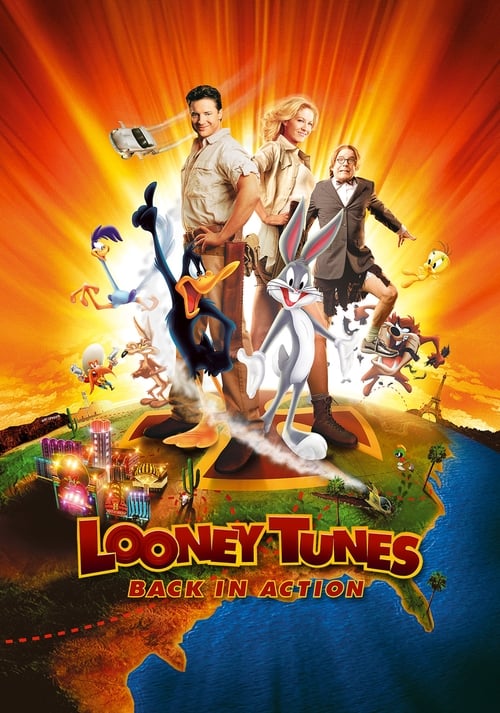
Looney Tunes: Back in Action
Fed up with all the attention going to Bugs Bunny, Daffy Duck quits Hollywood, teams up with recently-fired stuntman Damien Drake Jr. and embarks on a round-the-world adventure, along with Bugs and The VP of Warner Bros. Their mission? Find Damien's father, and the missing blue diamond... and stay one step ahead of The Acme Corp., who wants the diamond for their own purposes.
The film disappointed at the box office against its significant budget of $80.0M, earning $68.5M globally (-14% loss).


Plot Structure
Story beats plotted across runtime


Narrative Arc
Emotional journey through the story's key moments
Story Circle
Blueprint 15-beat structure
Arcplot Score Breakdown
Weighted: Precision (70%) + Arc (15%) + Theme (15%)
Looney Tunes: Back in Action (2003) exhibits strategically placed dramatic framework, characteristic of Joe Dante's storytelling approach. This structural analysis examines how the film's 15-point plot structure maps to proven narrative frameworks across 1 hour and 32 minutes. With an Arcplot score of 6.8, the film balances conventional beats with creative variation.
Characters
Cast & narrative archetypes

Bugs Bunny
Daffy Duck
DJ Drake
Kate Houghton
Mr. Chairman
Damian Drake
Main Cast & Characters
Bugs Bunny
Played by Jeff Bergman
Iconic cartoon rabbit who helps DJ Drake find his father and the Blue Monkey diamond while evading ACME.
Daffy Duck
Played by Jeff Bergman
Egotistical cartoon duck fired from Warner Bros. who teams up with DJ to prove his worth and find treasure.
DJ Drake
Played by Brendan Fraser
Warner Bros. stuntman and security guard searching for his kidnapped spy father while caught in a global adventure.
Kate Houghton
Played by Jenna Elfman
Ambitious Warner Bros. Vice President of Comedy who initially fires Daffy but joins the quest to bring him back.
Mr. Chairman
Played by Steve Martin
Evil CEO of ACME Corporation seeking the Blue Monkey diamond to turn humanity into monkeys and rule the world.
Damian Drake
Played by Timothy Dalton
Famous action movie star who is actually a secret spy, kidnapped by ACME while searching for the Blue Monkey diamond.
Structural Analysis
The Status Quo at 1 minutes (1% through the runtime) establishes Daffy Duck is a Hollywood stuntman frustrated with playing second fiddle to Bugs Bunny, demanding better roles and recognition from studio executives.. Structural examination shows that this early placement immediately immerses viewers in the story world.
The inciting incident occurs at 11 minutes when DJ receives a mysterious phone call from his father Damian Drake, who has been captured by the ACME Corporation. His father reveals he's a real spy, not just an actor, and needs DJ's help.. At 12% through the film, this Disruption aligns precisely with traditional story structure. This beat shifts the emotional landscape, launching the protagonist into the central conflict.
The First Threshold at 22 minutes marks the transition into Act II, occurring at 24% of the runtime. This illustrates the protagonist's commitment to DJ chooses to go to Las Vegas to follow his father's clues, actively embracing the spy adventure. Kate and Bugs decide to pursue Daffy, launching parallel journeys that converge., moving from reaction to action.
At 47 minutes, the Midpoint arrives at 51% of the runtime—precisely centered, creating perfect narrative symmetry. Of particular interest, this crucial beat In the Louvre, the group discovers the Blue Monkey is in Africa, but ACME forces close in. They barely escape, and the stakes raise as Mr. Chairman reveals his plan to turn humanity into monkeys using the diamond. False defeat: they're outmatched., fundamentally raising what's at risk. The emotional intensity shifts, dividing the narrative into clear before-and-after phases.
The Collapse moment at 69 minutes (75% through) represents the emotional nadir. Here, Damian Drake is revealed to be suspended over a death trap at ACME headquarters. DJ sees his father about to die. ACME captures the Blue Monkey diamond, and all seems lost. The whiff of death: Damian will be killed and humanity transformed., shows the protagonist at their lowest point. This beat's placement in the final quarter sets up the climactic reversal.
The Second Threshold at 73 minutes initiates the final act resolution at 80% of the runtime. DJ realizes they must infiltrate ACME headquarters together. He synthesizes his stuntman skills with his father's spy legacy, and accepts Daffy, Kate, and Bugs as true partners. The team commits to the final assault., demonstrating the transformation achieved throughout the journey.
Emotional Journey
Looney Tunes: Back in Action's emotional architecture traces a deliberate progression across 15 carefully calibrated beats.
Narrative Framework
This structural analysis employs proven narrative structure principles that track dramatic progression. By mapping Looney Tunes: Back in Action against these established plot points, we can identify how Joe Dante utilizes or subverts traditional narrative conventions. The plot point approach reveals not only adherence to structural principles but also creative choices that distinguish Looney Tunes: Back in Action within the animation genre.
Joe Dante's Structural Approach
Among the 10 Joe Dante films analyzed on Arcplot, the average structural score is 7.0, reflecting strong command of classical structure. Looney Tunes: Back in Action takes a more unconventional approach compared to the director's typical style. For comparative analysis, explore the complete Joe Dante filmography.
Comparative Analysis
Additional animation films include The Bad Guys, Puss in Boots and Violet Evergarden: Eternity and the Auto Memory Doll. For more Joe Dante analyses, see The Howling, Explorers and Small Soldiers.
Plot Points by Act
Act I
SetupStatus Quo
Daffy Duck is a Hollywood stuntman frustrated with playing second fiddle to Bugs Bunny, demanding better roles and recognition from studio executives.
Theme
Kate Houghton declares "It's not about the star, it's about the team" when firing Daffy, establishing the theme of teamwork versus ego.
Worldbuilding
Introduction to the Warner Bros. studio world where cartoons are real actors. DJ Drake works as a stuntman while hiding that his father is a spy movie star. Daffy gets fired and DJ gets fired trying to escort him off the lot.
Disruption
DJ receives a mysterious phone call from his father Damian Drake, who has been captured by the ACME Corporation. His father reveals he's a real spy, not just an actor, and needs DJ's help.
Resistance
DJ reluctantly teams with Daffy to find his father. Kate realizes firing Daffy was a mistake as Bugs needs a partner. DJ discovers his father left clues about the Blue Monkey diamond, a mystical artifact ACME wants.
Act II
ConfrontationFirst Threshold
DJ chooses to go to Las Vegas to follow his father's clues, actively embracing the spy adventure. Kate and Bugs decide to pursue Daffy, launching parallel journeys that converge.
Mirror World
DJ and Kate are forced to work together in Las Vegas. Their partnership represents the film's theme: the human (DJ) and toon (Daffy) must cooperate, mirroring Kate and Bugs' developing respect for each other.
Premise
The fun of the premise: wild chases through Vegas, meeting Dusty Tails, traveling to Paris and the Louvre for clues, escaping Elmer Fudd and ACME henchmen. Toons and humans interact in increasingly absurd ways as they hunt for the Blue Monkey.
Midpoint
In the Louvre, the group discovers the Blue Monkey is in Africa, but ACME forces close in. They barely escape, and the stakes raise as Mr. Chairman reveals his plan to turn humanity into monkeys using the diamond. False defeat: they're outmatched.
Opposition
The journey to Africa intensifies. The team faces jungle dangers, meets Granny and the spy organization, and gets closer to finding the diamond. However, ACME is always one step ahead, and internal conflicts between DJ and Daffy, Kate and Bugs, create tension.
Collapse
Damian Drake is revealed to be suspended over a death trap at ACME headquarters. DJ sees his father about to die. ACME captures the Blue Monkey diamond, and all seems lost. The whiff of death: Damian will be killed and humanity transformed.
Crisis
DJ feels defeated and responsible for his father's capture. Daffy faces his own inadequacy. The team must process their failure and find resolve. Kate and Bugs provide emotional support, reinforcing the theme that teamwork can overcome individual weakness.
Act III
ResolutionSecond Threshold
DJ realizes they must infiltrate ACME headquarters together. He synthesizes his stuntman skills with his father's spy legacy, and accepts Daffy, Kate, and Bugs as true partners. The team commits to the final assault.
Synthesis
The finale at ACME headquarters. DJ and Daffy work as a team to rescue Damian and stop Mr. Chairman from using the Blue Monkey. Cartoon physics and human ingenuity combine. The diamond is destroyed, humanity is saved, and the team triumphs through cooperation.
Transformation
Daffy and Bugs are now equal partners in their films. DJ and Kate are together, and DJ has reconciled with his father. The final image shows true teamwork: everyone gets credit, no one is second fiddle.