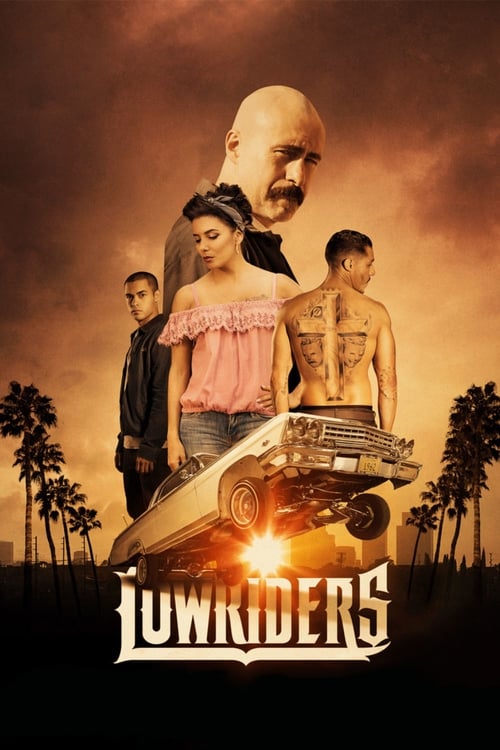
Lowriders
A young street artist in East Los Angeles is caught between his father's obsession with lowrider car culture, his ex-felon brother and his need for self-expression.
Despite its extremely modest budget of $916K, Lowriders became a massive hit, earning $6.3M worldwide—a remarkable 589% return. The film's compelling narrative connected with viewers, confirming that strong storytelling can transcend budget limitations.











Plot Structure
Story beats plotted across runtime


Narrative Arc
Emotional journey through the story's key moments
Story Circle
Blueprint 15-beat structure
Arcplot Score Breakdown
Weighted: Precision (70%) + Arc (15%) + Theme (15%)
Lowriders (2017) reveals carefully calibrated narrative design, characteristic of Ricardo de Montreuil's storytelling approach. This structural analysis examines how the film's 15-point plot structure maps to proven narrative frameworks across 1 hour and 39 minutes. With an Arcplot score of 7.3, the film balances conventional beats with creative variation.
Structural Analysis
The Status Quo at 1 minutes (1% through the runtime) establishes Danny sprays graffiti art on the streets of East LA at night, establishing his identity as a talented street artist caught between two worlds - the legal world of his father's lowrider shop and the underground art scene.. Of particular interest, this early placement immediately immerses viewers in the story world.
The inciting incident occurs at 13 minutes when Danny's older brother Francisco (Ghost) is released from prison and returns home, immediately creating tension. His arrival disrupts the fragile peace Danny has maintained between his art life and family obligations.. At 13% through the film, this Disruption is delayed, allowing extended setup of the story world. This beat shifts the emotional landscape, launching the protagonist into the central conflict.
The First Threshold at 25 minutes marks the transition into Act II, occurring at 26% of the runtime. This illustrates the protagonist's commitment to Danny makes the active choice to collaborate with Francisco on an underground art project, secretly taking money and pursuing his street art dreams behind his father's back. He chooses to follow his artistic passion despite the risks., moving from reaction to action.
At 50 minutes, the Midpoint arrives at 50% of the runtime—precisely centered, creating perfect narrative symmetry. Notably, this crucial beat Danny's graffiti art gains significant attention and he's offered a gallery opportunity. This false victory makes him believe he can have it all - artistic success and family approval - but the deception required begins to crack., fundamentally raising what's at risk. The emotional intensity shifts, dividing the narrative into clear before-and-after phases.
The Collapse moment at 74 minutes (74% through) represents the emotional nadir. Here, The family is torn apart when the full truth emerges. Miguel disowns Danny for his deception. Francisco's manipulation is exposed. Danny loses everything - his family, his relationship with Lorelai, and his sense of identity. The family lowrider, representing their legacy, is damaged., indicates the protagonist at their lowest point. This beat's placement in the final quarter sets up the climactic reversal.
The Second Threshold at 80 minutes initiates the final act resolution at 81% of the runtime. Danny realizes that his art and his family heritage are not opposites but can be united. He decides to use his artistic talent to restore the family lowrider, synthesizing both worlds. He commits to earning back his father's trust through honest work., demonstrating the transformation achieved throughout the journey.
Emotional Journey
Lowriders's emotional architecture traces a deliberate progression across 15 carefully calibrated beats.
Narrative Framework
This structural analysis employs a 15-point narrative structure framework that maps key story moments. By mapping Lowriders against these established plot points, we can identify how Ricardo de Montreuil utilizes or subverts traditional narrative conventions. The plot point approach reveals not only adherence to structural principles but also creative choices that distinguish Lowriders within the drama genre.
Comparative Analysis
Additional drama films include Eye for an Eye, South Pacific and Kiss of the Spider Woman.
Plot Points by Act
Act I
SetupStatus Quo
Danny sprays graffiti art on the streets of East LA at night, establishing his identity as a talented street artist caught between two worlds - the legal world of his father's lowrider shop and the underground art scene.
Theme
Miguel tells Danny that family legacy is everything and that a man must choose what he stands for. The theme of loyalty, family bonds, and finding one's true identity is established.
Worldbuilding
We see Danny's dual life: working at his father Miguel's lowrider shop by day while secretly creating street art at night. His relationship with girlfriend Lorelai is introduced, as is the tension in the household and the family's passion for lowrider culture.
Disruption
Danny's older brother Francisco (Ghost) is released from prison and returns home, immediately creating tension. His arrival disrupts the fragile peace Danny has maintained between his art life and family obligations.
Resistance
Danny is caught between two father figures: Miguel who wants him to embrace the lowrider tradition, and Francisco who sees Danny's art talent and wants to exploit it. Danny debates which path to follow while continuing his secret graffiti work.
Act II
ConfrontationFirst Threshold
Danny makes the active choice to collaborate with Francisco on an underground art project, secretly taking money and pursuing his street art dreams behind his father's back. He chooses to follow his artistic passion despite the risks.
Mirror World
Lorelai becomes Danny's anchor to authenticity, challenging him to be honest about who he is. She represents the possibility of integrating both sides of his identity - art and family - rather than choosing one over the other.
Premise
Danny lives the double life, creating increasingly ambitious street art with Francisco's backing while also learning the craft of lowrider building from Miguel. He gains recognition in the art world and begins to taste success on both fronts.
Midpoint
Danny's graffiti art gains significant attention and he's offered a gallery opportunity. This false victory makes him believe he can have it all - artistic success and family approval - but the deception required begins to crack.
Opposition
Miguel discovers Danny's secret art life and feels betrayed. Francisco's true motives become clearer as he pushes Danny toward increasingly risky work. The family begins to fracture as old wounds between Miguel and Francisco resurface, with Danny caught in the middle.
Collapse
The family is torn apart when the full truth emerges. Miguel disowns Danny for his deception. Francisco's manipulation is exposed. Danny loses everything - his family, his relationship with Lorelai, and his sense of identity. The family lowrider, representing their legacy, is damaged.
Crisis
Danny spirals in isolation, having lost both worlds he tried to inhabit. He reflects on the wreckage of his relationships and the cost of his deception. He must confront who he really is and what truly matters to him.
Act III
ResolutionSecond Threshold
Danny realizes that his art and his family heritage are not opposites but can be united. He decides to use his artistic talent to restore the family lowrider, synthesizing both worlds. He commits to earning back his father's trust through honest work.
Synthesis
Danny works to repair the family lowrider, incorporating his unique artistic vision into the restoration. He reconciles with Miguel by showing him that art and lowrider culture share the same soul - self-expression and legacy. The family prepares for the lowrider competition.
Transformation
The restored lowrider, now featuring Danny's distinctive artwork, is revealed at the competition. Danny stands with his reunited family, having found a way to honor both his artistic identity and his family legacy. He is no longer torn between two worlds but has created a new one that embraces both.