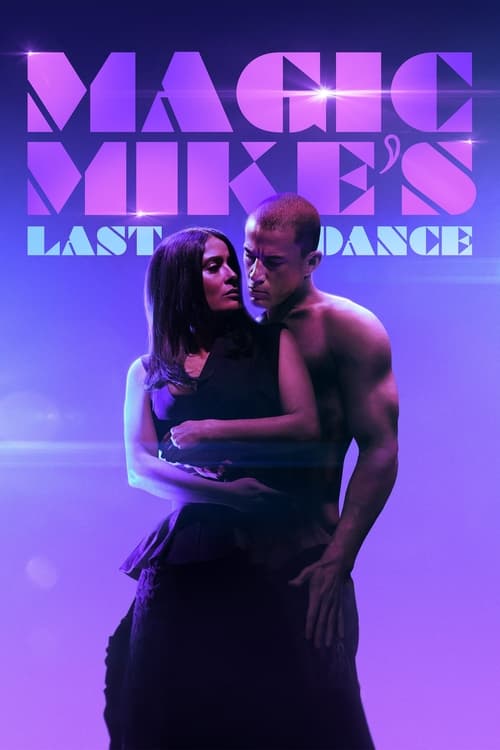
Magic Mike's Last Dance
Mike Lane takes to the stage again after a lengthy hiatus, following a business deal that went bust, leaving him broke and taking bartender gigs in Florida. For what he hopes will be one last hurrah, Mike heads to London with a wealthy socialite who lures him with an offer he can’t refuse… and an agenda all her own. With everything on the line, once Mike discovers what she truly has in mind, will he—and the roster of hot new dancers he’ll have to whip into shape—be able to pull it off?
Working with a mid-range budget of $45.0M, the film achieved a respectable showing with $52.0M in global revenue (+16% profit margin).


Plot Structure
Story beats plotted across runtime


Narrative Arc
Emotional journey through the story's key moments
Story Circle
Blueprint 15-beat structure
Arcplot Score Breakdown
Weighted: Precision (70%) + Arc (15%) + Theme (15%)
Magic Mike's Last Dance (2023) reveals meticulously timed story structure, characteristic of Steven Soderbergh's storytelling approach. This structural analysis examines how the film's 15-point plot structure maps to proven narrative frameworks across 1 hour and 52 minutes. With an Arcplot score of 7.2, the film balances conventional beats with creative variation.
Characters
Cast & narrative archetypes

Mike Lane
Max Mendoza
Zadie
Roger
Main Cast & Characters
Mike Lane
Played by Channing Tatum
A former stripper turned entrepreneur who takes on one final dance project in London with a wealthy socialite.
Max Mendoza
Played by Salma Hayek Pinault
A wealthy socialite going through a divorce who hires Mike to choreograph a new show at a London theater.
Zadie
Played by Jemelia George
Max's intelligent and perceptive teenage daughter navigating her parents' divorce.
Roger
Played by Alan Cox
Max's wealthy, controlling husband from whom she is divorcing.
Structural Analysis
The Status Quo at 1 minutes (1% through the runtime) establishes Mike works as a bartender at a high-society event in Miami, his performing days behind him, making drinks for wealthy patrons who don't see him as anything more than staff.. Structural examination shows that this early placement immediately immerses viewers in the story world.
The inciting incident occurs at 13 minutes when Max witnesses Mike performing an impromptu private dance and is captivated by his artistry and confidence, seeing something extraordinary she's been missing in her controlled, passionless life.. At 11% through the film, this Disruption aligns precisely with traditional story structure. This beat shifts the emotional landscape, launching the protagonist into the central conflict.
The First Threshold at 27 minutes marks the transition into Act II, occurring at 24% of the runtime. This shows the protagonist's commitment to Mike accepts Max's offer and boards a plane to London to reimagine and choreograph a new male revue show at her theater, leaving his bartending life behind., moving from reaction to action.
At 55 minutes, the Midpoint arrives at 50% of the runtime—precisely centered, creating perfect narrative symmetry. Significantly, this crucial beat The first preview performance is a triumph, with the audience electrified by the new show; Mike and Max share an intimate moment of creative and romantic connection, believing they've achieved something special together., fundamentally raising what's at risk. The emotional intensity shifts, dividing the narrative into clear before-and-after phases.
The Collapse moment at 84 minutes (75% through) represents the emotional nadir. Here, Max capitulates to Roger's demands to protect her daughter, agreeing to cancel the show and return to her controlled, safe existence; she tells Mike it's over and that their creative partnership was a fantasy., indicates the protagonist at their lowest point. This beat's placement in the final quarter sets up the climactic reversal.
The Second Threshold at 89 minutes initiates the final act resolution at 79% of the runtime. Zadie convinces her mother that running away from what makes her feel alive isn't protecting anyone; Max realizes she must fight for what she wants and models courage for her daughter; she decides to defy Roger and proceed with the show., demonstrating the transformation achieved throughout the journey.
Emotional Journey
Magic Mike's Last Dance's emotional architecture traces a deliberate progression across 15 carefully calibrated beats.
Narrative Framework
This structural analysis employs proven narrative structure principles that track dramatic progression. By mapping Magic Mike's Last Dance against these established plot points, we can identify how Steven Soderbergh utilizes or subverts traditional narrative conventions. The plot point approach reveals not only adherence to structural principles but also creative choices that distinguish Magic Mike's Last Dance within the comedy genre.
Steven Soderbergh's Structural Approach
Among the 17 Steven Soderbergh films analyzed on Arcplot, the average structural score is 7.1, reflecting strong command of classical structure. Magic Mike's Last Dance represents one of the director's most structurally precise works. For comparative analysis, explore the complete Steven Soderbergh filmography.
Comparative Analysis
Additional comedy films include The Bad Guys, Ella Enchanted and The Evening Star. For more Steven Soderbergh analyses, see Ocean's Twelve, Ocean's Thirteen and Contagion.
Plot Points by Act
Act I
SetupStatus Quo
Mike works as a bartender at a high-society event in Miami, his performing days behind him, making drinks for wealthy patrons who don't see him as anything more than staff.
Theme
Maxandra tells Mike that most people settle for less than they deserve, that real art comes from knowing what you truly want and having the courage to demand it.
Worldbuilding
Mike's post-dancing life in Miami serving the wealthy elite; introduction to Maxandra (Max), a recently divorced socialite struggling with her identity and failed marriage; her strained relationship with her teenage daughter Zadie.
Disruption
Max witnesses Mike performing an impromptu private dance and is captivated by his artistry and confidence, seeing something extraordinary she's been missing in her controlled, passionless life.
Resistance
Max propositions Mike for a private performance which leads to a passionate encounter; she reveals she owns a historic theater in London with a failing traditional show; Mike is hesitant to return to performing but intrigued by the creative opportunity.
Act II
ConfrontationFirst Threshold
Mike accepts Max's offer and boards a plane to London to reimagine and choreograph a new male revue show at her theater, leaving his bartending life behind.
Mirror World
Mike meets the traditional theater cast and crew in London, particularly connecting with Max's assistant Victor who becomes an ally; the relationship with Max deepens as they collaborate creatively.
Premise
Mike auditions and trains a diverse group of male dancers, teaching them to perform with authenticity and sensuality; he works to transform the stuffy theater into a space for liberated artistic expression; growing chemistry with Max as they collaborate.
Midpoint
The first preview performance is a triumph, with the audience electrified by the new show; Mike and Max share an intimate moment of creative and romantic connection, believing they've achieved something special together.
Opposition
Max's ex-husband Roger threatens to use his financial leverage to shut down the show and take custody of Zadie; theater board members resist the unconventional production; Max faces pressure to conform to society's expectations; tension builds between Mike and Max over control and vulnerability.
Collapse
Max capitulates to Roger's demands to protect her daughter, agreeing to cancel the show and return to her controlled, safe existence; she tells Mike it's over and that their creative partnership was a fantasy.
Crisis
Mike processes the loss, feeling used and discarded once again by the wealthy elite; he contemplates returning to Miami defeated; the dancers express their disappointment at losing this opportunity for authentic expression.
Act III
ResolutionSecond Threshold
Zadie convinces her mother that running away from what makes her feel alive isn't protecting anyone; Max realizes she must fight for what she wants and models courage for her daughter; she decides to defy Roger and proceed with the show.
Synthesis
Max finds Mike and convinces him to do the opening night performance; they stage the full production with Mike performing his final dance; the show is a massive success; Max confronts Roger and establishes boundaries; she chooses artistic passion and authenticity over social approval.
Transformation
Mike and Max share a final dance on the empty stage, both transformed—Mike has found his artistry has value beyond entertainment, and Max has reclaimed her agency and passion, no longer performing for others' approval.