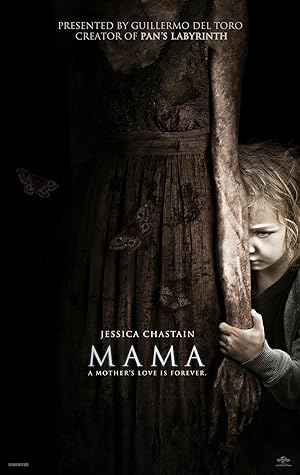
Mama
Jeffrey Desange, senior partner of an investment brokerage, has a breakdown after a financial collapse and kills several co-workers and his estranged wife and kidnaps his two young daughters, Victoria and Lily. When they're found five years later, they're taken in by their uncle (their father's twin brother) and his girlfriend. Macabre events soon make the new guardians suspect that a supernatural evil force named Mama has attached itself to the girls.
Despite a moderate budget of $15.0M, Mama became a massive hit, earning $146.4M worldwide—a remarkable 876% return.
11 wins & 19 nominations


Plot Structure
Story beats plotted across runtime


Narrative Arc
Emotional journey through the story's key moments
Story Circle
Blueprint 15-beat structure
Arcplot Score Breakdown
Weighted: Precision (70%) + Arc (15%) + Theme (15%)
Mama (2013) reveals strategically placed narrative design, characteristic of Andy Muschietti's storytelling approach. This structural analysis examines how the film's 15-point plot structure maps to proven narrative frameworks across 1 hour and 40 minutes. With an Arcplot score of 6.8, the film balances conventional beats with creative variation.
Characters
Cast & narrative archetypes

Annabel
Lucas
Victoria
Lilly
Mama
Dr. Dreyfuss
Main Cast & Characters
Annabel
Played by Jessica Chastain
A reluctant mother figure and punk bassist who must protect her boyfriend's orphaned nieces from a supernatural entity.
Lucas
Played by Nikolaj Coster-Waldau
A devoted uncle searching for his missing nieces, later attempting to provide them a stable home.
Victoria
Played by Megan Charpentier
The older of two sisters raised in isolation by a malevolent spirit, struggling to readjust to civilization.
Lilly
Played by Isabelle Nélisse
The younger sister who spent formative years feral in the woods, deeply bonded to the entity Mama.
Mama
Played by Javier Botet
A vengeful maternal spirit who protected the girls in the wilderness and refuses to let them go.
Dr. Dreyfuss
Played by Daniel Kash
A psychiatrist treating the girls who becomes obsessed with understanding Mama's origins.
Structural Analysis
The Status Quo at 1 minutes (1% through the runtime) establishes Jeffrey drives erratically with his daughters Victoria and Lilly after killing their mother during the financial crisis, establishing a world shattered by violence and desperation.. Of particular interest, this early placement immediately immerses viewers in the story world.
The inciting incident occurs at 13 minutes when The search team discovers Victoria and Lilly alive in the abandoned cabin after five years, their survival seemingly miraculous but deeply unsettling in their feral behavior.. At 13% through the film, this Disruption is delayed, allowing extended setup of the story world. This beat shifts the emotional landscape, launching the protagonist into the central conflict.
The First Threshold at 25 minutes marks the transition into Act II, occurring at 25% of the runtime. This reveals the protagonist's commitment to Annabel and Lucas bring Victoria and Lilly home to live with them, accepting custody and moving into the house provided by Dr. Dreyfuss, crossing into their new reality as a makeshift family., moving from reaction to action.
At 51 minutes, the Midpoint arrives at 51% of the runtime—precisely centered, creating perfect narrative symmetry. Structural examination shows that this crucial beat Dr. Dreyfuss discovers Mama's true identity as Edith Brennan, a 19th-century asylum patient who killed herself and her baby. The ghost is revealed to be searching for her lost child, raising the stakes and revealing the tragedy driving the horror., fundamentally raising what's at risk. The emotional intensity shifts, dividing the narrative into clear before-and-after phases.
The Collapse moment at 76 minutes (76% through) represents the emotional nadir. Here, Mama violently attacks Annabel in the house and takes both girls, dragging them toward the cliff where she died. Dr. Dreyfuss's death is discovered, and all hope of a rational solution dies with him., illustrates the protagonist at their lowest point. This beat's placement in the final quarter sets up the climactic reversal.
The Second Threshold at 81 minutes initiates the final act resolution at 81% of the runtime. Annabel realizes they must return Mama's baby's remains to her, giving her peace. Armed with this knowledge and the recovered baby's corpse, she commits fully to saving the girls through understanding rather than force., demonstrating the transformation achieved throughout the journey.
Emotional Journey
Mama's emotional architecture traces a deliberate progression across 15 carefully calibrated beats.
Narrative Framework
This structural analysis employs proven narrative structure principles that track dramatic progression. By mapping Mama against these established plot points, we can identify how Andy Muschietti utilizes or subverts traditional narrative conventions. The plot point approach reveals not only adherence to structural principles but also creative choices that distinguish Mama within the fantasy genre.
Andy Muschietti's Structural Approach
Among the 4 Andy Muschietti films analyzed on Arcplot, the average structural score is 7.0, reflecting strong command of classical structure. Mama takes a more unconventional approach compared to the director's typical style. For comparative analysis, explore the complete Andy Muschietti filmography.
Comparative Analysis
Additional fantasy films include Thinner, Ella Enchanted and Conan the Barbarian. For more Andy Muschietti analyses, see The Flash, It Chapter Two and It.
Plot Points by Act
Act I
SetupStatus Quo
Jeffrey drives erratically with his daughters Victoria and Lilly after killing their mother during the financial crisis, establishing a world shattered by violence and desperation.
Theme
Young Victoria tells her father "Daddy, you're scaring me" as he prepares to kill her, foreshadowing the film's exploration of how parental love can become monstrous possession.
Worldbuilding
The prologue establishes the girls' abandonment in the cabin, their father's death at Mama's hands, and five years of feral upbringing. Lucas's obsessive search for his nieces is introduced alongside Annabel's reluctant relationship with children.
Disruption
The search team discovers Victoria and Lilly alive in the abandoned cabin after five years, their survival seemingly miraculous but deeply unsettling in their feral behavior.
Resistance
The girls are hospitalized and studied by Dr. Dreyfuss. Lucas and Annabel debate taking custody. Annabel resists becoming a mother figure while Lucas pushes forward. The institutional structure and Dr. Dreyfuss serve as guides through the transition period.
Act II
ConfrontationFirst Threshold
Annabel and Lucas bring Victoria and Lilly home to live with them, accepting custody and moving into the house provided by Dr. Dreyfuss, crossing into their new reality as a makeshift family.
Mirror World
Annabel observes Victoria and Lilly playing with an invisible entity they call "Mama" in their room, establishing the supernatural subplot that will force Annabel to confront what true maternal love means.
Premise
Annabel struggles to bond with the feral children while Lucas recovers from Mama's attack. Strange occurrences escalate as Mama's presence grows stronger. Victoria slowly reconnects with humanity while Lilly remains attached to Mama. Dr. Dreyfuss investigates the mystery.
Midpoint
Dr. Dreyfuss discovers Mama's true identity as Edith Brennan, a 19th-century asylum patient who killed herself and her baby. The ghost is revealed to be searching for her lost child, raising the stakes and revealing the tragedy driving the horror.
Opposition
Mama becomes increasingly jealous and violent as Annabel bonds with Victoria. Dr. Dreyfuss pursues his investigation to the cabin and is killed by Mama. Lucas awakens from his coma. The supernatural threat intensifies as Mama refuses to let go of "her" children.
Collapse
Mama violently attacks Annabel in the house and takes both girls, dragging them toward the cliff where she died. Dr. Dreyfuss's death is discovered, and all hope of a rational solution dies with him.
Crisis
Annabel and Lucas race to find the girls before Mama can take them forever. They discover the location of the cliff and Mama's remains, understanding that the ghost intends to complete her original death with the children as substitutes for her lost baby.
Act III
ResolutionSecond Threshold
Annabel realizes they must return Mama's baby's remains to her, giving her peace. Armed with this knowledge and the recovered baby's corpse, she commits fully to saving the girls through understanding rather than force.
Synthesis
At the cliff, Annabel offers Mama her baby's remains, momentarily calming her. But Mama rejects peace and chooses to take Lilly with her over the cliff. Annabel fights desperately to save both girls, ultimately saving Victoria while Lilly chooses to go with Mama, transforming into a moth-like spirit.
Transformation
Annabel embraces Victoria as her daughter, having transformed from a reluctant caretaker into a true mother. The bittersweet ending shows Victoria seeing a moth - Lilly's spirit - suggesting both loss and transcendence. Annabel has learned that love requires sacrifice.