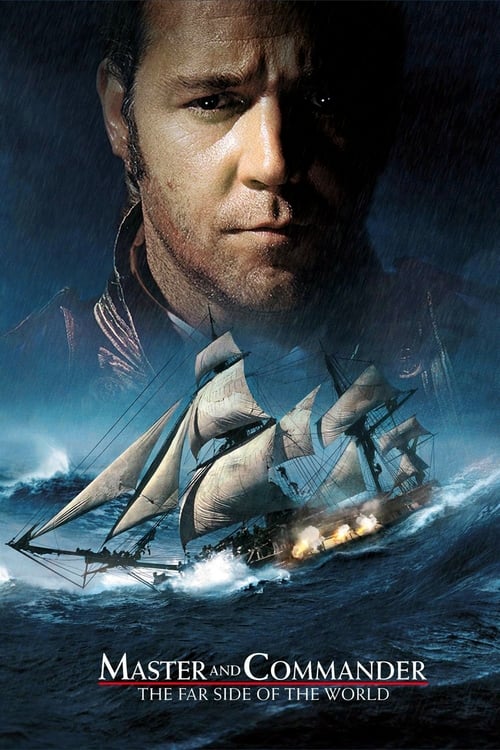
Master and Commander: The Far Side of the World
After an abrupt and violent encounter with a French warship inflicts severe damage upon his ship, a captain of the British Royal Navy begins a chase over two oceans to capture or destroy the enemy, though he must weigh his commitment to duty and ferocious pursuit of glory against the safety of his devoted crew, including the ship's thoughtful surgeon, his best friend.
Working with a enormous budget of $150.0M, the film achieved a respectable showing with $211.6M in global revenue (+41% profit margin).
2 Oscars. 23 wins & 90 nominations


Plot Structure
Story beats plotted across runtime


Narrative Arc
Emotional journey through the story's key moments
Story Circle
Blueprint 15-beat structure
Arcplot Score Breakdown
Weighted: Precision (70%) + Arc (15%) + Theme (15%)
Master and Commander: The Far Side of the World (2003) exhibits strategically placed story structure, characteristic of Peter Weir's storytelling approach. This structural analysis examines how the film's 15-point plot structure maps to proven narrative frameworks across 2 hours and 18 minutes. With an Arcplot score of 6.9, the film balances conventional beats with creative variation.
Characters
Cast & narrative archetypes

Captain Jack Aubrey
Dr. Stephen Maturin
Tom Pullings
William Mowett
Barrett Bonden
Preserved Killick
Midshipman Lord Blakeney
Midshipman Peter Calamy
Hollom
Main Cast & Characters
Captain Jack Aubrey
Played by Russell Crowe
Commander of HMS Surprise, a bold and charismatic naval officer pursuing a French privateer during the Napoleonic Wars.
Dr. Stephen Maturin
Played by Paul Bettany
Ship's surgeon and naturalist, Aubrey's closest friend who balances scientific curiosity with naval duty.
Tom Pullings
Played by James D'Arcy
Second Lieutenant, loyal and competent officer who supports Aubrey's command.
William Mowett
Played by Edward Woodall
Third Lieutenant, young officer with poetic inclinations and steady courage.
Barrett Bonden
Played by Billy Boyd
Master's Mate and coxswain, experienced seaman who loses his arm in battle.
Preserved Killick
Played by David Threlfall
Captain Aubrey's steward, cantankerous but devoted servant.
Midshipman Lord Blakeney
Played by Max Pirkis
Young aristocratic midshipman who loses confidence after being injured in action.
Midshipman Peter Calamy
Played by Max Benitz
Teenage midshipman who idolizes Captain Aubrey and faces a tragic fate.
Hollom
Played by Lee Ingleby
Unlucky officer passed over for promotion, viewed as a Jonah by the crew.
Structural Analysis
The Status Quo at 1 minutes (1% through the runtime) establishes The HMS Surprise sails through dark, fog-shrouded waters at dawn. A young midshipman stands watch, establishing the isolated world of the British warship and the ever-present danger of Napoleonic-era naval warfare.. Notably, this early placement immediately immerses viewers in the story world.
The inciting incident occurs at 14 minutes when The Acheron emerges from the fog and launches a devastating surprise attack on the Surprise. The French ship proves faster, more heavily armed, and disappears into the mist after inflicting significant casualties and damage.. At 10% through the film, this Disruption aligns precisely with traditional story structure. This beat shifts the emotional landscape, launching the protagonist into the central conflict.
The First Threshold at 33 minutes marks the transition into Act II, occurring at 24% of the runtime. This indicates the protagonist's commitment to Aubrey commits to pursuing the Acheron around Cape Horn, against conventional wisdom and Maturin's counsel. He chooses obsessive pursuit over prudent retreat, setting the course for the rest of the voyage., moving from reaction to action.
At 66 minutes, the Midpoint arrives at 48% of the runtime—precisely centered, creating perfect narrative symmetry. Notably, this crucial beat The Acheron ambushes the Surprise again, and the British ship barely escapes. Aubrey realizes the enemy captain is using the same tactics he would use. Midshipman Hollom becomes the focus of the crew's superstitious belief that he is a "Jonah" bringing bad luck, raising the human cost of Aubrey's obsession., fundamentally raising what's at risk. The emotional intensity shifts, dividing the narrative into clear before-and-after phases.
The Collapse moment at 99 minutes (72% through) represents the emotional nadir. Here, Midshipman Hollom, tormented by the crew's belief he is cursed and his own sense of failure, commits suicide by jumping overboard with a cannonball. His death is a direct consequence of the psychological pressure created by Aubrey's relentless pursuit. The "whiff of death" forces Aubrey to confront the cost of his obsession., indicates the protagonist at their lowest point. This beat's placement in the final quarter sets up the climactic reversal.
The Second Threshold at 109 minutes initiates the final act resolution at 79% of the runtime. Maturin spots the Acheron from the island and races back to warn Aubrey. Aubrey conceives the plan to disguise the Surprise as a whaling ship to deceive the enemy. The synthesis: Aubrey uses Maturin's knowledge of natural disguise (the stick insect he collected) to devise the winning strategy., demonstrating the transformation achieved throughout the journey.
Emotional Journey
Master and Commander: The Far Side of the World's emotional architecture traces a deliberate progression across 15 carefully calibrated beats.
Narrative Framework
This structural analysis employs systematic plot point analysis that identifies crucial turning points. By mapping Master and Commander: The Far Side of the World against these established plot points, we can identify how Peter Weir utilizes or subverts traditional narrative conventions. The plot point approach reveals not only adherence to structural principles but also creative choices that distinguish Master and Commander: The Far Side of the World within the adventure genre.
Peter Weir's Structural Approach
Among the 11 Peter Weir films analyzed on Arcplot, the average structural score is 6.2, demonstrating varied approaches to story architecture. Master and Commander: The Far Side of the World represents one of the director's most structurally precise works. For comparative analysis, explore the complete Peter Weir filmography.
Comparative Analysis
Additional adventure films include The Black Stallion, The Bad Guys and Puss in Boots. For more Peter Weir analyses, see Witness, Picnic at Hanging Rock and Gallipoli.
Plot Points by Act
Act I
SetupStatus Quo
The HMS Surprise sails through dark, fog-shrouded waters at dawn. A young midshipman stands watch, establishing the isolated world of the British warship and the ever-present danger of Napoleonic-era naval warfare.
Theme
Captain Aubrey discusses the nature of duty and command with Dr. Maturin, establishing the film's central tension: the demands of duty versus personal cost. "England is under threat of invasion, and though we be on the far side of the world, this ship is our home."
Worldbuilding
Life aboard the Surprise is established: the hierarchy of command, the friendship between Aubrey and Maturin, the crew's routines, and the ship's mission to intercept the French privateer Acheron.
Disruption
The Acheron emerges from the fog and launches a devastating surprise attack on the Surprise. The French ship proves faster, more heavily armed, and disappears into the mist after inflicting significant casualties and damage.
Resistance
Aubrey assesses the damage and debates with his officers and Maturin about pursuing the Acheron. Maturin argues they should return to port for repairs; Aubrey is determined to continue the hunt. The crew repairs the ship while Aubrey studies the enemy.
Act II
ConfrontationFirst Threshold
Aubrey commits to pursuing the Acheron around Cape Horn, against conventional wisdom and Maturin's counsel. He chooses obsessive pursuit over prudent retreat, setting the course for the rest of the voyage.
Mirror World
Dr. Stephen Maturin's role as the thematic counterweight crystallizes as he and Aubrey play music together. Their friendship represents the tension between scientific curiosity/humanity (Maturin) and martial duty/command (Aubrey). Maturin's natural philosophy contrasts with Aubrey's single-minded pursuit.
Premise
The Surprise pursues the Acheron through increasingly dangerous waters. Naval life unfolds: Aubrey mentors young officers, the ship rounds Cape Horn in brutal storms, Maturin tends to the wounded, and the crew faces the hardships of extended pursuit. The cat-and-mouse game intensifies.
Midpoint
The Acheron ambushes the Surprise again, and the British ship barely escapes. Aubrey realizes the enemy captain is using the same tactics he would use. Midshipman Hollom becomes the focus of the crew's superstitious belief that he is a "Jonah" bringing bad luck, raising the human cost of Aubrey's obsession.
Opposition
The pursuit becomes increasingly desperate. The crew's morale deteriorates; Hollom is ostracized. Maturin is accidentally shot by a marine and requires surgery. Aubrey faces mounting pressure: his friend is dying, his crew is suffering, and the enemy remains elusive. The Galápagos Islands are sighted.
Collapse
Midshipman Hollom, tormented by the crew's belief he is cursed and his own sense of failure, commits suicide by jumping overboard with a cannonball. His death is a direct consequence of the psychological pressure created by Aubrey's relentless pursuit. The "whiff of death" forces Aubrey to confront the cost of his obsession.
Crisis
Aubrey allows the ship to anchor at the Galápagos so Maturin can recover and explore. This represents Aubrey's first concession to humanity over duty. Maturin discovers the islands' unique wildlife, finding meaning and wonder amid the darkness.
Act III
ResolutionSecond Threshold
Maturin spots the Acheron from the island and races back to warn Aubrey. Aubrey conceives the plan to disguise the Surprise as a whaling ship to deceive the enemy. The synthesis: Aubrey uses Maturin's knowledge of natural disguise (the stick insect he collected) to devise the winning strategy.
Synthesis
The Surprise is disguised as a whaler. The Acheron takes the bait and approaches. In a brilliantly executed battle, Aubrey's crew boards the French ship. The combat is fierce and costly, but the British prevail. The Acheron is captured, fulfilling the mission.
Transformation
Aubrey and Maturin play music together once more aboard the victorious ship. But Aubrey learns the French captain faked his death—the hunt must continue. Rather than a complete resolution, the film ends with Aubrey setting sail again, but transformed: he now understands the balance between duty and humanity, friendship and command.