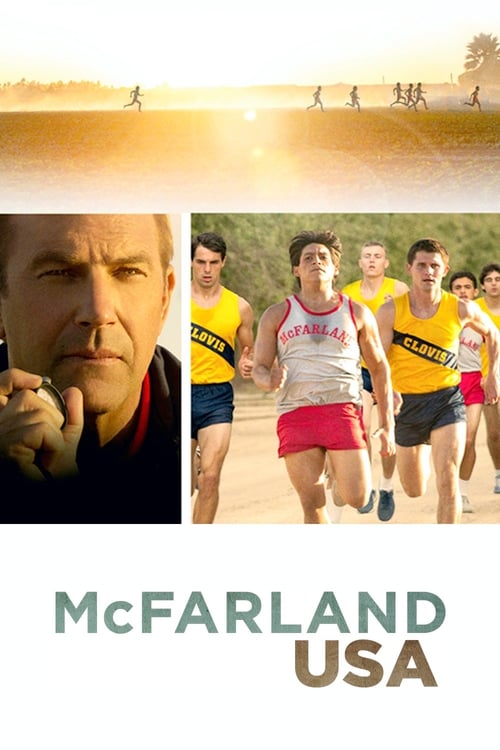
McFarland, USA
A track coach in a small California town transforms a team of athletes into championship contenders.
The film earned $45.7M at the global box office.
4 wins & 3 nominations


Plot Structure
Story beats plotted across runtime


Narrative Arc
Emotional journey through the story's key moments
Story Circle
Blueprint 15-beat structure
Arcplot Score Breakdown
Weighted: Precision (70%) + Arc (15%) + Theme (15%)
McFarland, USA (2015) reveals meticulously timed plot construction, characteristic of Niki Caro's storytelling approach. This structural analysis examines how the film's 15-point plot structure maps to proven narrative frameworks across 2 hours and 8 minutes. With an Arcplot score of 6.9, the film balances conventional beats with creative variation.
Characters
Cast & narrative archetypes

Jim White
Thomas Valles
Cheryl White
David Diaz
Damacio Diaz
Johnny Sameniego
Jose Cardenas
Victor Puentes
Julie White
Main Cast & Characters
Jim White
Played by Kevin Costner
A high school teacher and football coach who starts a cross country team in a predominantly Latino farming community, transforming both the team and himself
Thomas Valles
Played by Carlos Pratts
A talented runner and team captain who works in the fields with his family and struggles to balance his responsibilities with his athletic potential
Cheryl White
Played by Maria Bello
Jim's supportive wife who helps him see the value in the McFarland community and builds connections with local families
David Diaz
Played by Rafael Martinez
One of the original seven runners who brings dedication and quiet determination to the team despite family hardships
Damacio Diaz
Played by Michael Aguero
David's younger brother and fellow team member who shows resilience and commitment to the team's success
Johnny Sameniego
Played by Hank Rogerson
A dedicated runner who overcomes self-doubt and family pressures to become a key member of the championship team
Jose Cardenas
Played by Johnny Ortiz
A hardworking team member who balances grueling field work with training and racing
Victor Puentes
Played by Sergio Avelar
A small but determined runner who proves that heart matters more than size in distance running
Julie White
Played by Morgan Saylor
Jim and Cheryl's teenage daughter who adjusts to life in McFarland and develops respect for the community
Structural Analysis
The Status Quo at 1 minutes (1% through the runtime) establishes Jim White loses his temper and throws a shoe at a football player in Boise, getting fired. Establishes his volatile nature and downward career spiral.. Significantly, this early placement immediately immerses viewers in the story world.
The inciting incident occurs at 15 minutes when Jim notices his P.E. Students, including Thomas Valles, running with incredible endurance during practice. Realizes these field workers are natural distance runners.. At 12% through the film, this Disruption aligns precisely with traditional story structure. This beat shifts the emotional landscape, launching the protagonist into the central conflict.
The First Threshold at 32 minutes marks the transition into Act II, occurring at 25% of the runtime. This demonstrates the protagonist's commitment to Jim commits to the team, convincing parents to let their sons run. He chooses to invest in McFarland rather than look for another job. The team officially forms., moving from reaction to action.
At 64 minutes, the Midpoint arrives at 50% of the runtime—precisely centered, creating perfect narrative symmetry. Structural examination shows that this crucial beat McFarland wins their first major invitational, shocking the wealthy schools. The team celebrates - they're legitimate contenders. Stakes raised: State Championship is now possible., fundamentally raising what's at risk. The emotional intensity shifts, dividing the narrative into clear before-and-after phases.
The Collapse moment at 95 minutes (74% through) represents the emotional nadir. Here, Jim accepts Palo Alto job and tells the team he's leaving after State. The boys feel betrayed - he's just like everyone else who uses them and leaves. Thomas quits the team. Jim's dream costs him everything that matters., demonstrates the protagonist at their lowest point. This beat's placement in the final quarter sets up the climactic reversal.
The Second Threshold at 101 minutes initiates the final act resolution at 79% of the runtime. Jim turns down Palo Alto, choosing McFarland. He tells the team and community, "You're my family. This is where I belong." Synthesizes his old coaching skills with new understanding of what truly matters., demonstrating the transformation achieved throughout the journey.
Emotional Journey
McFarland, USA's emotional architecture traces a deliberate progression across 15 carefully calibrated beats.
Narrative Framework
This structural analysis employs a 15-point narrative structure framework that maps key story moments. By mapping McFarland, USA against these established plot points, we can identify how Niki Caro utilizes or subverts traditional narrative conventions. The plot point approach reveals not only adherence to structural principles but also creative choices that distinguish McFarland, USA within the drama genre.
Niki Caro's Structural Approach
Among the 5 Niki Caro films analyzed on Arcplot, the average structural score is 6.9, demonstrating varied approaches to story architecture. McFarland, USA represents one of the director's most structurally precise works. For comparative analysis, explore the complete Niki Caro filmography.
Comparative Analysis
Additional drama films include After Thomas, South Pacific and Dirty Dancing: Havana Nights. For more Niki Caro analyses, see Whale Rider, The Zookeeper's Wife and Mulan.
Plot Points by Act
Act I
SetupStatus Quo
Jim White loses his temper and throws a shoe at a football player in Boise, getting fired. Establishes his volatile nature and downward career spiral.
Theme
Principal Camillo tells Jim, "This isn't Palo Alto. These kids have a different kind of fight in them." Theme: recognizing hidden strength and potential in unexpected places.
Worldbuilding
White family arrives in McFarland, culture shock ensues. Jim starts teaching, witnesses students working in fields before dawn. Julie struggles to adapt, kids face discrimination at the store. World of agricultural poverty established.
Disruption
Jim notices his P.E. students, including Thomas Valles, running with incredible endurance during practice. Realizes these field workers are natural distance runners.
Resistance
Jim debates starting a cross country team. Parents skeptical - kids need to work. He recruits Thomas, Johnny, David, Damacio and others. First chaotic practices. Julie gets job offer in Bakersfield, tempting escape.
Act II
ConfrontationFirst Threshold
Jim commits to the team, convincing parents to let their sons run. He chooses to invest in McFarland rather than look for another job. The team officially forms.
Mirror World
Thomas and the runners invite Jim into the fields to work alongside them at 4 AM. Jim begins to understand their world - the physical and cultural education that will transform him.
Premise
Team trains together, building brotherhood. First meets - they lose badly but improve. Jim learns Spanish, eats with families, bonds with community. The promise: underdog team rising through dedication.
Midpoint
McFarland wins their first major invitational, shocking the wealthy schools. The team celebrates - they're legitimate contenders. Stakes raised: State Championship is now possible.
Opposition
Success brings complications. Jim gets job offer from Palo Alto - his dream escape. Thomas pulled between running and family obligations, gang pressure. Damacio's father demands he quit for field work. Jim's ambition vs. loyalty conflict builds.
Collapse
Jim accepts Palo Alto job and tells the team he's leaving after State. The boys feel betrayed - he's just like everyone else who uses them and leaves. Thomas quits the team. Jim's dream costs him everything that matters.
Crisis
Jim realizes his mistake as Julie and daughters confront him about what home really means. The community's disappointment is palpable. Jim sits with the collapse of both opportunities - he may lose both.
Act III
ResolutionSecond Threshold
Jim turns down Palo Alto, choosing McFarland. He tells the team and community, "You're my family. This is where I belong." Synthesizes his old coaching skills with new understanding of what truly matters.
Synthesis
State Championship race. Team unified and focused. The boys run not just for themselves but for their families and town. Down to the wire against wealthier schools. McFarland wins State, validating everything.
Transformation
Epilogue text reveals Jim White stayed at McFarland for decades, building dynasty. Contrasts with opening - he's found his true home and purpose. The angry outsider became the heart of the community.