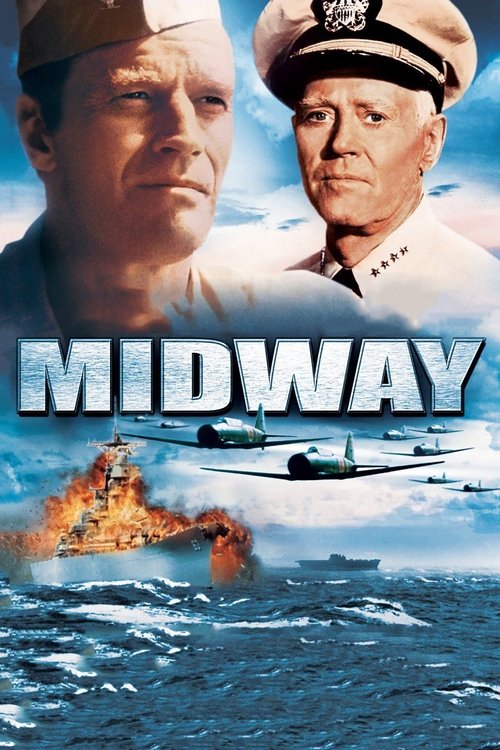
Midway
This war drama depicts the U.S. and Japanese forces in the naval Battle of Midway, which became a turning point for Americans during World War II.
Despite its tight budget of $4.0M, Midway became a runaway success, earning $100.0M worldwide—a remarkable 2400% return. The film's fresh perspective resonated with audiences, showing that strong storytelling can transcend budget limitations.


Plot Structure
Story beats plotted across runtime


Narrative Arc
Emotional journey through the story's key moments
Story Circle
Blueprint 15-beat structure
Arcplot Score Breakdown
Weighted: Precision (70%) + Arc (15%) + Theme (15%)
Midway (1976) showcases deliberately positioned story structure, characteristic of Jack Smight's storytelling approach. This structural analysis examines how the film's 15-point plot structure maps to proven narrative frameworks across 2 hours and 12 minutes. With an Arcplot score of 7.4, the film balances conventional beats with creative variation.
Characters
Cast & narrative archetypes

Captain Matt Garth
Admiral Chester W. Nimitz
Commander Rochefort
Admiral Raymond Spruance
Admiral Halsey
Admiral Isoroku Yamamoto
Admiral Nagumo
Lieutenant Tom Garth
Captain Vinton Maddox
Main Cast & Characters
Captain Matt Garth
Played by Charlton Heston
Naval aviator and son of Admiral Garth, torn between duty and concern for his father's decisions during the Pacific campaign.
Admiral Chester W. Nimitz
Played by Henry Fonda
Commander in Chief of the Pacific Fleet, calm and strategic leader orchestrating the American response to Japanese aggression.
Commander Rochefort
Played by Hal Holbrook
Intelligence officer who breaks Japanese naval codes, providing crucial intelligence for the Battle of Midway.
Admiral Raymond Spruance
Played by Glenn Ford
Tactical commander who makes critical decisions during the battle with calculated precision and courage.
Admiral Halsey
Played by Robert Mitchum
Aggressive carrier commander sidelined by illness before the battle, representing the bold American fighting spirit.
Admiral Isoroku Yamamoto
Played by Toshiro Mifune
Commander of the Japanese Combined Fleet, brilliant strategist who orchestrated Pearl Harbor but fears prolonged war.
Admiral Nagumo
Played by James Shigeta
Japanese carrier commander who struggles with indecision and pressure during the critical moments of battle.
Lieutenant Tom Garth
Played by Edward Albert
Matt Garth's son, young naval officer navigating his father's protective concerns and his own desire to serve.
Captain Vinton Maddox
Played by Cliff Robertson
Intelligence staff officer who supports Rochefort's code-breaking efforts against skeptical superiors.
Structural Analysis
The Status Quo at 2 minutes (2% through the runtime) establishes December 7, 1941: American naval officers attend a formal reception in Hawaii, unaware of the imminent attack. Captain Matt Garth enjoys peacetime naval life with his son Tom, establishing the pre-war world of military protocol and family concerns.. Notably, this early placement immediately immerses viewers in the story world.
The inciting incident occurs at 16 minutes when Intelligence officers intercept and partially decode Japanese communications revealing Admiral Yamamoto is planning a major offensive operation. The Americans realize a massive attack is coming but don't know where or when, creating urgent pressure to break the code.. At 12% through the film, this Disruption aligns precisely with traditional story structure. This beat shifts the emotional landscape, launching the protagonist into the central conflict.
The First Threshold at 33 minutes marks the transition into Act II, occurring at 25% of the runtime. This illustrates the protagonist's commitment to Admiral Nimitz makes the critical decision to commit all available carriers to ambush the Japanese fleet at Midway based on the decoded intelligence. This irreversible choice launches the American forces into battle, gambling everything on the code-breakers' analysis., moving from reaction to action.
At 67 minutes, the Midpoint arrives at 50% of the runtime—precisely centered, creating perfect narrative symmetry. Structural examination shows that this crucial beat June 4, 1942: The Japanese launch their massive air strike on Midway Island while American torpedo squadrons attack the Japanese carriers. The initial American attacks are devastated with nearly complete losses—Torpedo Squadron 8 is wiped out. This false defeat raises stakes enormously., fundamentally raising what's at risk. The emotional intensity shifts, dividing the narrative into clear before-and-after phases.
The Collapse moment at 100 minutes (76% through) represents the emotional nadir. Here, The USS Yorktown takes multiple torpedo hits and is abandoned, appearing to be sinking. Captain Garth and many personnel face the "whiff of death" as the carrier lists severely. Tom Garth's squadron suffers casualties. The cost of victory becomes devastatingly clear with massive American losses., demonstrates the protagonist at their lowest point. This beat's placement in the final quarter sets up the climactic reversal.
The Second Threshold at 107 minutes initiates the final act resolution at 81% of the runtime. Admiral Nimitz receives confirmation that all four Japanese carriers have been destroyed, fundamentally shifting the Pacific balance of power. The Americans realize they've achieved a decisive strategic victory despite heavy losses. The synthesis of intelligence, courage, and sacrifice has succeeded., demonstrating the transformation achieved throughout the journey.
Emotional Journey
Midway's emotional architecture traces a deliberate progression across 15 carefully calibrated beats.
Narrative Framework
This structural analysis employs proven narrative structure principles that track dramatic progression. By mapping Midway against these established plot points, we can identify how Jack Smight utilizes or subverts traditional narrative conventions. The plot point approach reveals not only adherence to structural principles but also creative choices that distinguish Midway within the action genre.
Jack Smight's Structural Approach
Among the 4 Jack Smight films analyzed on Arcplot, the average structural score is 7.4, reflecting strong command of classical structure. Midway represents one of the director's most structurally precise works. For comparative analysis, explore the complete Jack Smight filmography.
Comparative Analysis
Additional action films include The Bad Guys, Puss in Boots and Venom: The Last Dance. For more Jack Smight analyses, see Damnation Alley, Airport 1975 and Harper.
Plot Points by Act
Act I
SetupStatus Quo
December 7, 1941: American naval officers attend a formal reception in Hawaii, unaware of the imminent attack. Captain Matt Garth enjoys peacetime naval life with his son Tom, establishing the pre-war world of military protocol and family concerns.
Theme
Admiral Nimitz states: "We will fight them with what we have." The film's theme of resourcefulness, determination, and making crucial decisions with limited information under extreme pressure is established early.
Worldbuilding
Introduction to key military personnel, intelligence operations, and Japanese strategy. The film establishes the Pacific theater post-Pearl Harbor, American disadvantage, code-breaking efforts, and personal subplots including Captain Garth's concern over his son's relationship with a Japanese-American woman.
Disruption
Intelligence officers intercept and partially decode Japanese communications revealing Admiral Yamamoto is planning a major offensive operation. The Americans realize a massive attack is coming but don't know where or when, creating urgent pressure to break the code.
Resistance
Code-breakers work frantically to determine "AF" is Midway. Debate among commanders about committing their limited carrier force. Admiral Nimitz must decide whether to trust the intelligence. Garth deals with personal conflict over Tom's relationship while preparing for potential combat.
Act II
ConfrontationFirst Threshold
Admiral Nimitz makes the critical decision to commit all available carriers to ambush the Japanese fleet at Midway based on the decoded intelligence. This irreversible choice launches the American forces into battle, gambling everything on the code-breakers' analysis.
Mirror World
The relationship between Tom Garth and Haruko, a Japanese-American woman, represents the film's exploration of loyalty, prejudice, and personal values during wartime. Their subplot carries the thematic question of what we fight for beyond military victory.
Premise
American and Japanese forces move into position. The film delivers on its premise of naval warfare spectacle: reconnaissance flights, tactical maneuvering, pre-battle preparations, and the mounting tension as both fleets search for each other, unaware the Americans know the Japanese plan.
Midpoint
June 4, 1942: The Japanese launch their massive air strike on Midway Island while American torpedo squadrons attack the Japanese carriers. The initial American attacks are devastated with nearly complete losses—Torpedo Squadron 8 is wiped out. This false defeat raises stakes enormously.
Opposition
The battle intensifies with devastating losses on both sides. American dive bombers finally locate the Japanese carriers. The turning point comes as American SBD Dauntlesses catch Japanese carriers with armed planes and fuel on deck, destroying three carriers in minutes. Japanese forces regroup and counterattack, sinking the Yorktown.
Collapse
The USS Yorktown takes multiple torpedo hits and is abandoned, appearing to be sinking. Captain Garth and many personnel face the "whiff of death" as the carrier lists severely. Tom Garth's squadron suffers casualties. The cost of victory becomes devastatingly clear with massive American losses.
Crisis
Survivors process the losses. The Americans assess whether they've done enough or should pursue the retreating Japanese. Admiral Yamamoto contemplates the defeat. Personal costs are counted—friends lost, Tom's future uncertain, the Yorktown possibly salvageable but vulnerable.
Act III
ResolutionSecond Threshold
Admiral Nimitz receives confirmation that all four Japanese carriers have been destroyed, fundamentally shifting the Pacific balance of power. The Americans realize they've achieved a decisive strategic victory despite heavy losses. The synthesis of intelligence, courage, and sacrifice has succeeded.
Synthesis
The aftermath of battle: final reports, casualty counts, strategic assessment. Admiral Yamamoto orders retreat. The film resolves personal storylines—Tom Garth survives, his relationship with Haruko endures despite prejudice. Nimitz and his staff recognize this as the turning point of the Pacific War.
Transformation
Final image shows the American flag and carriers at sea, victorious but somber. The officers who began the film in peacetime naivety are now tested combat leaders. The balance of power has shifted—America is no longer on the defensive but poised to take the offensive in the Pacific.