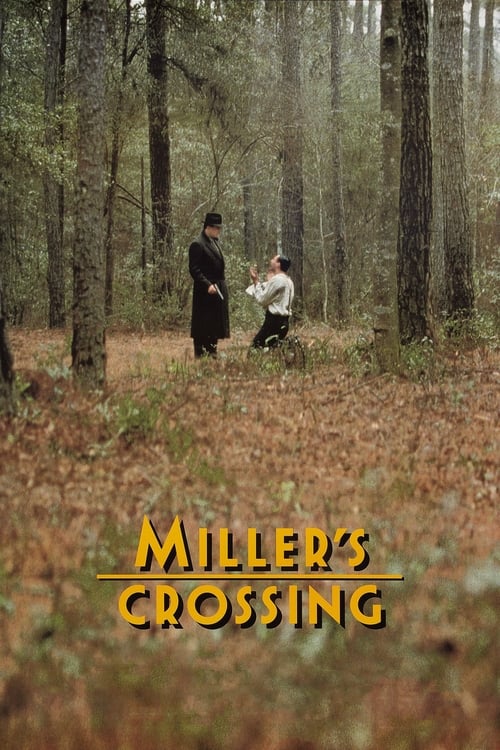
Miller's Crossing
Set in 1929, a political boss and his advisor have a parting of the ways when they both fall for the same woman.
The film financial setback against its limited budget of $14.0M, earning $5.1M globally (-64% loss). While initial box office returns were modest, the film has gained appreciation for its fresh perspective within the drama genre.
4 wins & 16 nominations


Plot Structure
Story beats plotted across runtime


Narrative Arc
Emotional journey through the story's key moments
Story Circle
Blueprint 15-beat structure
Arcplot Score Breakdown
Weighted: Precision (70%) + Arc (15%) + Theme (15%)
Miller's Crossing (1990) demonstrates meticulously timed story structure, characteristic of Joel Coen's storytelling approach. This structural analysis examines how the film's 15-point plot structure maps to proven narrative frameworks across 1 hour and 55 minutes. With an Arcplot score of 6.9, the film balances conventional beats with creative variation.
Characters
Cast & narrative archetypes

Tom Reagan
Leo O'Bannon
Verna Bernbaum
Bernie Bernbaum
Johnny Caspar
Eddie Dane
The Dane's Boy (Mink)
Main Cast & Characters
Tom Reagan
Played by Gabriel Byrne
A calculating advisor to Irish mob boss Leo O'Bannon who navigates loyalty, betrayal, and survival in a Prohibition-era gang war.
Leo O'Bannon
Played by Albert Finney
An Irish mob boss whose heart overrules his head when it comes to his mistress Verna, leading to conflict with Italian rivals.
Verna Bernbaum
Played by Marcia Gay Harden
A manipulative femme fatale playing multiple sides, romantically involved with both Leo and Tom while protecting her brother Bernie.
Bernie Bernbaum
Played by John Turturro
A sleazy bookie and con artist whose schemes spark a gang war, constantly relying on his sister Verna to save him.
Johnny Caspar
Played by Jon Polito
An Italian gangster seeking Leo's permission to kill Bernie for fixing his boxing matches, ultimately sparking all-out war.
Eddie Dane
Played by J.E. Freeman
Johnny Caspar's cold-blooded enforcer and lover of Mink, suspicious of Tom's true loyalties throughout the gang conflict.
The Dane's Boy (Mink)
Played by Steve Buscemi
Bernie's lover and Eddie Dane's secret paramour, caught in a dangerous love triangle that becomes leverage in the gang war.
Structural Analysis
The Status Quo at 1 minutes (1% through the runtime) establishes Tom Reagan sits in Leo's office as Johnny Caspar complains about Bernie Bernbaum. Tom is Leo's trusted advisor, living off his wits in Prohibition-era gang politics, maintaining balance through clever counsel.. Structural examination shows that this early placement immediately immerses viewers in the story world.
The inciting incident occurs at 13 minutes when Johnny Caspar openly defies Leo, declaring he'll kill Bernie with or without permission. This breaks the political order Tom has been maintaining. The disruption isn't Tom's choice - it's Caspar's declaration of war that shatters the status quo.. At 12% through the film, this Disruption aligns precisely with traditional story structure. This beat shifts the emotional landscape, launching the protagonist into the central conflict.
The First Threshold at 27 minutes marks the transition into Act II, occurring at 24% of the runtime. This indicates the protagonist's commitment to Tom makes an active choice to approach Johnny Caspar and offer his services as an informant against Leo. This is his irreversible decision to cross into Act 2 - switching sides in the gang war, entering a world of deeper deception and danger., moving from reaction to action.
At 56 minutes, the Midpoint arrives at 49% of the runtime—precisely centered, creating perfect narrative symmetry. Structural examination shows that this crucial beat Caspar orders Tom to kill Bernie at Miller's Crossing to prove his loyalty. Tom takes Bernie to the woods but cannot kill him - a false defeat. He lets Bernie go and fakes the murder. The stakes raise dramatically: Tom is now committed to an elaborate deception that could get him killed if discovered., fundamentally raising what's at risk. The emotional intensity shifts, dividing the narrative into clear before-and-after phases.
The Collapse moment at 84 minutes (73% through) represents the emotional nadir. Here, Bernie reveals he killed Caspar's son (Caspar's adopted son was Eddie Dane's lover who Bernie murdered). Tom realizes Bernie has been playing everyone and is more dangerous than anyone suspected. Tom's "whiff of death": the moral death of his illusions - he must kill Bernie or be destroyed., reveals the protagonist at their lowest point. This beat's placement in the final quarter sets up the climactic reversal.
The Second Threshold at 92 minutes initiates the final act resolution at 80% of the runtime. Tom synthesizes everything: he stages an elaborate plan to turn Caspar and Eddie Dane against each other while positioning himself to execute Bernie. He uses the information about Eddie and Caspar's son to trigger the final confrontation. Tom finds clarity in accepting his role., demonstrating the transformation achieved throughout the journey.
Emotional Journey
Miller's Crossing's emotional architecture traces a deliberate progression across 15 carefully calibrated beats.
Narrative Framework
This structural analysis employs proven narrative structure principles that track dramatic progression. By mapping Miller's Crossing against these established plot points, we can identify how Joel Coen utilizes or subverts traditional narrative conventions. The plot point approach reveals not only adherence to structural principles but also creative choices that distinguish Miller's Crossing within the drama genre.
Joel Coen's Structural Approach
Among the 4 Joel Coen films analyzed on Arcplot, the average structural score is 7.1, reflecting strong command of classical structure. Miller's Crossing takes a more unconventional approach compared to the director's typical style. For comparative analysis, explore the complete Joel Coen filmography.
Comparative Analysis
Additional drama films include After Thomas, South Pacific and Dirty Dancing: Havana Nights. For more Joel Coen analyses, see Raising Arizona, The Tragedy of Macbeth and Intolerable Cruelty.
Plot Points by Act
Act I
SetupStatus Quo
Tom Reagan sits in Leo's office as Johnny Caspar complains about Bernie Bernbaum. Tom is Leo's trusted advisor, living off his wits in Prohibition-era gang politics, maintaining balance through clever counsel.
Theme
Leo tells Tom: "I'm talkin' about friendship. I'm talkin' about character. I'm talkin' about - hell, Leo, I ain't embarrassed to use the word - I'm talkin' about ethics." This establishes the film's central question: what are the ethics of loyalty when everyone is corrupt?
Worldbuilding
Establishment of the power structure: Leo runs the city through political connections. Tom is his brain. Johnny Caspar wants permission to kill Bernie Bernbaum for selling fight information. Leo refuses because he's sleeping with Bernie's sister Verna. Tom is also sleeping with Verna, creating a triangle of betrayal.
Disruption
Johnny Caspar openly defies Leo, declaring he'll kill Bernie with or without permission. This breaks the political order Tom has been maintaining. The disruption isn't Tom's choice - it's Caspar's declaration of war that shatters the status quo.
Resistance
Tom tries to prevent the war through negotiation and counsel. He debates with Leo about giving up Bernie and Verna. Leo discovers Tom's affair with Verna, beats him, and throws him out. Tom loses everything - his position, his home, his income. He resists choosing sides but circumstances force him toward a decision.
Act II
ConfrontationFirst Threshold
Tom makes an active choice to approach Johnny Caspar and offer his services as an informant against Leo. This is his irreversible decision to cross into Act 2 - switching sides in the gang war, entering a world of deeper deception and danger.
Mirror World
Bernie Bernbaum becomes Tom's thematic mirror - a sniveling, dishonest character who begs for his life and makes promises he won't keep. Bernie represents what Tom could become: a man without ethics playing all sides with no loyalty to anyone.
Premise
Tom plays both sides: working for Caspar while secretly trying to protect Leo and manipulate the war's outcome. The "fun and games" of watching Tom navigate elaborate lies, double-crosses, and near-misses. He must prove himself to Caspar while maintaining hidden loyalties.
Midpoint
Caspar orders Tom to kill Bernie at Miller's Crossing to prove his loyalty. Tom takes Bernie to the woods but cannot kill him - a false defeat. He lets Bernie go and fakes the murder. The stakes raise dramatically: Tom is now committed to an elaborate deception that could get him killed if discovered.
Opposition
Tom's lies compound. Bernie is alive and blackmailing him. Eddie Dane suspects Tom's deception. Caspar grows paranoid. Tom is caught between all sides, getting beaten and threatened repeatedly. The pressure intensifies as his schemes unravel and everyone closes in.
Collapse
Bernie reveals he killed Caspar's son (Caspar's adopted son was Eddie Dane's lover who Bernie murdered). Tom realizes Bernie has been playing everyone and is more dangerous than anyone suspected. Tom's "whiff of death": the moral death of his illusions - he must kill Bernie or be destroyed.
Crisis
Tom processes that he must commit actual murder - not just manipulation and lies. He sits with the dark reality that all his clever schemes have led to this: he must kill Bernie himself. The playacting is over.
Act III
ResolutionSecond Threshold
Tom synthesizes everything: he stages an elaborate plan to turn Caspar and Eddie Dane against each other while positioning himself to execute Bernie. He uses the information about Eddie and Caspar's son to trigger the final confrontation. Tom finds clarity in accepting his role.
Synthesis
The finale executes: Tom manipulates Eddie and Caspar into killing each other. He takes Bernie back to Miller's Crossing. Bernie begs again, asking "What's in your heart?" Tom shoots him. Leo regains power. Tom refuses Leo's offer to return, walking away from both friendship and the criminal world.
Transformation
Tom walks away from Leo and Verna at the cemetery, alone. Unlike the opening where he was Leo's advisor embedded in the system, he now walks away from all of it - transformed by having finally acted on principle (executing Bernie for murder) but at the cost of friendship, love, and position. He has ethics, but they've isolated him.