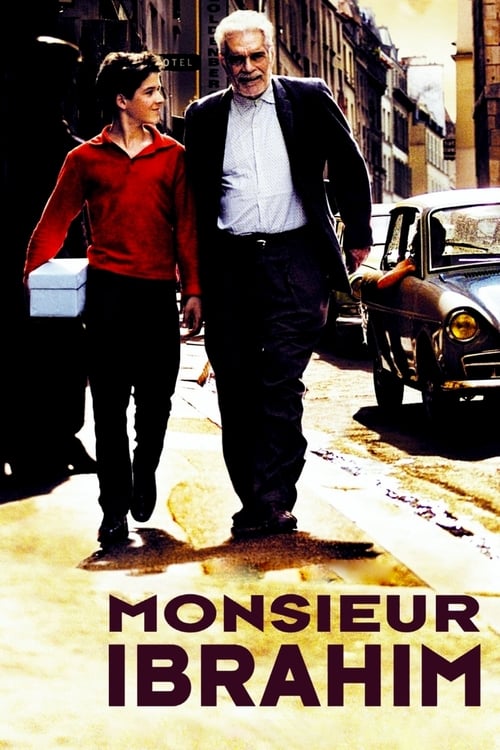
Monsieur Ibrahim
Paris, 1960s. Momo, a resolute and independent Jewish teenager who lives with his father, a sullen and depressed man, in a working-class neighborhood, develops a close friendship with Monsieur Ibrahim, an elderly Muslim who owns a small grocery store.
The film earned $11.6M at the global box office.




Plot Structure
Story beats plotted across runtime


Narrative Arc
Emotional journey through the story's key moments
Story Circle
Blueprint 15-beat structure
Arcplot Score Breakdown
Weighted: Precision (70%) + Arc (15%) + Theme (15%)
Monsieur Ibrahim (2003) demonstrates precise dramatic framework, characteristic of François Dupeyron's storytelling approach. This structural analysis examines how the film's 15-point plot structure maps to proven narrative frameworks across 1 hour and 31 minutes. With an Arcplot score of 7.6, the film showcases strong structural fundamentals.
Structural Analysis
The Status Quo at 1 minutes (1% through the runtime) establishes Momo, a lonely Jewish teenager, lives in poverty with his emotionally distant father in 1960s Paris. He steals money from his father and shoplifts from the corner grocery store run by Monsieur Ibrahim.. The analysis reveals that this early placement immediately immerses viewers in the story world.
The inciting incident occurs at 11 minutes when Momo's father abandons him, leaving only a note. Momo discovers he has been deserted and must face life alone at age thirteen.. At 12% through the film, this Disruption aligns precisely with traditional story structure. This beat shifts the emotional landscape, launching the protagonist into the central conflict.
The First Threshold at 23 minutes marks the transition into Act II, occurring at 25% of the runtime. This demonstrates the protagonist's commitment to Momo chooses to fully embrace Ibrahim as his adoptive father figure. Ibrahim formally takes Momo in, and Momo begins working in the shop, marking his transition into a new life., moving from reaction to action.
At 46 minutes, the Midpoint arrives at 50% of the runtime—precisely centered, creating perfect narrative symmetry. Structural examination shows that this crucial beat Ibrahim reveals he is selling his shop and wants to take Momo on a journey to his birthplace in Turkey. This represents a false victory - their bond is at its strongest, but Ibrahim's health issues are subtly foreshadowed. The stakes raise as they prepare for this significant journey., fundamentally raising what's at risk. The emotional intensity shifts, dividing the narrative into clear before-and-after phases.
The Collapse moment at 68 minutes (75% through) represents the emotional nadir. Here, Ibrahim dies in a car accident during their journey. Momo loses his mentor, adoptive father, and the only person who truly loved him. The literal "whiff of death" - Ibrahim's passing represents the end of Momo's innocence and guided transformation., reveals the protagonist at their lowest point. This beat's placement in the final quarter sets up the climactic reversal.
The Second Threshold at 73 minutes initiates the final act resolution at 80% of the runtime. Momo inherits Ibrahim's Koran and his wisdom. He realizes that Ibrahim's teachings have become part of him. He synthesizes his Jewish heritage with Ibrahim's Sufi wisdom, understanding that love and wisdom transcend religious boundaries., demonstrating the transformation achieved throughout the journey.
Emotional Journey
Monsieur Ibrahim's emotional architecture traces a deliberate progression across 15 carefully calibrated beats.
Narrative Framework
This structural analysis employs proven narrative structure principles that track dramatic progression. By mapping Monsieur Ibrahim against these established plot points, we can identify how François Dupeyron utilizes or subverts traditional narrative conventions. The plot point approach reveals not only adherence to structural principles but also creative choices that distinguish Monsieur Ibrahim within the drama genre.
Comparative Analysis
Additional drama films include Eye for an Eye, South Pacific and Kiss of the Spider Woman.
Plot Points by Act
Act I
SetupStatus Quo
Momo, a lonely Jewish teenager, lives in poverty with his emotionally distant father in 1960s Paris. He steals money from his father and shoplifts from the corner grocery store run by Monsieur Ibrahim.
Theme
Ibrahim tells Momo: "I know what's in my Koran." This hints at the film's theme about finding wisdom, acceptance, and spiritual fulfillment beyond religious and cultural boundaries.
Worldbuilding
Establishment of Momo's difficult life: his father's coldness, the comparison to his absent brother Popol, Momo's visits to prostitutes on Rue Bleu, and his growing fascination with the kind Muslim shopkeeper Ibrahim who seems to see through his petty thefts.
Disruption
Momo's father abandons him, leaving only a note. Momo discovers he has been deserted and must face life alone at age thirteen.
Resistance
Ibrahim becomes Momo's de facto guardian and mentor. Momo debates what to do with his life, continues school reluctantly, and begins spending more time with Ibrahim, who shares wisdom about life, happiness, and acceptance.
Act II
ConfrontationFirst Threshold
Momo chooses to fully embrace Ibrahim as his adoptive father figure. Ibrahim formally takes Momo in, and Momo begins working in the shop, marking his transition into a new life.
Mirror World
Momo develops a relationship with a young prostitute who represents tenderness and human connection. This subplot explores the theme of love transcending social boundaries and finding beauty in unexpected places.
Premise
The joy of the surrogate father-son relationship. Ibrahim teaches Momo about Sufism, smiling, appreciating life's small pleasures, and seeing beyond appearances. Momo transforms from an angry, cynical boy into someone capable of joy and love.
Midpoint
Ibrahim reveals he is selling his shop and wants to take Momo on a journey to his birthplace in Turkey. This represents a false victory - their bond is at its strongest, but Ibrahim's health issues are subtly foreshadowed. The stakes raise as they prepare for this significant journey.
Opposition
The journey to Turkey in Ibrahim's prized car. While beautiful and enlightening, subtle signs of Ibrahim's failing health emerge. Momo must confront his own identity, his abandonment issues, and prepare for eventual loss.
Collapse
Ibrahim dies in a car accident during their journey. Momo loses his mentor, adoptive father, and the only person who truly loved him. The literal "whiff of death" - Ibrahim's passing represents the end of Momo's innocence and guided transformation.
Crisis
Momo grieves Ibrahim's death. He must process the loss of his beloved mentor and contemplate his future alone. The dark night of the soul as he faces life without Ibrahim's wisdom and guidance.
Act III
ResolutionSecond Threshold
Momo inherits Ibrahim's Koran and his wisdom. He realizes that Ibrahim's teachings have become part of him. He synthesizes his Jewish heritage with Ibrahim's Sufi wisdom, understanding that love and wisdom transcend religious boundaries.
Synthesis
Momo returns to Paris and takes over Ibrahim's shop. He becomes the new "Monsieur Ibrahim" for the neighborhood, passing on the wisdom and kindness he learned. He embodies Ibrahim's teachings and finds peace.
Transformation
Momo sits in Ibrahim's place in the shop, smiling at customers with the same knowing kindness Ibrahim once showed him. The abandoned, angry boy has become a wise, compassionate man who will now guide others. He has inherited not just the shop, but Ibrahim's spirit.