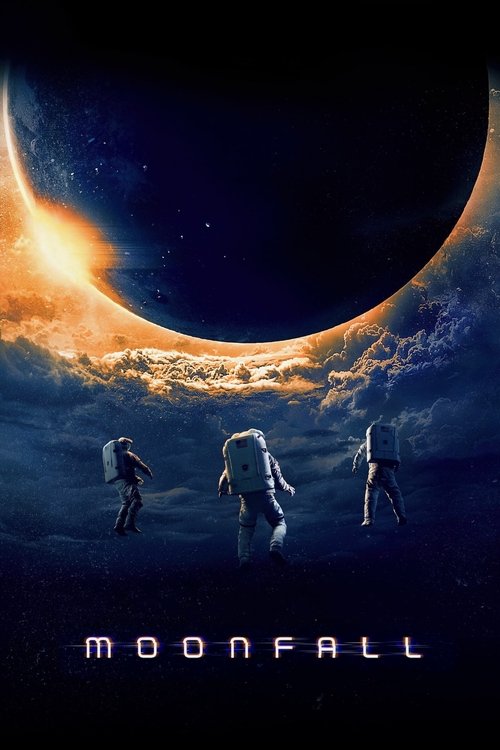
Moonfall
A mysterious force knocks the moon from its orbit around Earth and sends it hurtling on a collision course with life as we know it.
The film financial setback against its substantial budget of $146.0M, earning $67.3M globally (-54% loss). While initial box office returns were modest, the film has gained appreciation for its bold vision within the science fiction genre.


Plot Structure
Story beats plotted across runtime


Narrative Arc
Emotional journey through the story's key moments
Story Circle
Blueprint 15-beat structure
Arcplot Score Breakdown
Weighted: Precision (70%) + Arc (15%) + Theme (15%)
Moonfall (2022) exhibits carefully calibrated plot construction, characteristic of Roland Emmerich's storytelling approach. This structural analysis examines how the film's 15-point plot structure maps to proven narrative frameworks across 2 hours and 11 minutes. With an Arcplot score of 7.1, the film balances conventional beats with creative variation.
Characters
Cast & narrative archetypes

Brian Harper
Jo Fowler
K.C. Houseman
Sonny Harper
Brenda Lopez
Tom Lopez
Main Cast & Characters
Brian Harper
Played by Patrick Wilson
Disgraced former astronaut who discovers the Moon is falling out of orbit and must save humanity.
Jo Fowler
Played by Halle Berry
Deputy director of NASA who teams with Harper to investigate the Moon's mysterious behavior.
K.C. Houseman
Played by John Bradley
Conspiracy theorist and amateur astronomer who first discovers the Moon's anomalous orbit.
Sonny Harper
Played by Charlie Plummer
Brian's estranged teenage son who must survive catastrophic events on Earth.
Brenda Lopez
Played by Carolina Bartczak
Brian's ex-wife who tries to protect their son during the crisis.
Tom Lopez
Played by Michael Peña
Brenda's current husband and Sonny's stepfather who helps during the evacuation.
Structural Analysis
The Status Quo at 1 minutes (1% through the runtime) establishes 2011: Astronauts Brian Harper and Jo Fowler conduct a routine satellite repair mission on the Space Shuttle. Harper is a confident, accomplished NASA astronaut living his dream.. Significantly, this early placement immediately immerses viewers in the story world.
The inciting incident occurs at 19 minutes when K.C. Houseman discovers the Moon's orbit is decaying - it's falling toward Earth. He tries to warn NASA but is dismissed as a crank. Jo Fowler independently verifies his calculations and realizes the Moon will impact Earth in three weeks, causing an extinction-level event.. At 14% through the film, this Disruption is delayed, allowing extended setup of the story world. This beat shifts the emotional landscape, launching the protagonist into the central conflict.
The First Threshold at 33 minutes marks the transition into Act II, occurring at 25% of the runtime. This illustrates the protagonist's commitment to Brian Harper chooses to join Jo and K.C. On an unauthorized mission to the Moon using a mothballed Space Shuttle. He commits to the dangerous journey, leaving his family behind, to discover what's causing the Moon's orbital decay and attempt to stop it. The team launches from Vandenberg despite military opposition., moving from reaction to action.
At 68 minutes, the Midpoint arrives at 52% of the runtime—precisely centered, creating perfect narrative symmetry. Structural examination shows that this crucial beat False victory: The team encounters a digital consciousness that reveals the truth - the Moon is an ancient megastructure ark built by humanity's ancestors who fled an AI uprising. The Moon brought human life to Earth billions of years ago. The swarm is that same rogue AI, now trying to destroy the Moon's power source. The team believes they now understand how to save Earth by restarting the power core., fundamentally raising what's at risk. The emotional intensity shifts, dividing the narrative into clear before-and-after phases.
The Collapse moment at 102 minutes (78% through) represents the emotional nadir. Here, The power core fails to fully restart. K.C. Discovers that a living human consciousness must merge with the Moon's AI to reboot the system - meaning certain death. The shuttle is critically damaged. On Earth, massive chunks of the Moon begin breaking off and crashing down. Humanity faces imminent extinction. K.C. Realizes he must sacrifice himself, confronting his own mortality and the end of his physical existence., demonstrates the protagonist at their lowest point. This beat's placement in the final quarter sets up the climactic reversal.
The Second Threshold at 104 minutes initiates the final act resolution at 79% of the runtime. K.C. Makes peace with his sacrifice and volunteers to merge his consciousness with the Moon's AI. He synthesizes his knowledge of ancient civilizations and technology with newfound courage. Harper and Jo realize they must protect K.C. Long enough for the merge to complete, combining their astronaut skills with understanding of the alien technology. The final plan is set., demonstrating the transformation achieved throughout the journey.
Emotional Journey
Moonfall's emotional architecture traces a deliberate progression across 15 carefully calibrated beats.
Narrative Framework
This structural analysis employs structural analysis methodology used to understand storytelling architecture. By mapping Moonfall against these established plot points, we can identify how Roland Emmerich utilizes or subverts traditional narrative conventions. The plot point approach reveals not only adherence to structural principles but also creative choices that distinguish Moonfall within the science fiction genre.
Roland Emmerich's Structural Approach
Among the 12 Roland Emmerich films analyzed on Arcplot, the average structural score is 7.0, demonstrating varied approaches to story architecture. Moonfall represents one of the director's most structurally precise works. For comparative analysis, explore the complete Roland Emmerich filmography.
Comparative Analysis
Additional science fiction films include The Postman, Mad Max 2 and AVP: Alien vs. Predator. For more Roland Emmerich analyses, see The Day After Tomorrow, White House Down and 10,000 BC.
Plot Points by Act
Act I
SetupStatus Quo
2011: Astronauts Brian Harper and Jo Fowler conduct a routine satellite repair mission on the Space Shuttle. Harper is a confident, accomplished NASA astronaut living his dream.
Theme
During the shuttle mission, as the mysterious swarm approaches, a crew member dismisses the anomaly saying "sometimes what you see isn't real" - establishing the theme of belief versus skepticism, and whether humanity will accept uncomfortable truths.
Worldbuilding
The swarm attacks the shuttle, killing a crew member. Harper sees it but Jo is unconscious. Flash forward 10 years: Harper is disgraced, divorced, and working odd jobs. Jo is a NASA deputy director. K.C. Houseman is a conspiracy theorist obsessed with the Moon. NASA and the world operate normally, unaware of the impending catastrophe.
Disruption
K.C. Houseman discovers the Moon's orbit is decaying - it's falling toward Earth. He tries to warn NASA but is dismissed as a crank. Jo Fowler independently verifies his calculations and realizes the Moon will impact Earth in three weeks, causing an extinction-level event.
Resistance
Jo debates whether to believe K.C.'s data. NASA confirms the threat. Governments begin preparations but hide the full severity. Jo seeks out Brian Harper despite their estranged relationship. Harper initially resists, haunted by his past disgrace. Catastrophic gravitational events begin - massive tidal waves hit Colorado, gravity fluctuations cause destruction. World leaders debate solutions including nuclear strikes.
Act II
ConfrontationFirst Threshold
Brian Harper chooses to join Jo and K.C. on an unauthorized mission to the Moon using a mothballed Space Shuttle. He commits to the dangerous journey, leaving his family behind, to discover what's causing the Moon's orbital decay and attempt to stop it. The team launches from Vandenberg despite military opposition.
Mirror World
In space, Harper and Jo reconnect, discussing their shared past and the incident that destroyed Harper's career. K.C. shares his theories about the Moon's true nature. This relationship subplot carries the theme of redemption and restored belief - Jo begins to believe Harper's account of the swarm attack.
Premise
The promise of the premise: exploring the Moon's mysteries. The team journeys through space as Earth suffers increasing gravitational catastrophes. They approach the Moon and encounter the same swarm that attacked Harper. They discover a massive opening in the Moon's surface and fly inside, revealing the Moon is hollow. They navigate through the interior megastructure - ancient alien technology on an immense scale.
Midpoint
False victory: The team encounters a digital consciousness that reveals the truth - the Moon is an ancient megastructure ark built by humanity's ancestors who fled an AI uprising. The Moon brought human life to Earth billions of years ago. The swarm is that same rogue AI, now trying to destroy the Moon's power source. The team believes they now understand how to save Earth by restarting the power core.
Opposition
The swarm intensifies attacks on the Moon's systems. The team works to reach the power core but faces constant obstacles - structural damage, the swarm's pursuit, and the Moon's failing systems. On Earth, Harper's son and family flee toward the launch site while gravitational forces tear cities apart. The team realizes restarting the core requires the shuttle's energy, but the swarm damages their craft. Time runs out as the Moon approaches impact distance.
Collapse
The power core fails to fully restart. K.C. discovers that a living human consciousness must merge with the Moon's AI to reboot the system - meaning certain death. The shuttle is critically damaged. On Earth, massive chunks of the Moon begin breaking off and crashing down. Humanity faces imminent extinction. K.C. realizes he must sacrifice himself, confronting his own mortality and the end of his physical existence.
Crisis
K.C. grapples with the terror and finality of his decision. Harper and Jo protest, seeking alternatives that don't exist. K.C. processes that he will never return home, never live a normal life, but accepts that his existence will continue in a new form. The weight of sacrifice settles over the team.
Act III
ResolutionSecond Threshold
K.C. makes peace with his sacrifice and volunteers to merge his consciousness with the Moon's AI. He synthesizes his knowledge of ancient civilizations and technology with newfound courage. Harper and Jo realize they must protect K.C. long enough for the merge to complete, combining their astronaut skills with understanding of the alien technology. The final plan is set.
Synthesis
K.C. begins the merge process, his consciousness uploading into the Moon's vast AI system. Harper and Jo fight off the swarm in a desperate battle, using the damaged shuttle and alien technology. The merge completes and K.C., now one with the Moon, gains control of its systems. He weaponizes the megastructure against the swarm, destroying it. K.C. stabilizes the Moon's orbit, saving Earth. Harper and Jo return to the shuttle and begin their journey home.
Transformation
Harper reunites with his son and family, vindicated and restored as a hero. Jo stands with world leaders as humanity processes its true origins. K.C.'s consciousness, now dwelling within the Moon, communicates with Earth - no longer the dismissed conspiracy theorist but guardian of humanity's ancestral home. The final image shows the Moon stable in orbit, humanity entering a new era with knowledge of its cosmic heritage and inherited alien technology.