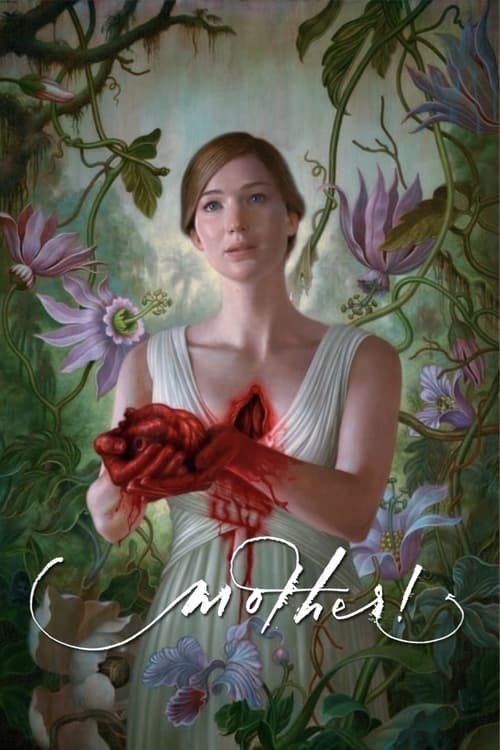
mother!
A couple's relationship is tested when uninvited guests arrive at their home, disrupting their tranquil existence.
Working with a mid-range budget of $30.0M, the film achieved a respectable showing with $44.5M in global revenue (+48% profit margin).
9 wins & 54 nominations


Plot Structure
Story beats plotted across runtime


Narrative Arc
Emotional journey through the story's key moments
Story Circle
Blueprint 15-beat structure
Arcplot Score Breakdown
Weighted: Precision (70%) + Arc (15%) + Theme (15%)
mother! (2017) exhibits deliberately positioned story structure, characteristic of Darren Aronofsky's storytelling approach. This structural analysis examines how the film's 15-point plot structure maps to proven narrative frameworks across 2 hours and 1 minutes. With an Arcplot score of 6.1, the film takes an unconventional approach to traditional narrative frameworks.
Structural Analysis
The Status Quo at 1 minutes (1% through the runtime) establishes Mother wakes alone in bed calling for Him, wandering through the isolated Victorian house she has been lovingly restoring while her poet husband struggles with writer's block.. The analysis reveals that this early placement immediately immerses viewers in the story world.
The inciting incident occurs at 15 minutes when A stranger called Man arrives at the door claiming to be a lost traveler seeking lodging. Him immediately invites him to stay despite Mother's discomfort, beginning the violation of their sanctuary.. At 12% through the film, this Disruption aligns precisely with traditional story structure. This beat shifts the emotional landscape, launching the protagonist into the central conflict.
The First Threshold at 30 minutes marks the transition into Act II, occurring at 25% of the runtime. This reveals the protagonist's commitment to Man and Woman break into Him's study and shatter the precious crystal on the mantle—the one object He forbade them to touch. Mother witnesses Him sealing off the study, her home now permanently scarred., moving from reaction to action.
At 61 minutes, the Midpoint arrives at 50% of the runtime—precisely centered, creating perfect narrative symmetry. Of particular interest, this crucial beat Mother announces her pregnancy and Him suddenly breaks through his creative block, writing furiously through the night. The house heals as Mother nurtures both her pregnancy and restored hope for their life together., fundamentally raising what's at risk. The emotional intensity shifts, dividing the narrative into clear before-and-after phases.
The Collapse moment at 91 minutes (75% through) represents the emotional nadir. Here, The house descends into absolute chaos—warfare erupts between factions of worshippers, executions occur in the hallways, and the home Mother built is systematically destroyed. She goes into labor amid the apocalyptic violence., shows the protagonist at their lowest point. This beat's placement in the final quarter sets up the climactic reversal.
The Second Threshold at 97 minutes initiates the final act resolution at 80% of the runtime. Mother falls asleep from exhaustion and Him takes the baby from her arms, passing the infant to the adoring crowd. She wakes to find her child gone, carried away by the worshippers above., demonstrating the transformation achieved throughout the journey.
Emotional Journey
mother!'s emotional architecture traces a deliberate progression across 15 carefully calibrated beats.
Narrative Framework
This structural analysis employs systematic plot point analysis that identifies crucial turning points. By mapping mother! against these established plot points, we can identify how Darren Aronofsky utilizes or subverts traditional narrative conventions. The plot point approach reveals not only adherence to structural principles but also creative choices that distinguish mother! within the drama genre.
Darren Aronofsky's Structural Approach
Among the 7 Darren Aronofsky films analyzed on Arcplot, the average structural score is 6.2, demonstrating varied approaches to story architecture. mother! takes a more unconventional approach compared to the director's typical style. For comparative analysis, explore the complete Darren Aronofsky filmography.
Comparative Analysis
Additional drama films include After Thomas, South Pacific and Dirty Dancing: Havana Nights. For more Darren Aronofsky analyses, see Noah, Black Swan and The Whale.
Plot Points by Act
Act I
SetupStatus Quo
Mother wakes alone in bed calling for Him, wandering through the isolated Victorian house she has been lovingly restoring while her poet husband struggles with writer's block.
Theme
Him tells Mother he wants to create something that will last forever, revealing the film's theme about the consuming nature of artistic creation and the cost extracted from those who love the creator.
Worldbuilding
Mother's devotion to restoring the house is established alongside her husband's creative frustration. The house pulses with a heartbeat when she touches the walls, and she mixes a yellow powder into drinks, suggesting a mystical connection to the home.
Disruption
A stranger called Man arrives at the door claiming to be a lost traveler seeking lodging. Him immediately invites him to stay despite Mother's discomfort, beginning the violation of their sanctuary.
Resistance
Mother struggles with the intrusion as Man settles in, coughing throughout the night. Him grows increasingly fascinated with the stranger while Mother feels pushed aside. Woman arrives the next day, even more invasive and critical.
Act II
ConfrontationFirst Threshold
Man and Woman break into Him's study and shatter the precious crystal on the mantle—the one object He forbade them to touch. Mother witnesses Him sealing off the study, her home now permanently scarred.
Mirror World
Man and Woman's sons arrive, immediately fighting over their inheritance. Their violent conflict—culminating in Older Son killing Younger Son—mirrors the biblical Cain and Abel and foreshadows the violence that will consume Mother's world.
Premise
Uninvited mourners flood the house for Younger Son's wake, desecrating every room despite Mother's protests. After she finally expels them all, she and Him make love passionately, and she awakens knowing she's pregnant.
Midpoint
Mother announces her pregnancy and Him suddenly breaks through his creative block, writing furiously through the night. The house heals as Mother nurtures both her pregnancy and restored hope for their life together.
Opposition
Months later, Him finishes his masterwork and shares it with his publisher. Admirers begin arriving to worship the poet, their numbers growing from a trickle to a flood. Mother, now heavily pregnant, watches helplessly as strangers overrun every room.
Collapse
The house descends into absolute chaos—warfare erupts between factions of worshippers, executions occur in the hallways, and the home Mother built is systematically destroyed. She goes into labor amid the apocalyptic violence.
Crisis
Mother gives birth to a son on the ruined floor of her home while chaos rages around her. She clutches the infant protectively, refusing to let Him hold the baby as exhaustion battles her desperate maternal instincts.
Act III
ResolutionSecond Threshold
Mother falls asleep from exhaustion and Him takes the baby from her arms, passing the infant to the adoring crowd. She wakes to find her child gone, carried away by the worshippers above.
Synthesis
Mother fights through the crowd to find her baby has been killed and consumed by the worshippers. In grief-fueled rage, she descends to the basement and ignites the oil tank, destroying the house and everyone in it.
Transformation
Him survives the fire and extracts a crystal from Mother's charred body, placing it on the mantle. The house regenerates, and a new woman wakes in bed asking where He is—the cycle begins again, eternal creation demanding eternal sacrifice.