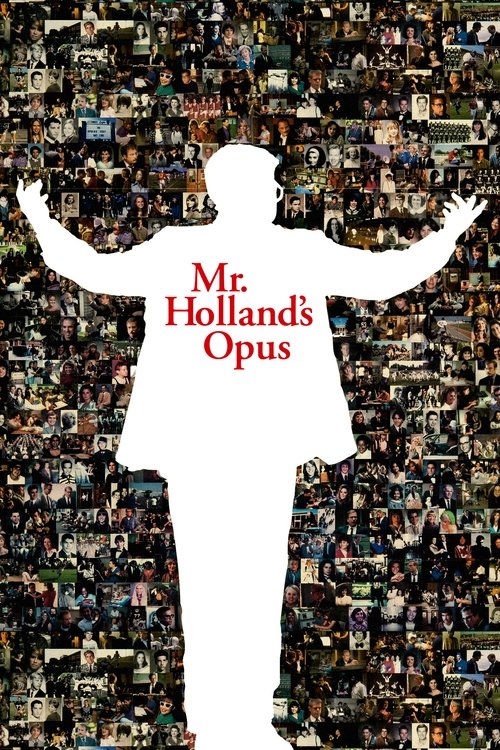
Mr. Holland's Opus
In 1965, passionate musician Glenn Holland takes a day job as a high school music teacher, convinced it's just a small obstacle on the road to his true calling: writing a historic opus. As the decades roll by with the composition unwritten but generations of students inspired through his teaching, Holland must redefine his life's purpose.
Despite a moderate budget of $31.0M, Mr. Holland's Opus became a solid performer, earning $106.3M worldwide—a 243% return.
Nominated for 1 Oscar. 5 wins & 5 nominations


Plot Structure
Story beats plotted across runtime


Narrative Arc
Emotional journey through the story's key moments
Story Circle
Blueprint 15-beat structure
Arcplot Score Breakdown
Weighted: Precision (70%) + Arc (15%) + Theme (15%)
Mr. Holland's Opus (1995) reveals strategically placed narrative design, characteristic of Stephen Herek's storytelling approach. This structural analysis examines how the film's 15-point plot structure maps to proven narrative frameworks across 2 hours and 23 minutes. With an Arcplot score of 7.7, the film showcases strong structural fundamentals.
Characters
Cast & narrative archetypes

Glenn Holland
Iris Holland
Principal Helen Jacobs
Vice Principal Gene Wolters
Rowena Morgan
Cole Holland
Lou Russ
Main Cast & Characters
Glenn Holland
Played by Richard Dreyfuss
A passionate musician who becomes a reluctant high school music teacher, discovering his true opus in the lives of his students over 30 years.
Iris Holland
Played by Glenne Headly
Glenn's supportive wife who balances her husband's obsessions with raising their deaf son and maintaining family stability.
Principal Helen Jacobs
Played by Olympia Dukakis
The pragmatic school principal who hires Holland and becomes both his challenger and ally over decades.
Vice Principal Gene Wolters
Played by William H. Macy
Holland's closest friend and colleague, the wrestling coach who provides grounded wisdom and unwavering support.
Rowena Morgan
Played by Jean Louisa Kelly
A talented student clarinet player who develops an intense connection with Mr. Holland, testing professional boundaries.
Cole Holland
Played by Joseph Anderson
Glenn and Iris's deaf son, whose condition creates distance from his musical father and forces Holland to reevaluate his priorities.
Lou Russ
Played by Terrence Howard
A football player struggling in music class who Holland reaches by connecting music to wrestling through rhythm and tempo.
Structural Analysis
The Status Quo at 2 minutes (1% through the runtime) establishes Glenn Holland, an ambitious composer, works odd gigs while composing music at night with his wife Iris. He dreams of writing one great symphony that will make him famous.. Of particular interest, this early placement immediately immerses viewers in the story world.
The inciting incident occurs at 16 minutes when Glenn's first class is a disaster. Students are completely disengaged, talking over him, mocking classical music. One student walks out. He realizes teaching won't be the easy side job he imagined.. At 11% through the film, this Disruption aligns precisely with traditional story structure. This beat shifts the emotional landscape, launching the protagonist into the central conflict.
The First Threshold at 35 minutes marks the transition into Act II, occurring at 24% of the runtime. This reveals the protagonist's commitment to Glenn makes the active choice to fully commit to teaching when he helps Gertrude Lang discover her musicality by playing the sunset. He sees her transformation and realizes teaching can be meaningful. He chooses to invest himself in his students rather than just going through the motions., moving from reaction to action.
At 72 minutes, the Midpoint arrives at 50% of the runtime—precisely centered, creating perfect narrative symmetry. Significantly, this crucial beat False defeat: Glenn discovers his son Cole is deaf. His identity as a musician makes this devastating - he cannot share music with his own child. The communication barrier creates distance in his family. His home life, which should bring joy, instead highlights what he's sacrificing for his teaching career., fundamentally raising what's at risk. The emotional intensity shifts, dividing the narrative into clear before-and-after phases.
The Collapse moment at 106 minutes (74% through) represents the emotional nadir. Here, 1995: The school board eliminates the entire music program due to budget cuts. Glenn is forced into early retirement. His life's work - the teaching career he never wanted but grew to love - dies. His symphony remains unfinished. He believes he's wasted his life and has nothing to show for 30 years., shows the protagonist at their lowest point. This beat's placement in the final quarter sets up the climactic reversal.
The Second Threshold at 114 minutes initiates the final act resolution at 80% of the runtime. Cole confronts Glenn in sign language: "You were a great teacher. You're a terrible father." This painful truth breaks through Glenn's self-pity. Glenn finally sees what matters - not the fame he never achieved, but the people he's touched. He chooses to see his teaching as his opus, not his failure., demonstrating the transformation achieved throughout the journey.
Emotional Journey
Mr. Holland's Opus's emotional architecture traces a deliberate progression across 15 carefully calibrated beats.
Narrative Framework
This structural analysis employs structural analysis methodology used to understand storytelling architecture. By mapping Mr. Holland's Opus against these established plot points, we can identify how Stephen Herek utilizes or subverts traditional narrative conventions. The plot point approach reveals not only adherence to structural principles but also creative choices that distinguish Mr. Holland's Opus within the drama genre.
Stephen Herek's Structural Approach
Among the 11 Stephen Herek films analyzed on Arcplot, the average structural score is 7.2, reflecting strong command of classical structure. Mr. Holland's Opus represents one of the director's most structurally precise works. For comparative analysis, explore the complete Stephen Herek filmography.
Comparative Analysis
Additional drama films include After Thomas, South Pacific and Dirty Dancing: Havana Nights. For more Stephen Herek analyses, see Rock Star, 101 Dalmatians and Critters.
Plot Points by Act
Act I
SetupStatus Quo
Glenn Holland, an ambitious composer, works odd gigs while composing music at night with his wife Iris. He dreams of writing one great symphony that will make him famous.
Theme
Principal Jacobs tells Glenn, "A teacher has two jobs: fill young minds with knowledge, yes, but more important, give those minds a compass so that knowledge doesn't go to waste." Theme: life's true opus is the impact we have on others.
Worldbuilding
Glenn reluctantly accepts a teaching position at John F. Kennedy High School in 1965, seeing it as temporary income while he composes his symphony. We meet his colleagues including cynical gym teacher Bill Meister. Glenn struggles with apathetic students who don't understand classical music.
Disruption
Glenn's first class is a disaster. Students are completely disengaged, talking over him, mocking classical music. One student walks out. He realizes teaching won't be the easy side job he imagined.
Resistance
Glenn debates whether to quit. Iris encourages him to give it time. Vice Principal Wolters becomes a mentor figure, helping him understand students need connection, not just facts. Glenn learns to meet students where they are, using rock and roll to teach musical concepts. He connects with struggling clarinetist Gertrude Lang.
Act II
ConfrontationFirst Threshold
Glenn makes the active choice to fully commit to teaching when he helps Gertrude Lang discover her musicality by playing the sunset. He sees her transformation and realizes teaching can be meaningful. He chooses to invest himself in his students rather than just going through the motions.
Mirror World
Iris reveals she's pregnant. This relationship/family storyline becomes the thematic mirror - Glenn must learn to balance his artistic dreams with the people right in front of him who need him.
Premise
Glenn thrives as a teacher through the late 60s and early 70s. He builds the music program, directs successful concerts, forms the marching band, inspires students. His son Cole is born deaf, creating tension as Glenn struggles to connect with him. Time montage shows years passing - students come and go, all touched by his teaching.
Midpoint
False defeat: Glenn discovers his son Cole is deaf. His identity as a musician makes this devastating - he cannot share music with his own child. The communication barrier creates distance in his family. His home life, which should bring joy, instead highlights what he's sacrificing for his teaching career.
Opposition
The 1980s bring budget cuts threatening the arts program. Glenn's marriage strains as he becomes distant from Cole, unable to connect through sign language. He takes a summer job to make ends meet. A talented student, Rowena Morgan, develops feelings for him, creating temptation. Glenn nearly abandons his family to run away with Rowena to New York but pulls back. His symphony remains unfinished after 30 years.
Collapse
1995: The school board eliminates the entire music program due to budget cuts. Glenn is forced into early retirement. His life's work - the teaching career he never wanted but grew to love - dies. His symphony remains unfinished. He believes he's wasted his life and has nothing to show for 30 years.
Crisis
Glenn clears out his classroom in despair. He tells Iris he's failed - no symphony, no legacy, just "a teacher." He confronts the emptiness of his original dream and questions whether his life had meaning. Cole witnesses his father's pain.
Act III
ResolutionSecond Threshold
Cole confronts Glenn in sign language: "You were a great teacher. You're a terrible father." This painful truth breaks through Glenn's self-pity. Glenn finally sees what matters - not the fame he never achieved, but the people he's touched. He chooses to see his teaching as his opus, not his failure.
Synthesis
Glenn returns to the school for one final goodbye. His former students - now adults, including the Governor - have organized a surprise tribute concert. Hundreds of lives he's touched over 30 years fill the auditorium. They perform his "American Symphony," the piece he wrote for the school but never considered his real work. He conducts them one final time.
Transformation
Glenn stands before the assembly of former students, finally understanding his true legacy. Gertrude Lang, now the Governor, tells him: "We are your symphony, Mr. Holland. We are the melodies and the notes of your opus. We are the music of your life." Glenn sees his life's work reflected in the faces before him - not a famous symphony, but lives forever changed.