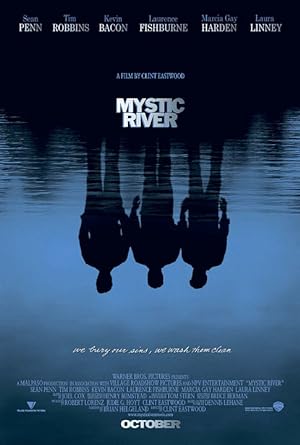
Mystic River
In the summer of 1975 in a neighborhood in Boston, three kids- Dave Boyle and his two friends, Jimmy Markum and Sean Devine- are playing on the sidewalk when Dave gets abducted by two men and endures days of sexual abuse. Eventually Dave escapes, but is traumatized throughout adulthood. Jimmy is an ex-con and a father of three, whose daughter Katie is found dead, and Dave becomes the number one suspect. Sean is a homicide detective investigating Katie's murder, and finds himself faced with past and present demons as more is uncovered about Katie's murder. Learning Katie had a boyfriend, ballistics later connect a gun belonging to his father to the murder, setting her boyfriend as the suspect. Will Sean find out who killed Katie? Will Jimmy make it through the investigation? And will Dave ever admit what really happened when he was abducted?
Despite a moderate budget of $25.0M, Mystic River became a runaway success, earning $156.8M worldwide—a remarkable 527% return.
2 Oscars. 57 wins & 144 nominations


Plot Structure
Story beats plotted across runtime


Narrative Arc
Emotional journey through the story's key moments
Story Circle
Blueprint 15-beat structure
Arcplot Score Breakdown
Weighted: Precision (70%) + Arc (15%) + Theme (15%)
Mystic River (2003) demonstrates carefully calibrated narrative design, characteristic of Clint Eastwood's storytelling approach. This structural analysis examines how the film's 15-point plot structure maps to proven narrative frameworks across 2 hours and 18 minutes. With an Arcplot score of 7.1, the film balances conventional beats with creative variation.
Characters
Cast & narrative archetypes

Jimmy Markum
Sean Devine
Dave Boyle
Celeste Boyle
Annabeth Markum
Whitey Powers
Brendan Harris
Katie Markum
Sgt. Whitey Powers
Main Cast & Characters
Jimmy Markum
Played by Sean Penn
An ex-con grocery store owner devastated by his daughter's murder, driven by grief and a thirst for vigilante justice.
Sean Devine
Played by Kevin Bacon
A homicide detective investigating the murder case while dealing with his own troubled marriage and emotional distance.
Dave Boyle
Played by Tim Robbins
A damaged man traumatized by childhood abuse who becomes a suspect in the murder investigation.
Celeste Boyle
Played by Marcia Gay Harden
Dave's suspicious wife who becomes convinced her husband is hiding a terrible secret.
Annabeth Markum
Played by Laura Linney
Jimmy's second wife who supports and enables his darkest impulses in seeking revenge.
Whitey Powers
Played by Kevin Chapman
Jimmy's loyal friend and enforcer who helps carry out his vendetta.
Brendan Harris
Played by Tom Guiry
Katie's secret boyfriend whose involvement in the case complicates the investigation.
Katie Markum
Played by Emmy Rossum
Jimmy's 19-year-old daughter whose murder sets the tragic events in motion.
Sgt. Whitey Powers
Played by Laurence Fishburne
Sean's partner in the homicide investigation, providing a grounded presence.
Structural Analysis
The Status Quo at 1 minutes (1% through the runtime) establishes Three boys playing street hockey in East Buckingham, Boston. Dave is abducted by child molesters posing as police, establishing the childhood trauma that will haunt all three men into adulthood.. Significantly, this early placement immediately immerses viewers in the story world.
The inciting incident occurs at 15 minutes when Katie Marcus is murdered. Her car is found in a park with blood inside. Jimmy receives the news that his daughter is missing, then dead, shattering his world and setting the central mystery in motion.. At 11% through the film, this Disruption aligns precisely with traditional story structure. This beat shifts the emotional landscape, launching the protagonist into the central conflict.
The First Threshold at 33 minutes marks the transition into Act II, occurring at 24% of the runtime. This reveals the protagonist's commitment to Jimmy vows at Katie's wake to find and kill whoever murdered his daughter, rejecting the legal system. He actively chooses the path of vengeance, crossing into the dark world of vigilante justice. This is his point of no return., moving from reaction to action.
At 67 minutes, the Midpoint arrives at 49% of the runtime—precisely centered, creating perfect narrative symmetry. The analysis reveals that this crucial beat Dave's wife Celeste begins to believe Dave killed Katie. She confronts the possibility that her husband is a murderer, raising the stakes. Simultaneously, evidence points to two young men at the scene. False defeat: the investigation seems to point toward Dave, but the truth is more complex., fundamentally raising what's at risk. The emotional intensity shifts, dividing the narrative into clear before-and-after phases.
The Collapse moment at 101 minutes (74% through) represents the emotional nadir. Here, Celeste betrays Dave to Jimmy, telling him she thinks Dave killed Katie. This act of desperation leads directly to Dave's death. The whiff of death is both literal (Dave will soon die) and metaphorical (the death of trust, innocence, and any possibility of redemption for these damaged men)., indicates the protagonist at their lowest point. This beat's placement in the final quarter sets up the climactic reversal.
The Second Threshold at 110 minutes initiates the final act resolution at 79% of the runtime. Sean discovers the real killers: Silent Ray's son and his friend killed Katie accidentally during a prank gone wrong. Sean realizes Dave was innocent. He calls Jimmy with the truth, but it's too late. The synthesis of information comes after the tragedy, revealing the cost of vigilante justice., demonstrating the transformation achieved throughout the journey.
Emotional Journey
Mystic River's emotional architecture traces a deliberate progression across 15 carefully calibrated beats.
Narrative Framework
This structural analysis employs proven narrative structure principles that track dramatic progression. By mapping Mystic River against these established plot points, we can identify how Clint Eastwood utilizes or subverts traditional narrative conventions. The plot point approach reveals not only adherence to structural principles but also creative choices that distinguish Mystic River within the crime genre.
Clint Eastwood's Structural Approach
Among the 32 Clint Eastwood films analyzed on Arcplot, the average structural score is 6.5, demonstrating varied approaches to story architecture. Mystic River represents one of the director's most structurally precise works. For comparative analysis, explore the complete Clint Eastwood filmography.
Comparative Analysis
Additional crime films include The Bad Guys, Rustom and The Whole Ten Yards. For more Clint Eastwood analyses, see True Crime, Million Dollar Baby and The Gauntlet.
Plot Points by Act
Act I
SetupStatus Quo
Three boys playing street hockey in East Buckingham, Boston. Dave is abducted by child molesters posing as police, establishing the childhood trauma that will haunt all three men into adulthood.
Theme
Adult Jimmy states, "We bury our sins here, Dave. We wash them clean." The theme of buried trauma, guilt, and the impossibility of escaping the past is established through dialogue about their shared childhood and the neighborhood.
Worldbuilding
Introduction of the three men 25 years later: Jimmy (ex-con running a store), Dave (damaged husband and father), and Sean (state police detective). We see their separate lives, families, and the working-class Boston neighborhood that binds them. Katie, Jimmy's 19-year-old daughter, prepares for a night out.
Disruption
Katie Marcus is murdered. Her car is found in a park with blood inside. Jimmy receives the news that his daughter is missing, then dead, shattering his world and setting the central mystery in motion.
Resistance
Sean investigates Katie's murder while Jimmy spirals into grief and rage. Dave returns home bloodied the same night, claiming he fought off a mugger. The three childhood friends are reunited by tragedy. Jimmy debates whether to let the law handle it or seek his own justice.
Act II
ConfrontationFirst Threshold
Jimmy vows at Katie's wake to find and kill whoever murdered his daughter, rejecting the legal system. He actively chooses the path of vengeance, crossing into the dark world of vigilante justice. This is his point of no return.
Mirror World
Sean's estranged wife calls but won't speak to him, only listens. This subplot mirrors the theme of broken communication and unresolved trauma. Sean's failed marriage reflects how the past damages all relationships in this world.
Premise
The investigation unfolds. Sean and his partner interview witnesses and suspects. Jimmy and his crew conduct their own investigation. Suspicion grows around Dave due to his injuries, evasive behavior, and history as an abuse victim. The neighborhood's code of silence complicates everything.
Midpoint
Dave's wife Celeste begins to believe Dave killed Katie. She confronts the possibility that her husband is a murderer, raising the stakes. Simultaneously, evidence points to two young men at the scene. False defeat: the investigation seems to point toward Dave, but the truth is more complex.
Opposition
Pressure intensifies on all fronts. Jimmy's certainty that Dave is guilty grows. Celeste's fear mounts as Dave's story about the mugger unravels. Sean gets closer to the real killers. The neighborhood closes ranks, making investigation harder. Everyone's past wounds are reopened.
Collapse
Celeste betrays Dave to Jimmy, telling him she thinks Dave killed Katie. This act of desperation leads directly to Dave's death. The whiff of death is both literal (Dave will soon die) and metaphorical (the death of trust, innocence, and any possibility of redemption for these damaged men).
Crisis
Jimmy lures Dave to the river. In a devastating confrontation, Dave tries to explain he killed a pedophile, not Katie, but Jimmy doesn't believe him. Jimmy and his crew murder Dave and dump his body. The darkest moment: an innocent man killed by his childhood friend.
Act III
ResolutionSecond Threshold
Sean discovers the real killers: Silent Ray's son and his friend killed Katie accidentally during a prank gone wrong. Sean realizes Dave was innocent. He calls Jimmy with the truth, but it's too late. The synthesis of information comes after the tragedy, revealing the cost of vigilante justice.
Synthesis
Sean arrests the real killers. He confronts Jimmy about Dave's murder but lacks proof. Jimmy justifies his actions, showing no remorse. Sean's wife finally speaks to him, suggesting reconciliation. The legal finale intersects with the moral one: justice is served for Katie but not for Dave.
Transformation
At a neighborhood parade, Jimmy stands with his family while Sean watches from across the street. Jimmy makes a gun gesture at Sean, asserting dominance. The transformation is dark: Jimmy has become the monster, Sean accepts the compromise, and the neighborhood remains unchanged. No redemption, only survival.