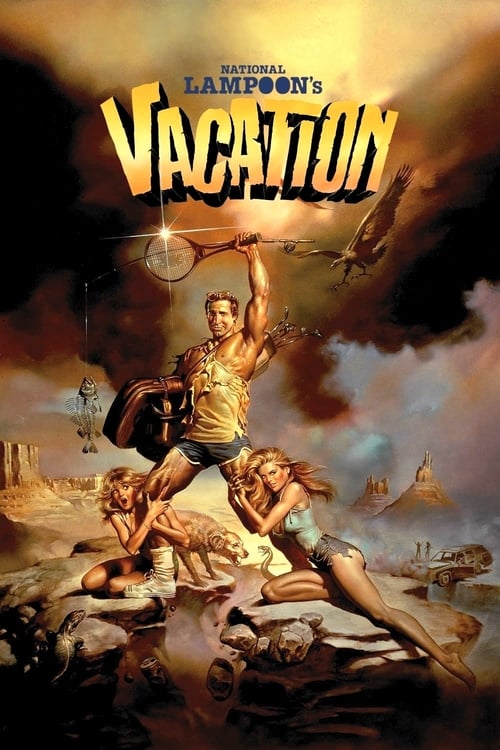
National Lampoon's Vacation
Clark Griswold is on a quest to take his family to the Walley World theme park for a vacation, but things don't go exactly as planned.
Despite a respectable budget of $15.0M, National Lampoon's Vacation became a box office success, earning $61.4M worldwide—a 309% return.


Plot Structure
Story beats plotted across runtime


Narrative Arc
Emotional journey through the story's key moments
Story Circle
Blueprint 15-beat structure
Arcplot Score Breakdown
Weighted: Precision (70%) + Arc (15%) + Theme (15%)
National Lampoon's Vacation (1983) exemplifies deliberately positioned dramatic framework, characteristic of Harold Ramis's storytelling approach. This structural analysis examines how the film's 15-point plot structure maps to proven narrative frameworks across 1 hour and 39 minutes. With an Arcplot score of 7.2, the film balances conventional beats with creative variation.
Characters
Cast & narrative archetypes

Clark Griswold
Ellen Griswold
Rusty Griswold
Audrey Griswold
Cousin Eddie
Aunt Edna
Main Cast & Characters
Clark Griswold
Played by Chevy Chase
An optimistic family man determined to take his family on the perfect cross-country road trip to Walley World theme park.
Ellen Griswold
Played by Beverly D'Angelo
Clark's patient and supportive wife who tries to maintain peace during the increasingly disastrous family vacation.
Rusty Griswold
Played by Anthony Michael Hall
The Griswold's teenage son who endures his father's mishaps with reluctant tolerance and occasional embarrassment.
Audrey Griswold
Played by Dana Barron
The Griswold's teenage daughter who is mortified by her family's behavior and increasingly vocal about her misery.
Cousin Eddie
Played by Randy Quaid
Clark's crude, unemployed cousin who lives in a rundown Kansas farm and embodies everything wrong with the Griswold family tree.
Aunt Edna
Played by Imogene Coca
Ellen's cantankerous elderly aunt who joins the trip and constantly complains about everything.
Structural Analysis
The Status Quo at 1 minutes (1% through the runtime) establishes Clark Griswold stands in a car dealership lot, confidently selecting the "Wagon Queen Family Truckster" for the family road trip. Establishes Clark as an optimistic, well-meaning suburban dad living his conventional middle-class American life.. The analysis reveals that this early placement immediately immerses viewers in the story world.
The inciting incident occurs at 11 minutes when The car dealership delivers the hideous, pea-green "Wagon Queen Family Truckster" instead of the sleek sports wagon Clark ordered. Clark's perfect vacation plan is already compromised before they even leave, but he refuses to turn back.. At 12% through the film, this Disruption aligns precisely with traditional story structure. This beat shifts the emotional landscape, launching the protagonist into the central conflict.
The First Threshold at 23 minutes marks the transition into Act II, occurring at 23% of the runtime. This illustrates the protagonist's commitment to The Griswolds officially depart Chicago, pulling out of their driveway in the Truckster with luggage piled high. Clark makes the active choice to commit fully to his vision despite all warnings and setbacks. No turning back now—they're on the road to Walley World., moving from reaction to action.
At 48 minutes, the Midpoint arrives at 48% of the runtime—precisely centered, creating perfect narrative symmetry. Structural examination shows that this crucial beat Aunt Edna dies in the back seat during the drive through the desert. The stakes raise dramatically—this is no longer just an uncomfortable vacation, but a journey with real consequences. Clark must confront that his dream trip is literally killing people, yet he still won't quit., fundamentally raising what's at risk. The emotional intensity shifts, dividing the narrative into clear before-and-after phases.
The Collapse moment at 73 minutes (74% through) represents the emotional nadir. Here, The Griswolds finally arrive at Walley World only to find it closed for repairs. A mechanical moose delivers the devastating news. Clark's entire dream—the reason for all the suffering—is dead. His fantasy of family bonding at the park dies with it., demonstrates the protagonist at their lowest point. This beat's placement in the final quarter sets up the climactic reversal.
The Second Threshold at 79 minutes initiates the final act resolution at 80% of the runtime. Clark has the realization that they've come too far to give up. He takes the security guard hostage with his BB gun and forces Walley World to open just for his family. He synthesizes his original goal (family fun) with his newfound aggression, taking direct action for the first time., demonstrating the transformation achieved throughout the journey.
Emotional Journey
National Lampoon's Vacation's emotional architecture traces a deliberate progression across 15 carefully calibrated beats.
Narrative Framework
This structural analysis employs a 15-point narrative structure framework that maps key story moments. By mapping National Lampoon's Vacation against these established plot points, we can identify how Harold Ramis utilizes or subverts traditional narrative conventions. The plot point approach reveals not only adherence to structural principles but also creative choices that distinguish National Lampoon's Vacation within the comedy genre.
Harold Ramis's Structural Approach
Among the 10 Harold Ramis films analyzed on Arcplot, the average structural score is 6.9, demonstrating varied approaches to story architecture. National Lampoon's Vacation represents one of the director's most structurally precise works. For comparative analysis, explore the complete Harold Ramis filmography.
Comparative Analysis
Additional comedy films include The Bad Guys, Ella Enchanted and The Evening Star. For more Harold Ramis analyses, see The Ice Harvest, Year One and Groundhog Day.
Plot Points by Act
Act I
SetupStatus Quo
Clark Griswold stands in a car dealership lot, confidently selecting the "Wagon Queen Family Truckster" for the family road trip. Establishes Clark as an optimistic, well-meaning suburban dad living his conventional middle-class American life.
Theme
Ellen warns Clark that "these things never turn out the way you expect them to," foreshadowing the gap between Clark's idealized family vacation fantasy and the chaotic reality ahead. The theme: the American Dream of the perfect family experience vs. messy reality.
Worldbuilding
Setup of the Griswold family dynamics: Clark's obsessive planning, Ellen's patient support, the cynical teenage kids Rusty and Audrey, and the suburban Chicago home life. Clark reveals his dream of bonding with his family on a cross-country road trip to Walley World theme park in California.
Disruption
The car dealership delivers the hideous, pea-green "Wagon Queen Family Truckster" instead of the sleek sports wagon Clark ordered. Clark's perfect vacation plan is already compromised before they even leave, but he refuses to turn back.
Resistance
The family debates whether to take the trip at all. Ellen suggests alternatives, the kids complain, but Clark insists this vacation will create perfect family memories. They pack up, say goodbye to neighbors, and reluctantly prepare to depart despite everyone's reservations.
Act II
ConfrontationFirst Threshold
The Griswolds officially depart Chicago, pulling out of their driveway in the Truckster with luggage piled high. Clark makes the active choice to commit fully to his vision despite all warnings and setbacks. No turning back now—they're on the road to Walley World.
Mirror World
The family encounters the ideal-seeming vacation family in a station wagon playing games and having wholesome fun. This "mirror" shows what Clark desperately wants his family to be—perfectly harmonious and loving—contrasting with the Griswolds' bickering reality.
Premise
The "fun and games" of the road trip disaster: getting lost in rough St. Louis neighborhoods, the dog dying tied to the bumper, visiting Cousin Normie's hellish Kansas home, Aunt Edna joining them, motel mishaps, and escalating vehicular chaos. Clark pushes forward obsessively despite every catastrophe.
Midpoint
Aunt Edna dies in the back seat during the drive through the desert. The stakes raise dramatically—this is no longer just an uncomfortable vacation, but a journey with real consequences. Clark must confront that his dream trip is literally killing people, yet he still won't quit.
Opposition
Everything intensifies: they dump Aunt Edna's corpse at Cousin Normie's, the Truckster falls apart piece by piece, Clark becomes increasingly unhinged and aggressive, the family openly rebels against him, Ellen nearly leaves him, and Clark has a flirtation/fantasy with the girl in the Ferrari. The family unit is disintegrating.
Collapse
The Griswolds finally arrive at Walley World only to find it closed for repairs. A mechanical moose delivers the devastating news. Clark's entire dream—the reason for all the suffering—is dead. His fantasy of family bonding at the park dies with it.
Crisis
Clark has a complete psychological breakdown in the parking lot, pulling out a BB gun and ranting about his sacrifices. He's hit rock bottom—the polite suburban dad has become a raving maniac. The family watches in horror as his sanity crumbles.
Act III
ResolutionSecond Threshold
Clark has the realization that they've come too far to give up. He takes the security guard hostage with his BB gun and forces Walley World to open just for his family. He synthesizes his original goal (family fun) with his newfound aggression, taking direct action for the first time.
Synthesis
The Griswolds storm Walley World and finally get their theme park experience. They ride rides, have fun together, and briefly achieve Clark's dream—until the police arrive. Clark is arrested but defended by his family, who have bonded through shared trauma. Roy Walley himself shows mercy, recognizing Clark's devotion.
Transformation
The Griswolds ride home together in the back of a police truck, bruised but laughing and united as a family. Mirrors the Status Quo but transformed: Clark's fantasy of perfection is dead, replaced by acceptance of chaotic reality. They bonded not through his plan, but despite it.