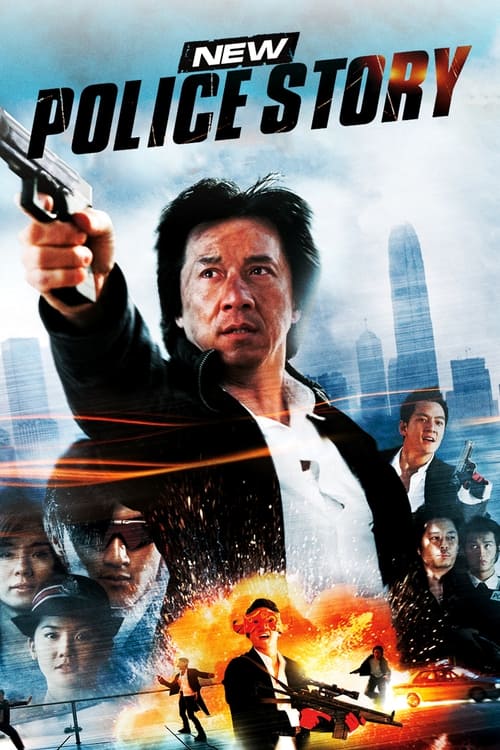
New Police Story
Sent into a drunken tailspin when his entire unit is killed by a gang of thrill-seeking punks, disgraced Hong Kong police inspector Wing needs help from his new rookie partner, with a troubled past of his own, to climb out of the bottle and track down the gang and its ruthless leader.
The film commercial failure against its mid-range budget of $20.0M, earning $8.7M globally (-56% loss). While initial box office returns were modest, the film has gained appreciation for its unique voice within the action genre.
7 wins & 22 nominations
Plot Structure
Story beats plotted across runtime


Narrative Arc
Emotional journey through the story's key moments
Story Circle
Blueprint 15-beat structure
Arcplot Score Breakdown
Weighted: Precision (70%) + Arc (15%) + Theme (15%)
New Police Story (2004) reveals strategically placed story structure, characteristic of Benny Chan Muk-Sing's storytelling approach. This structural analysis examines how the film's 15-point plot structure maps to proven narrative frameworks across 2 hours and 2 minutes. With an Arcplot score of 7.0, the film balances conventional beats with creative variation.
Characters
Cast & narrative archetypes

Inspector Wing
Frank Cheng
Joe Kwan
Sam Wong
Fire
Tin-Tin
Max
Sue
Main Cast & Characters
Inspector Wing
Played by Jackie Chan
A decorated Hong Kong police inspector who falls into alcoholic despair after his entire team is killed by a group of ruthless young criminals. Must rebuild himself to seek justice.
Frank Cheng
Played by Nicholas Tse
A young police officer who idolizes Wing and becomes his partner to help him recover and catch the gang responsible for the massacre. Provides emotional support and investigative assistance.
Joe Kwan
Played by Daniel Wu
The wealthy, psychopathic leader of the gang who orchestrates the killing of Wing's team as part of an elaborate game. Treats crime as entertainment and shows no remorse.
Sam Wong
Played by Charlie Yeung
Wing's ex-girlfriend and bar owner who tries to help him overcome his alcoholism and guilt. Represents his connection to normal life and redemption.
Fire
Played by Charlene Choi
A female member of Joe's gang who participates in the crimes but shows hints of conscience. Serves as the tech specialist and carries out dangerous tasks.
Tin-Tin
Played by Terence Yin
A gang member and son of a wealthy family who joins Joe's crew for thrills. Equipped with high-tech weaponry and treats police work as a video game.
Max
Played by Andy On
A brutal member of Joe's gang who enjoys violence and carries out the group's most vicious acts. Serves as the enforcer of the group.
Sue
Played by Coco Chiang
Another female member of Joe's gang who participates in the crimes. Demonstrates loyalty to Joe and the group's twisted philosophy.
Structural Analysis
The Status Quo at 1 minutes (1% through the runtime) establishes Inspector Wing leads his elite police team celebrating after another successful bust. He's the cocky, celebrated hero of Hong Kong police, beloved by his team, living his dream as the city's top cop.. Significantly, this early placement immediately immerses viewers in the story world.
The inciting incident occurs at 13 minutes when The "routine" robbery is revealed as an elaborate trap set by Joe and his gang of rich thrill-seekers. Wing's entire team is systematically slaughtered in front of him as the criminals live-stream it as entertainment. Wing survives but is psychologically destroyed.. At 11% through the film, this Disruption aligns precisely with traditional story structure. This beat shifts the emotional landscape, launching the protagonist into the central conflict.
The First Threshold at 30 minutes marks the transition into Act II, occurring at 25% of the runtime. This indicates the protagonist's commitment to After Joe's gang murders more police and taunts Wing publicly, Wing finally makes the choice to face his demons. He agrees to work with Frank to take down the gang, stepping back into the world of police work he abandoned., moving from reaction to action.
At 60 minutes, the Midpoint arrives at 50% of the runtime—precisely centered, creating perfect narrative symmetry. Of particular interest, this crucial beat Wing and Frank locate the gang's hideout and engage them directly, but the confrontation goes badly. The gang escapes and captures Sam, Wing's ex-girlfriend. The stakes raise dramatically as it becomes personal again, and Wing realizes his old tactics won't work against criminals who treat murder as a game., fundamentally raising what's at risk. The emotional intensity shifts, dividing the narrative into clear before-and-after phases.
The Collapse moment at 90 minutes (74% through) represents the emotional nadir. Here, Joe triggers a massive explosion during the hostage situation. Frank is critically injured protecting civilians. Wing believes he's failed again—another person who believed in him has paid the price. Wing hits rock bottom, ready to give up entirely as the gang seems untouchable., shows the protagonist at their lowest point. This beat's placement in the final quarter sets up the climactic reversal.
The Second Threshold at 98 minutes initiates the final act resolution at 80% of the runtime. Wing synthesizes his old skills with his new humility and Frank's heart. He realizes he must stop treating this as a tactical problem and recognize it as what Joe said from the start—a game. To beat them, he must turn their game against them. He gets crucial information about the gang's final target., demonstrating the transformation achieved throughout the journey.
Emotional Journey
New Police Story's emotional architecture traces a deliberate progression across 15 carefully calibrated beats.
Narrative Framework
This structural analysis employs structural analysis methodology used to understand storytelling architecture. By mapping New Police Story against these established plot points, we can identify how Benny Chan Muk-Sing utilizes or subverts traditional narrative conventions. The plot point approach reveals not only adherence to structural principles but also creative choices that distinguish New Police Story within the action genre.
Benny Chan Muk-Sing's Structural Approach
Among the 3 Benny Chan Muk-Sing films analyzed on Arcplot, the average structural score is 7.4, reflecting strong command of classical structure. New Police Story takes a more unconventional approach compared to the director's typical style. For comparative analysis, explore the complete Benny Chan Muk-Sing filmography.
Comparative Analysis
Additional action films include The Bad Guys, Puss in Boots and Venom: The Last Dance. For more Benny Chan Muk-Sing analyses, see Shaolin, Raging Fire.
Plot Points by Act
Act I
SetupStatus Quo
Inspector Wing leads his elite police team celebrating after another successful bust. He's the cocky, celebrated hero of Hong Kong police, beloved by his team, living his dream as the city's top cop.
Theme
One of the young criminals taunts Wing: "You think this is a game?" The theme of taking responsibility seriously versus treating life like a game is introduced, foreshadowing how Wing's arrogance will be challenged.
Worldbuilding
Wing's elite team bonds at their celebration party. We see the camaraderie, their families, their loyalty to each other. Wing's girlfriend Sam is introduced. The team is called to what seems like a routine jewelry store robbery.
Disruption
The "routine" robbery is revealed as an elaborate trap set by Joe and his gang of rich thrill-seekers. Wing's entire team is systematically slaughtered in front of him as the criminals live-stream it as entertainment. Wing survives but is psychologically destroyed.
Resistance
One year later: Wing is a broken alcoholic, consumed by guilt and PTSD. Frank, a young man claiming to be a cop, persistently tries to recruit Wing back to catch Joe's gang. Wing refuses repeatedly, lost in self-destruction and alcohol. Frank won't give up, pushing and prodding Wing.
Act II
ConfrontationFirst Threshold
After Joe's gang murders more police and taunts Wing publicly, Wing finally makes the choice to face his demons. He agrees to work with Frank to take down the gang, stepping back into the world of police work he abandoned.
Mirror World
Wing discovers Frank isn't actually a cop but a bar security guard who idolized Wing and lied to motivate him. Rather than representing authority, Frank represents pure heart and determination without the credentials—the opposite of Wing's former arrogance about his elite status.
Premise
Wing and Frank investigate Joe's gang, tracking their identities as spoiled rich kids seeking thrills. The unlikely partnership develops as they pursue leads, clash over methods, and gradually learn to work together. Wing begins reconnecting with his police instincts while Frank proves his worth despite lacking training.
Midpoint
Wing and Frank locate the gang's hideout and engage them directly, but the confrontation goes badly. The gang escapes and captures Sam, Wing's ex-girlfriend. The stakes raise dramatically as it becomes personal again, and Wing realizes his old tactics won't work against criminals who treat murder as a game.
Opposition
Joe forces Wing into a sadistic "game" using building demolition and human shields. The gang maintains control, using Sam as leverage. Wing's attempts to outthink them fail. His guilt intensifies as more people die. Frank is injured. The police bureaucracy ties Wing's hands.
Collapse
Joe triggers a massive explosion during the hostage situation. Frank is critically injured protecting civilians. Wing believes he's failed again—another person who believed in him has paid the price. Wing hits rock bottom, ready to give up entirely as the gang seems untouchable.
Crisis
Wing visits the injured Frank in the hospital, processing his failure. He confronts his dead team members' families and his own guilt. In his darkest moment, he realizes that his old arrogance caused the first massacre, but giving up now dishonors their memory worse than the original failure.
Act III
ResolutionSecond Threshold
Wing synthesizes his old skills with his new humility and Frank's heart. He realizes he must stop treating this as a tactical problem and recognize it as what Joe said from the start—a game. To beat them, he must turn their game against them. He gets crucial information about the gang's final target.
Synthesis
Wing launches the final assault on Joe's gang at their ultimate robbery target. Massive action sequence through the building as Wing systematically takes down each gang member. He saves Sam, defeats Joe in brutal hand-to-hand combat, and finally avenges his fallen team—not through arrogance but through determined, humble courage.
Transformation
Wing visits his fallen teammates' memorial wall, finally able to face their photos without shame. Frank, recovered, joins the real police force with Wing as his partner. Wing is no longer the cocky hero but a humble, grounded cop who understands the weight of the badge. They walk together into their next case as true partners.