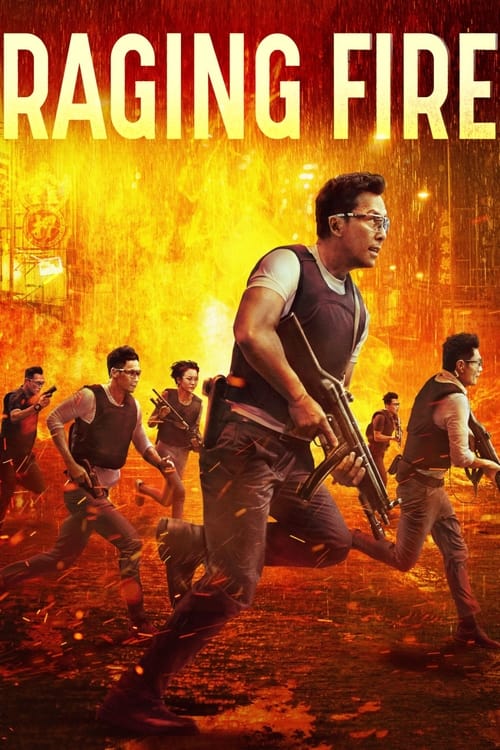
Raging Fire
Cheung Sung-bong is a highly respected cop with a long history of success in dangerous cases. However, his past soon comes back to haunt him when a former protégé resurfaces, seeking revenge.
The film earned $205.0M at the global box office.
10 wins & 24 nominations


Plot Structure
Story beats plotted across runtime


Narrative Arc
Emotional journey through the story's key moments
Story Circle
Blueprint 15-beat structure
Arcplot Score Breakdown
Weighted: Precision (70%) + Arc (15%) + Theme (15%)
Raging Fire (2021) exhibits carefully calibrated narrative design, characteristic of Benny Chan Muk-Sing's storytelling approach. This structural analysis examines how the film's 15-point plot structure maps to proven narrative frameworks across 2 hours and 5 minutes. With an Arcplot score of 7.6, the film showcases strong structural fundamentals.
Characters
Cast & narrative archetypes

Bong Cheung Lok
Yau Kong Ngo
Mrs. Bong
Sze To Bo Lin
Main Cast & Characters
Bong Cheung Lok
Played by Donnie Yen
A righteous and by-the-book senior inspector who mentored a team of officers, now forced to confront his former protégé turned criminal mastermind.
Yau Kong Ngo
Played by Nicholas Tse
A former elite cop turned vengeful criminal leader who orchestrates brutal attacks against the police force that betrayed him.
Mrs. Bong
Played by Qin Lan
Cheung Lok's supportive wife who provides emotional grounding and represents what he's fighting to protect.
Sze To Bo Lin
Played by Ray Lui
A young and capable officer in Cheung Lok's team who looks up to him as a mentor and role model.
Structural Analysis
The Status Quo at 2 minutes (2% through the runtime) establishes Inspector Bong Cheung-Sing leads a successful drug bust, establishing him as an exemplary, by-the-book senior inspector respected by his team and superiors.. Structural examination shows that this early placement immediately immerses viewers in the story world.
The inciting incident occurs at 15 minutes when A violent armed robbery executed by masked criminals kills several people including police officers. The brutal efficiency and military precision of the attack signals something unprecedented.. At 12% through the film, this Disruption aligns precisely with traditional story structure. This beat shifts the emotional landscape, launching the protagonist into the central conflict.
The First Threshold at 31 minutes marks the transition into Act II, occurring at 25% of the runtime. This reveals the protagonist's commitment to Bong discovers that his former protégé Yau is leading the criminal gang. He commits to bringing him down despite their personal history, crossing into a world where his past training choices haunt him., moving from reaction to action.
At 63 minutes, the Midpoint arrives at 50% of the runtime—precisely centered, creating perfect narrative symmetry. Notably, this crucial beat A major confrontation results in civilian casualties and Yau escapes. Bong faces investigation and criticism from superiors. False defeat—his methods are questioned and he realizes Yau is always one step ahead., fundamentally raising what's at risk. The emotional intensity shifts, dividing the narrative into clear before-and-after phases.
The Collapse moment at 93 minutes (74% through) represents the emotional nadir. Here, Team members are killed in an ambush set by Yau. Bong faces the deadly consequence of his teachings being used against innocents. The "whiff of death"—his mentor ideology dies along with his officers., demonstrates the protagonist at their lowest point. This beat's placement in the final quarter sets up the climactic reversal.
The Second Threshold at 100 minutes initiates the final act resolution at 80% of the runtime. Bong realizes he must use Yau's own tactics against him while maintaining his integrity. He synthesizes his by-the-book approach with understanding of Yau's mindset to predict the final attack. Gains crucial intelligence., demonstrating the transformation achieved throughout the journey.
Emotional Journey
Raging Fire's emotional architecture traces a deliberate progression across 15 carefully calibrated beats.
Narrative Framework
This structural analysis employs a 15-point narrative structure framework that maps key story moments. By mapping Raging Fire against these established plot points, we can identify how Benny Chan Muk-Sing utilizes or subverts traditional narrative conventions. The plot point approach reveals not only adherence to structural principles but also creative choices that distinguish Raging Fire within the action genre.
Benny Chan Muk-Sing's Structural Approach
Among the 3 Benny Chan Muk-Sing films analyzed on Arcplot, the average structural score is 7.4, reflecting strong command of classical structure. Raging Fire represents one of the director's most structurally precise works. For comparative analysis, explore the complete Benny Chan Muk-Sing filmography.
Comparative Analysis
Additional action films include The Bad Guys, Puss in Boots and Venom: The Last Dance. For more Benny Chan Muk-Sing analyses, see Shaolin, New Police Story.
Plot Points by Act
Act I
SetupStatus Quo
Inspector Bong Cheung-Sing leads a successful drug bust, establishing him as an exemplary, by-the-book senior inspector respected by his team and superiors.
Theme
A colleague mentions that justice and the law aren't always the same thing, hinting at the film's exploration of moral absolutism versus situational ethics in law enforcement.
Worldbuilding
Introduction to Bong's professional world, his team dynamics, family life with pregnant wife, and the high standards of Hong Kong police work. We meet his former protégé Yau Kong-Ngo who was expelled from the force.
Disruption
A violent armed robbery executed by masked criminals kills several people including police officers. The brutal efficiency and military precision of the attack signals something unprecedented.
Resistance
Bong investigates the robbery and begins to suspect the criminals have police training. He debates whether his former methods of training created this threat. Evidence slowly points toward former officers.
Act II
ConfrontationFirst Threshold
Bong discovers that his former protégé Yau is leading the criminal gang. He commits to bringing him down despite their personal history, crossing into a world where his past training choices haunt him.
Mirror World
Yau and Bong's parallel relationship is explored—both were shaped by the same system, but Yau represents what happens when idealism meets institutional betrayal. Yau becomes a dark mirror of Bong's righteousness.
Premise
Cat-and-mouse pursuit between Bong and Yau's crew. Spectacular action set pieces showcase both sides using identical tactical training. Bong must anticipate his former student while protecting his team and the public.
Midpoint
A major confrontation results in civilian casualties and Yau escapes. Bong faces investigation and criticism from superiors. False defeat—his methods are questioned and he realizes Yau is always one step ahead.
Opposition
Yau escalates attacks, targeting Bong personally. Internal affairs investigates Bong's past training methods. The system Bong believed in turns against him. His team members are put at risk and his pregnant wife is threatened.
Collapse
Team members are killed in an ambush set by Yau. Bong faces the deadly consequence of his teachings being used against innocents. The "whiff of death"—his mentor ideology dies along with his officers.
Crisis
Bong processes the devastating loss and his role in creating the monster he now faces. Dark night of contemplation about justice, responsibility, and whether his unwavering principles are enough.
Act III
ResolutionSecond Threshold
Bong realizes he must use Yau's own tactics against him while maintaining his integrity. He synthesizes his by-the-book approach with understanding of Yau's mindset to predict the final attack. Gains crucial intelligence.
Synthesis
Climactic confrontation between Bong and Yau's forces. Extended action finale where Bong uses everything he taught Yau against him, while proving that honor and justice can prevail over vengeance and nihilism.
Transformation
Bong stands victorious but changed—he maintains his principles but now understands their weight and consequences. Final image shows him with deeper wisdom about justice, no longer naive about the cost of righteousness.