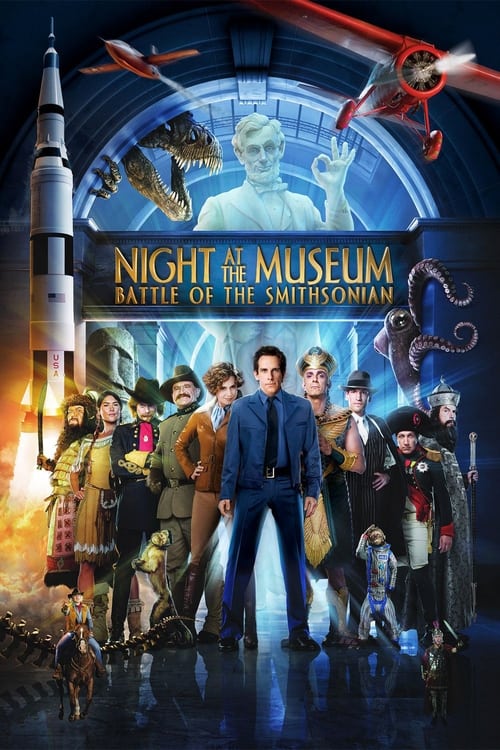
Night at the Museum: Battle of the Smithsonian
Security guard Larry Daley infiltrates the Smithsonian Institution in order to rescue Jedediah and Octavius, who have been shipped to the museum by mistake.
Despite a blockbuster budget of $150.0M, Night at the Museum: Battle of the Smithsonian became a commercial success, earning $413.1M worldwide—a 175% return. This commercial performance validated the ambitious narrative scope, illustrating how audiences embrace distinctive approach even at blockbuster scale.
2 wins & 9 nominations


Plot Structure
Story beats plotted across runtime


Narrative Arc
Emotional journey through the story's key moments
Story Circle
Blueprint 15-beat structure
Characters
Cast & narrative archetypes

Larry Daley
Amelia Earhart
Kahmunrah
Jedediah Smith
Octavius
Theodore Roosevelt
Napoleon Bonaparte
Ivan the Terrible
Al Capone
Main Cast & Characters
Larry Daley
Played by Ben Stiller
Former night guard turned successful businessman who returns to save his museum friends from the Smithsonian.
Amelia Earhart
Played by Amy Adams
Spirited aviator exhibit who becomes Larry's ally and love interest in his quest to rescue his friends.
Kahmunrah
Played by Hank Azaria
Napoleon-complex-afflicted Egyptian pharaoh and primary antagonist who seeks to open the Gate to the Underworld.
Jedediah Smith
Played by Owen Wilson
Miniature cowboy diorama figure and Larry's loyal friend trapped in the Smithsonian.
Octavius
Played by Steve Coogan
Miniature Roman general and Jedediah's best friend, also trapped in the Smithsonian.
Theodore Roosevelt
Played by Robin Williams
Wax figure mentor who provides guidance to Larry from the Natural History Museum.
Napoleon Bonaparte
Played by Alain Chabat
Diminutive French emperor who joins Kahmunrah's villainous alliance.
Ivan the Terrible
Played by Christopher Guest
Brutal Russian czar who serves as one of Kahmunrah's henchmen.
Al Capone
Played by Jon Bernthal
Notorious gangster who reluctantly joins Kahmunrah's team of historical villains.
Structural Analysis
The Status Quo at 1 minutes (1% through the runtime) establishes Larry Daley is now a successful inventor and infomercial mogul, demonstrating his glow-in-the-dark flashlight on TV. He appears successful but disconnected from what made him happy.. Significantly, this early placement immediately immerses viewers in the story world.
The inciting incident occurs at 12 minutes when Larry receives a panicked phone call from Jedediah at the Smithsonian - the Tablet of Ahkmenrah has brought everything to life, and the evil Kahmunrah has taken his friends hostage and plans to take over the world.. At 11% through the film, this Disruption aligns precisely with traditional story structure. This beat shifts the emotional landscape, launching the protagonist into the central conflict.
The First Threshold at 25 minutes marks the transition into Act II, occurring at 24% of the runtime. This indicates the protagonist's commitment to Larry enters the Smithsonian archives and encounters the living exhibits. He commits to rescuing his friends and stopping Kahmunrah, leaving his safe civilian life behind to become a hero again., moving from reaction to action.
At 53 minutes, the Midpoint arrives at 50% of the runtime—precisely centered, creating perfect narrative symmetry. Structural examination shows that this crucial beat Kahmunrah captures Larry and forces him to translate the tablet's combination code to open the Gate to the Underworld. Larry stalls, but Kahmunrah threatens his friends. The villain is about to gain ultimate power, and the stakes escalate dramatically., fundamentally raising what's at risk. The emotional intensity shifts, dividing the narrative into clear before-and-after phases.
The Collapse moment at 77 minutes (73% through) represents the emotional nadir. Here, The Gate to the Underworld fully opens and Kahmunrah's army of supernatural warriors emerges. Larry is separated from Amelia and the tablet. All seems lost as Kahmunrah gains control of an unstoppable force. Larry's friends are scattered and helpless., reveals the protagonist at their lowest point. This beat's placement in the final quarter sets up the climactic reversal.
The Second Threshold at 82 minutes initiates the final act resolution at 78% of the runtime. Larry formulates a plan using both his natural creativity and everything he's learned from Amelia about courage. He rallies all the Smithsonian exhibits - the Tuskegee Airmen, Custer, the bobblehead Einsteins - for a final coordinated assault., demonstrating the transformation achieved throughout the journey.
Emotional Journey
Night at the Museum: Battle of the Smithsonian's emotional architecture traces a deliberate progression across 15 carefully calibrated beats.
Narrative Framework
This structural analysis employs proven narrative structure principles that track dramatic progression. By mapping Night at the Museum: Battle of the Smithsonian against these established plot points, we can identify how Shawn Levy utilizes or subverts traditional narrative conventions. The plot point approach reveals not only adherence to structural principles but also creative choices that distinguish Night at the Museum: Battle of the Smithsonian within the adventure genre.
Shawn Levy's Structural Approach
Among the 14 Shawn Levy films analyzed on Arcplot, the average structural score is 7.1, reflecting strong command of classical structure. Night at the Museum: Battle of the Smithsonian exemplifies the director's characteristic narrative technique. For comparative analysis, explore the complete Shawn Levy filmography.
Comparative Analysis
Additional adventure films include The Black Stallion, The Bad Guys and Puss in Boots. For more Shawn Levy analyses, see Night at the Museum: Secret of the Tomb, This Is Where I Leave You and Free Guy.
Plot Points by Act
Act I
SetupStatus Quo
Larry Daley is now a successful inventor and infomercial mogul, demonstrating his glow-in-the-dark flashlight on TV. He appears successful but disconnected from what made him happy.
Theme
Dr. McPhee mentions the museum exhibits being shipped to the Smithsonian for "safekeeping" and that "progress" means moving forward. Theme: What truly matters - success and progress, or connection and purpose?
Worldbuilding
Larry visits the Museum of Natural History to find the exhibits being packed up and replaced with holograms. He reunites with Teddy, Jedediah, Octavius, and others. We see his business success contrasted with his emotional connection to the museum world.
Disruption
Larry receives a panicked phone call from Jedediah at the Smithsonian - the Tablet of Ahkmenrah has brought everything to life, and the evil Kahmunrah has taken his friends hostage and plans to take over the world.
Resistance
Larry debates whether to go to Washington DC. He books a flight, travels to the Smithsonian, and breaks in through the loading dock. He navigates the massive museum complex, uncertain if he can handle this alone.
Act II
ConfrontationFirst Threshold
Larry enters the Smithsonian archives and encounters the living exhibits. He commits to rescuing his friends and stopping Kahmunrah, leaving his safe civilian life behind to become a hero again.
Mirror World
Larry meets Amelia Earhart, the fearless aviator who embodies courage, authenticity, and living life fully. She immediately joins his mission and represents everything he's been missing - passion and purpose over commercial success.
Premise
Larry and Amelia explore the Smithsonian, encountering living exhibits: the Tuskegee Airmen, the Lincoln Memorial, Rodin's Thinker, and various historical figures. They work to rescue Jedediah and Octavius while evading Kahmunrah's forces. Classic adventure hijinks through American history.
Midpoint
Kahmunrah captures Larry and forces him to translate the tablet's combination code to open the Gate to the Underworld. Larry stalls, but Kahmunrah threatens his friends. The villain is about to gain ultimate power, and the stakes escalate dramatically.
Opposition
Larry tries various combinations to delay Kahmunrah while Amelia works to free the others. Kahmunrah recruits Ivan the Terrible, Napoleon, and Al Capone as his henchmen. Multiple escape attempts fail. The gate begins to open, summoning Horus's warriors from the underworld.
Collapse
The Gate to the Underworld fully opens and Kahmunrah's army of supernatural warriors emerges. Larry is separated from Amelia and the tablet. All seems lost as Kahmunrah gains control of an unstoppable force. Larry's friends are scattered and helpless.
Crisis
Larry regroups with his friends in defeat. Amelia encourages him, reminding him that he doesn't need to be a successful businessman to be a hero - he just needs to be himself. Larry realizes what truly matters.
Act III
ResolutionSecond Threshold
Larry formulates a plan using both his natural creativity and everything he's learned from Amelia about courage. He rallies all the Smithsonian exhibits - the Tuskegee Airmen, Custer, the bobblehead Einsteins - for a final coordinated assault.
Synthesis
Epic battle in the Smithsonian as Larry leads all the exhibits against Kahmunrah's forces. Jedediah and Octavius provide crucial help. Larry outsmarts Kahmunrah and traps him in the Gate. Amelia sacrifices her chance at life to help seal the portal, choosing duty over desire. Larry returns the exhibits safely before dawn.
Transformation
Larry quits his business empire and takes a job as night guard at the Museum of Natural History again, choosing meaningful work over wealth. He's reunited with his friends, and through a clever arrangement, brings the Smithsonian exhibits for a "special exhibit" so the adventure can continue.