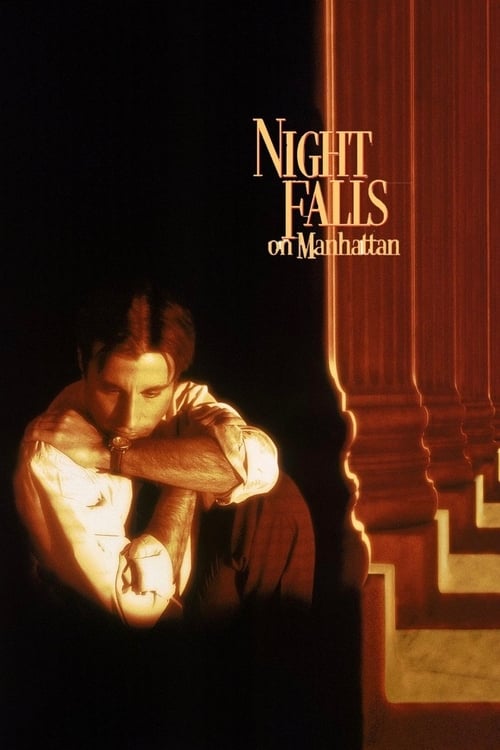
Night Falls on Manhattan
A newly elected District attorney finds himself in the middle of a police corruption investigation that may involve his father and his partner.
The film underperformed commercially against its limited budget of $10.0M, earning $9.9M globally (-1% loss).


Plot Structure
Story beats plotted across runtime


Narrative Arc
Emotional journey through the story's key moments
Story Circle
Blueprint 15-beat structure
Arcplot Score Breakdown
Weighted: Precision (70%) + Arc (15%) + Theme (15%)
Night Falls on Manhattan (1997) exemplifies strategically placed story structure, characteristic of Sidney Lumet's storytelling approach. This structural analysis examines how the film's 15-point plot structure maps to proven narrative frameworks across 1 hour and 53 minutes. With an Arcplot score of 7.3, the film balances conventional beats with creative variation.
Characters
Cast & narrative archetypes

Sean Casey
Liam Casey
Morgenstern
Sam Vigoda
Peggy Lindstrom
Jordan Washington
Joey Allegretto
Main Cast & Characters
Sean Casey
Played by Andy Garcia
Young assistant district attorney who becomes lead prosecutor in a cop-killing case, facing moral dilemmas about corruption and justice.
Liam Casey
Played by Ian Holm
Sean's father, a veteran NYPD detective shot in the line of duty, whose injury propels his son's career.
Morgenstern
Played by Ron Leibman
District Attorney and Sean's mentor who guides him through the political landscape of prosecution.
Sam Vigoda
Played by Richard Dreyfuss
Defense attorney representing the cop killer, a skilled lawyer who challenges Sean's case and moral certainty.
Peggy Lindstrom
Played by Lena Olin
Assistant district attorney and Sean's colleague and love interest who supports his journey.
Jordan Washington
Played by James Gandolfini
Police officer accused of corruption whose case forces Sean to confront systemic problems in law enforcement.
Joey Allegretto
Played by Shiek Mahmud-Bey
Drug dealer and cop killer whose trial becomes the centerpiece of the film's moral drama.
Structural Analysis
The Status Quo at 1 minutes (1% through the runtime) establishes Sean Casey works as an assistant DA in Manhattan, his father Liam is a veteran NYPD detective. The Casey family represents three generations of Irish-American law enforcement.. Significantly, this early placement immediately immerses viewers in the story world.
The inciting incident occurs at 13 minutes when Sean's father Liam and his partner are ambushed during a drug raid. Liam is critically wounded and his partner killed by drug dealer Jordan Washington, creating a media firestorm and personal crisis.. At 11% through the film, this Disruption aligns precisely with traditional story structure. This beat shifts the emotional landscape, launching the protagonist into the central conflict.
The First Threshold at 28 minutes marks the transition into Act II, occurring at 25% of the runtime. This illustrates the protagonist's commitment to Sean accepts the offer to prosecute Jordan Washington despite his inexperience. His choice is driven by duty to his father and belief in justice, launching him into the spotlight of a major trial., moving from reaction to action.
At 57 minutes, the Midpoint arrives at 51% of the runtime—precisely centered, creating perfect narrative symmetry. Notably, this crucial beat Sean wins the Washington trial and is celebrated as a hero. He's offered the position of District Attorney—a meteoric rise. This appears to be a victory, but it positions him for the real conflict to come., fundamentally raising what's at risk. The emotional intensity shifts, dividing the narrative into clear before-and-after phases.
The Collapse moment at 83 minutes (74% through) represents the emotional nadir. Here, Sean discovers definitive proof that his father knew about or was involved in the corruption. The case that made Sean's career may have been tainted. His relationship with his father collapses under the weight of betrayal and moral compromise., illustrates the protagonist at their lowest point. This beat's placement in the final quarter sets up the climactic reversal.
The Second Threshold at 89 minutes initiates the final act resolution at 79% of the runtime. Sean decides he must pursue the truth regardless of personal cost. He realizes that real justice requires integrity even when it destroys what you love—synthesizing the law with true morality., demonstrating the transformation achieved throughout the journey.
Emotional Journey
Night Falls on Manhattan's emotional architecture traces a deliberate progression across 15 carefully calibrated beats.
Narrative Framework
This structural analysis employs proven narrative structure principles that track dramatic progression. By mapping Night Falls on Manhattan against these established plot points, we can identify how Sidney Lumet utilizes or subverts traditional narrative conventions. The plot point approach reveals not only adherence to structural principles but also creative choices that distinguish Night Falls on Manhattan within the drama genre.
Sidney Lumet's Structural Approach
Among the 15 Sidney Lumet films analyzed on Arcplot, the average structural score is 6.8, demonstrating varied approaches to story architecture. Night Falls on Manhattan represents one of the director's most structurally precise works. For comparative analysis, explore the complete Sidney Lumet filmography.
Comparative Analysis
Additional drama films include After Thomas, South Pacific and Dirty Dancing: Havana Nights. For more Sidney Lumet analyses, see Guilty as Sin, Dog Day Afternoon and Murder on the Orient Express.
Plot Points by Act
Act I
SetupStatus Quo
Sean Casey works as an assistant DA in Manhattan, his father Liam is a veteran NYPD detective. The Casey family represents three generations of Irish-American law enforcement.
Theme
A senior colleague discusses the thin line between law enforcement and criminality, suggesting that sometimes good cops must bend rules to catch bad guys—foreshadowing Sean's moral dilemma.
Worldbuilding
Establishment of Sean's world: his relationship with his father, his position as a junior prosecutor, the rough justice culture of New York law enforcement, and introduction of key players in the DA's office.
Disruption
Sean's father Liam and his partner are ambushed during a drug raid. Liam is critically wounded and his partner killed by drug dealer Jordan Washington, creating a media firestorm and personal crisis.
Resistance
Sean grapples with his father's critical condition while the DA's office debates who should prosecute. Political pressure mounts for a high-profile conviction. Sean is inexperienced but personally invested.
Act II
ConfrontationFirst Threshold
Sean accepts the offer to prosecute Jordan Washington despite his inexperience. His choice is driven by duty to his father and belief in justice, launching him into the spotlight of a major trial.
Mirror World
Sean deepens his relationship with Peggy Lindstrom, a defense attorney who represents the moral complexity of the justice system—someone who defends people Sean prosecutes, embodying the theme of justice vs. law.
Premise
Sean prepares for and conducts the trial of Jordan Washington. He becomes a media sensation, wins the case convincingly, and rides the wave of public approval. His father recovers. Everything seems to validate his choice.
Midpoint
Sean wins the Washington trial and is celebrated as a hero. He's offered the position of District Attorney—a meteoric rise. This appears to be a victory, but it positions him for the real conflict to come.
Opposition
As DA, Sean uncovers evidence of widespread police corruption, including officers planting evidence and taking bribes. The trail leads uncomfortably close to his father and his father's generation of cops. Political and personal pressure mounts to ignore it.
Collapse
Sean discovers definitive proof that his father knew about or was involved in the corruption. The case that made Sean's career may have been tainted. His relationship with his father collapses under the weight of betrayal and moral compromise.
Crisis
Sean wrestles with impossible choices: prosecute his father and destroy his family, or cover it up and become complicit in corruption. He confronts what justice truly means when it costs everything personal.
Act III
ResolutionSecond Threshold
Sean decides he must pursue the truth regardless of personal cost. He realizes that real justice requires integrity even when it destroys what you love—synthesizing the law with true morality.
Synthesis
Sean navigates the political fallout, confronts his father directly, and makes his final decisions about prosecution. He acts according to his principles while understanding the human cost and complexity of justice.
Transformation
Sean stands alone, having made his choice. He is no longer the naive prosecutor who believed in simple justice. He understands the moral complexity of the system he serves, transformed by the cost of integrity.