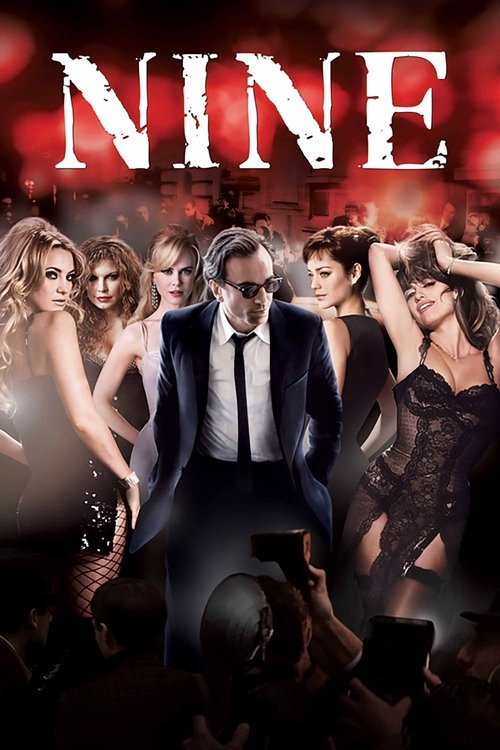
Nine
Arrogant, self-centered movie director Guido Contini finds himself struggling to find meaning, purpose, and a script for his latest film endeavor. With only a week left before shooting begins, he desperately searches for answers and inspiration from his wife, his mistress, his muse, and his mother.
The film struggled financially against its significant budget of $80.0M, earning $53.8M globally (-33% loss). While initial box office returns were modest, the film has gained appreciation for its bold vision within the drama genre.
Nominated for 4 Oscars. 8 wins & 60 nominations


Plot Structure
Story beats plotted across runtime


Narrative Arc
Emotional journey through the story's key moments
Story Circle
Blueprint 15-beat structure
Arcplot Score Breakdown
Weighted: Precision (70%) + Arc (15%) + Theme (15%)
Nine (2009) showcases precise narrative design, characteristic of Rob Marshall's storytelling approach. This structural analysis examines how the film's 15-point plot structure maps to proven narrative frameworks across 1 hour and 58 minutes. With an Arcplot score of 7.4, the film balances conventional beats with creative variation.
Structural Analysis
The Status Quo at 1 minutes (1% through the runtime) establishes Guido Contini sits alone backstage, surrounded by adoring press and chaos, revealing a celebrated director who appears successful but is internally empty and creatively paralyzed.. Of particular interest, this early placement immediately immerses viewers in the story world.
The inciting incident occurs at 14 minutes when The producer confronts Guido demanding to see the script for "Italia" - revealing publicly that there is no script, no story, nothing. Guido's carefully maintained facade of creative genius begins to crack.. At 12% through the film, this Disruption aligns precisely with traditional story structure. This beat shifts the emotional landscape, launching the protagonist into the central conflict.
The First Threshold at 30 minutes marks the transition into Act II, occurring at 25% of the runtime. This indicates the protagonist's commitment to Guido makes the active choice to bring everyone to the Cinecittà set and begin production despite having nothing - committing to the grand deception rather than admitting failure, hoping inspiration will somehow arrive., moving from reaction to action.
At 59 minutes, the Midpoint arrives at 50% of the runtime—precisely centered, creating perfect narrative symmetry. Structural examination shows that this crucial beat Luisa discovers Carla at the film set, realizing Guido has been lying about his affair. The false victory of keeping all his relationships spinning collapses - now the women in his life are actively in conflict and aware of each other., fundamentally raising what's at risk. The emotional intensity shifts, dividing the narrative into clear before-and-after phases.
The Collapse moment at 89 minutes (75% through) represents the emotional nadir. Here, Claudia confronts Guido about having no vision and leaves the film. Luisa formally announces she's leaving him. Guido orders the destruction of the elaborate set - the whiff of death as his career, marriage, and identity as an artist all collapse simultaneously., demonstrates the protagonist at their lowest point. This beat's placement in the final quarter sets up the climactic reversal.
The Second Threshold at 94 minutes initiates the final act resolution at 80% of the runtime. Guido has a vision of his younger self - the nine-year-old boy who first discovered the magic of cinema. He realizes he must create from genuine emotion and memory, not manipulation. He finally has something real to say., demonstrating the transformation achieved throughout the journey.
Emotional Journey
Nine's emotional architecture traces a deliberate progression across 15 carefully calibrated beats.
Narrative Framework
This structural analysis employs structural analysis methodology used to understand storytelling architecture. By mapping Nine against these established plot points, we can identify how Rob Marshall utilizes or subverts traditional narrative conventions. The plot point approach reveals not only adherence to structural principles but also creative choices that distinguish Nine within the drama genre.
Rob Marshall's Structural Approach
Among the 8 Rob Marshall films analyzed on Arcplot, the average structural score is 7.0, demonstrating varied approaches to story architecture. Nine represents one of the director's most structurally precise works. For comparative analysis, explore the complete Rob Marshall filmography.
Comparative Analysis
Additional drama films include After Thomas, South Pacific and Dirty Dancing: Havana Nights. For more Rob Marshall analyses, see Mary Poppins Returns, Pirates of the Caribbean: On Stranger Tides and Chicago.
Plot Points by Act
Act I
SetupStatus Quo
Guido Contini sits alone backstage, surrounded by adoring press and chaos, revealing a celebrated director who appears successful but is internally empty and creatively paralyzed.
Theme
Lilli tells Guido, "You cannot make a film about nothing," articulating the theme that creative expression requires genuine substance and emotional truth, not just clever evasion.
Worldbuilding
The glamorous but hollow world of 1965 Italian cinema is established: Guido's fame, his mistress Carla, his devoted wife Luisa, the awaiting film set at Cinecittà, and the pressure from producers demanding his new film "Italia."
Disruption
The producer confronts Guido demanding to see the script for "Italia" - revealing publicly that there is no script, no story, nothing. Guido's carefully maintained facade of creative genius begins to crack.
Resistance
Guido flees to a spa to hide, but is found by Carla. He debates his options, escaping into fantasy sequences while Lilli serves as his guide, urging him to confront his creative void rather than seduce his way around it.
Act II
ConfrontationFirst Threshold
Guido makes the active choice to bring everyone to the Cinecittà set and begin production despite having nothing - committing to the grand deception rather than admitting failure, hoping inspiration will somehow arrive.
Mirror World
Claudia Jenssen arrives - Guido's muse and leading lady who represents authentic artistry. Their relationship embodies the theme: she demands real emotional connection and genuine creative vision, not manipulation.
Premise
The promise of the premise unfolds: elaborate fantasy musical numbers with all the women in Guido's life ("A Call from the Vatican," "Cinema Italiano," "My Husband Makes Movies") as he juggles his muse, wife, mistress, and memories while pretending to make a film.
Midpoint
Luisa discovers Carla at the film set, realizing Guido has been lying about his affair. The false victory of keeping all his relationships spinning collapses - now the women in his life are actively in conflict and aware of each other.
Opposition
Everything closes in on Guido: Luisa pulls away emotionally ("My Husband Makes Movies" reveals her pain), Claudia demands a real script or she walks, Carla becomes desperate, and the production spirals toward disaster with no creative solution in sight.
Collapse
Claudia confronts Guido about having no vision and leaves the film. Luisa formally announces she's leaving him. Guido orders the destruction of the elaborate set - the whiff of death as his career, marriage, and identity as an artist all collapse simultaneously.
Crisis
Guido wanders the destroyed set in despair. He confronts his inability to love, his pattern of using women, and the hollowness at his core. The fantasy women fade - he is truly alone with the consequences of his choices.
Act III
ResolutionSecond Threshold
Guido has a vision of his younger self - the nine-year-old boy who first discovered the magic of cinema. He realizes he must create from genuine emotion and memory, not manipulation. He finally has something real to say.
Synthesis
Years later, Guido begins a new film - a genuine, personal work. He approaches Luisa not to seduce her back but to honestly ask her to be in his film. The fantasy women take their proper place as inspiration rather than escape. He finally creates from truth.
Transformation
Guido sits in the director's chair calling "Action!" on his new film, but now with peace and genuine creative purpose. The opening isolation has transformed into connection - he makes films not to hide from life but to honestly express it.