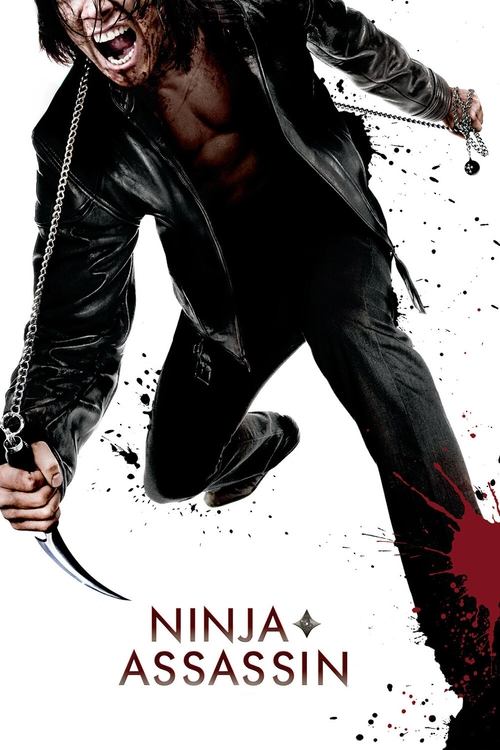
Ninja Assassin
Ninja Assassin follows Raizo, one of the deadliest assassins in the world. Taken from the streets as a child, he was transformed into a trained killer by the Ozunu Clan, a secret society whose very existence is considered a myth. But haunted by the merciless execution of his friend by the Clan, Raizo breaks free from them and vanishes. Now he waits, preparing to exact his revenge.
Working with a mid-range budget of $40.0M, the film achieved a respectable showing with $61.6M in global revenue (+54% profit margin).


Plot Structure
Story beats plotted across runtime


Narrative Arc
Emotional journey through the story's key moments
Story Circle
Blueprint 15-beat structure
Arcplot Score Breakdown
Weighted: Precision (70%) + Arc (15%) + Theme (15%)
Ninja Assassin (2009) exemplifies deliberately positioned plot construction, characteristic of James McTeigue's storytelling approach. This structural analysis examines how the film's 15-point plot structure maps to proven narrative frameworks across 1 hour and 39 minutes. With an Arcplot score of 6.8, the film balances conventional beats with creative variation.
Characters
Cast & narrative archetypes

Raizo
Mika Coretti
Lord Ozunu
Ryan Maslow
Kiriko
Takeshi
Young Raizo
Main Cast & Characters
Raizo
Played by Rain
A deadly ninja assassin trained from childhood by the Ozunu Clan who turns against his masters after witnessing the murder of his first love.
Mika Coretti
Played by Naomie Harris
A Europol forensic researcher who discovers evidence of ninja clan assassinations and becomes a target herself.
Lord Ozunu
Played by Sho Kosugi
The ruthless master of the Ozunu Clan who raised Raizo and serves as the primary antagonist seeking to destroy his former student.
Ryan Maslow
Played by Ben Miles
A Europol agent and Mika's supervisor who initially dismisses her research but later helps her survive.
Kiriko
Played by Kylie Goldstein
A young female ninja trainee who showed kindness to Raizo during their childhood training and whose death sparked his rebellion.
Takeshi
Played by Rick Yune
Raizo's rival and fellow Ozunu trainee who remains loyal to the clan and becomes an enforcer hunting Raizo.
Young Raizo
Played by Joon Lee
The childhood version of Raizo, shown during his brutal training at the Ozunu compound.
Structural Analysis
The Status Quo at 1 minutes (1% through the runtime) establishes A Yakuza gang member is brutally executed by invisible ninja assassins in his own headquarters, establishing the terrifying existence of the Ozunu Clan as unstoppable supernatural killers who eliminate targets without mercy.. Of particular interest, this early placement immediately immerses viewers in the story world.
The inciting incident occurs at 13 minutes when Raizo witnesses Kiriko's execution by the clan for attempting to escape, a traumatic event that plants the seed of his own rebellion and shatters his world of obedience. He is forced to watch the girl he loves die for choosing freedom.. At 13% through the film, this Disruption is delayed, allowing extended setup of the story world. This beat shifts the emotional landscape, launching the protagonist into the central conflict.
The First Threshold at 24 minutes marks the transition into Act II, occurring at 25% of the runtime. This indicates the protagonist's commitment to Raizo makes his choice: he refuses to complete an assassination mission and turns against the Ozunu Clan, actively defying Lord Ozunu and choosing his own path. This is his irreversible decision to leave the only family he has ever known., moving from reaction to action.
At 50 minutes, the Midpoint arrives at 51% of the runtime—precisely centered, creating perfect narrative symmetry. Significantly, this crucial beat Europol raids a suspected Ozunu safe house, but the clan ambushes them in a massive battle. Despite Raizo's help, many agents are slaughtered. The stakes are raised dramatically: the clan is more powerful than anyone imagined, and Raizo realizes he cannot hide from them. False defeat., fundamentally raising what's at risk. The emotional intensity shifts, dividing the narrative into clear before-and-after phases.
The Collapse moment at 73 minutes (74% through) represents the emotional nadir. Here, The Ozunu Clan infiltrates Europol headquarters and captures Raizo, taking him back to Lord Ozunu. Raizo is chained and helpless before his former master, facing torture and certain death. His attempt to escape his past has failed completely, and he's back where he started—a prisoner of the clan., demonstrates the protagonist at their lowest point. This beat's placement in the final quarter sets up the climactic reversal.
The Second Threshold at 79 minutes initiates the final act resolution at 80% of the runtime. Mika and Europol forces locate the Ozunu Clan's compound and launch an assault. Raizo synthesizes his realization: he can use the clan's own teachings against them while fighting for his own freedom rather than for obedience. He breaks free of his chains, ready for final confrontation., demonstrating the transformation achieved throughout the journey.
Emotional Journey
Ninja Assassin's emotional architecture traces a deliberate progression across 15 carefully calibrated beats.
Narrative Framework
This structural analysis employs a 15-point narrative structure framework that maps key story moments. By mapping Ninja Assassin against these established plot points, we can identify how James McTeigue utilizes or subverts traditional narrative conventions. The plot point approach reveals not only adherence to structural principles but also creative choices that distinguish Ninja Assassin within the action genre.
James McTeigue's Structural Approach
Among the 4 James McTeigue films analyzed on Arcplot, the average structural score is 6.1, demonstrating varied approaches to story architecture. Ninja Assassin represents one of the director's most structurally precise works. For comparative analysis, explore the complete James McTeigue filmography.
Comparative Analysis
Additional action films include The Bad Guys, Puss in Boots and Venom: The Last Dance. For more James McTeigue analyses, see The Raven, Breaking In and V for Vendetta.
Plot Points by Act
Act I
SetupStatus Quo
A Yakuza gang member is brutally executed by invisible ninja assassins in his own headquarters, establishing the terrifying existence of the Ozunu Clan as unstoppable supernatural killers who eliminate targets without mercy.
Theme
Young Raizo is told by Lord Ozunu: "You will learn to sacrifice yourself for the clan. You have no other purpose." The theme of obedience versus freedom, and whether one's life belongs to themselves or to those who raised them, is established.
Worldbuilding
Flashbacks reveal Raizo's brutal training from childhood in the Ozunu Clan, including his relationship with Kiriko, while present-day scenes show Europol agent Mika Coretti investigating black-ops ninja assassinations. The parallel worlds of the ninja underground and modern law enforcement are established.
Disruption
Raizo witnesses Kiriko's execution by the clan for attempting to escape, a traumatic event that plants the seed of his own rebellion and shatters his world of obedience. He is forced to watch the girl he loves die for choosing freedom.
Resistance
Raizo trains to become the clan's deadliest weapon while internally processing Kiriko's death. Mika continues her investigation, getting closer to exposing the ninja clans despite warnings from her superiors. Both characters move toward inevitable confrontation with the Ozunu Clan.
Act II
ConfrontationFirst Threshold
Raizo makes his choice: he refuses to complete an assassination mission and turns against the Ozunu Clan, actively defying Lord Ozunu and choosing his own path. This is his irreversible decision to leave the only family he has ever known.
Mirror World
Raizo saves Mika from ninja assassins sent to silence her investigation, bringing together the two worlds. Mika represents the theme's answer: someone who fights for truth and justice within the law, showing an alternative to the ninja code of absolute obedience.
Premise
Raizo and Mika team up, combining her intelligence resources with his combat skills. They evade clan assassins, uncover the network of ninja clans, and Raizo begins to trust Mika. The promise of the premise delivers: spectacular ninja action sequences and the unlikely alliance between warrior and investigator.
Midpoint
Europol raids a suspected Ozunu safe house, but the clan ambushes them in a massive battle. Despite Raizo's help, many agents are slaughtered. The stakes are raised dramatically: the clan is more powerful than anyone imagined, and Raizo realizes he cannot hide from them. False defeat.
Opposition
The Ozunu Clan closes in from all sides. Europol keeps Raizo and Mika in protective custody but doesn't trust Raizo. Lord Ozunu sends his best ninjas after them. Raizo's past trauma resurfaces as he's forced to confront fellow ninja he trained with. The pressure intensifies relentlessly.
Collapse
The Ozunu Clan infiltrates Europol headquarters and captures Raizo, taking him back to Lord Ozunu. Raizo is chained and helpless before his former master, facing torture and certain death. His attempt to escape his past has failed completely, and he's back where he started—a prisoner of the clan.
Crisis
Raizo is tortured by Lord Ozunu and confronts his deepest fear: that he cannot escape his upbringing, that he will always belong to the clan. He processes Kiriko's death and his own guilt for not saving her. His darkest moment of doubt before finding new resolve.
Act III
ResolutionSecond Threshold
Mika and Europol forces locate the Ozunu Clan's compound and launch an assault. Raizo synthesizes his realization: he can use the clan's own teachings against them while fighting for his own freedom rather than for obedience. He breaks free of his chains, ready for final confrontation.
Synthesis
Raizo battles through the Ozunu Clan, facing his former brothers in combat. He confronts and defeats Lord Ozunu in a final duel, breaking the psychological hold his master had over him. The clan compound is destroyed, and Raizo achieves both revenge and liberation.
Transformation
Raizo vanishes into the shadows, choosing to disappear rather than stay with Europol or seek recognition. Unlike the opening where ninjas were tools of murder, he now uses his skills on his own terms, free from any master. He has transformed from obedient weapon to autonomous individual.