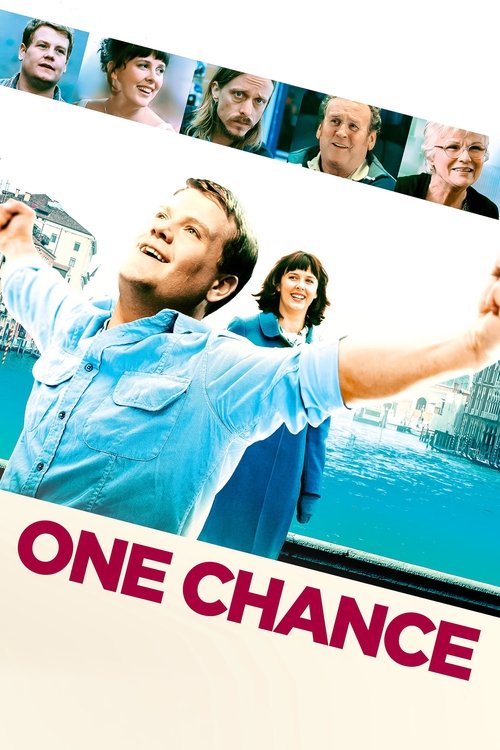
One Chance
This film follows the remarkable and inspirational true story of Paul Potts, a shy, bullied shop assistant by day and an amateur opera singer by night.
The film earned $10.9M at the global box office.
3 wins & 5 nominations


Plot Structure
Story beats plotted across runtime


Narrative Arc
Emotional journey through the story's key moments
Story Circle
Blueprint 15-beat structure
Arcplot Score Breakdown
Weighted: Precision (70%) + Arc (15%) + Theme (15%)
One Chance (2013) exhibits strategically placed dramatic framework, characteristic of David Frankel's storytelling approach. This structural analysis examines how the film's 15-point plot structure maps to proven narrative frameworks across 1 hour and 43 minutes. With an Arcplot score of 7.6, the film showcases strong structural fundamentals.
Characters
Cast & narrative archetypes

Paul Potts
Julie-Ann Cooper
Roland Potts
Yvonne Potts
Luciano Pavarotti
Hydra
Main Cast & Characters
Paul Potts
Played by James Corden
A shy, bullied mobile phone salesman from Bristol with an extraordinary operatic voice who dreams of becoming a professional singer despite constant setbacks and self-doubt.
Julie-Ann Cooper
Played by Alexandra Roach
Paul's supportive girlfriend and later wife who believes in his talent even when he struggles to believe in himself, providing unwavering emotional support throughout his journey.
Roland Potts
Played by Colm Meaney
Paul's working-class father who is skeptical of his son's singing ambitions and struggles to express emotional support, representing the practical obstacles Paul must overcome.
Yvonne Potts
Played by Julie Walters
Paul's loving mother who quietly supports his dreams and serves as an emotional anchor between Paul and his father.
Luciano Pavarotti
Played by Trystan Gravelle
The legendary opera tenor who serves as both an inspiration and brief mentor figure to Paul during his training in Italy.
Hydra
Played by Mackenzie Crook
Paul's childhood bully who torments him relentlessly, representing the external forces of doubt and cruelty that Paul must overcome on his journey.
Structural Analysis
The Status Quo at 1 minutes (1% through the runtime) establishes Young Paul is bullied at school and finds solace only in singing. We see him as an insecure, overweight child mocked by peers, establishing his lifelong struggle with confidence and belonging.. The analysis reveals that this early placement immediately immerses viewers in the story world.
The inciting incident occurs at 12 minutes when Paul reconnects with Julz at the mobile phone shop where he works. This chance encounter reignites hope and possibility in his dreary existence, disrupting his resigned acceptance of an unremarkable life.. At 11% through the film, this Disruption aligns precisely with traditional story structure. This beat shifts the emotional landscape, launching the protagonist into the central conflict.
The First Threshold at 25 minutes marks the transition into Act II, occurring at 24% of the runtime. This demonstrates the protagonist's commitment to Paul proposes to Julz and she accepts. He makes the active choice to commit to building a life with her, stepping into the "new world" of marriage and partnership, believing love might be enough even if opera dreams fail., moving from reaction to action.
At 50 minutes, the Midpoint arrives at 49% of the runtime—precisely centered, creating perfect narrative symmetry. Notably, this crucial beat Paul sees an advertisement for Britain's Got Talent auditions. This is the false victory—a possible path to his dream appears. He decides to audition, raising the stakes. From here, the pressure intensifies., fundamentally raising what's at risk. The emotional intensity shifts, dividing the narrative into clear before-and-after phases.
The Collapse moment at 76 minutes (73% through) represents the emotional nadir. Here, Paul has a massive panic attack and breakdown before the Britain's Got Talent final. He tells Julz he can't do it, that he's not good enough. This is his darkest moment—the death of his dream and his belief in himself., reveals the protagonist at their lowest point. This beat's placement in the final quarter sets up the climactic reversal.
The Second Threshold at 82 minutes initiates the final act resolution at 80% of the runtime. Paul looks at Julz and realizes: her belief in him has taught him to believe in himself. He synthesizes his gift (voice) with what he learned from their relationship (self-worth). He chooses to perform—not to prove others wrong, but because he finally believes., demonstrating the transformation achieved throughout the journey.
Emotional Journey
One Chance's emotional architecture traces a deliberate progression across 15 carefully calibrated beats.
Narrative Framework
This structural analysis employs structural analysis methodology used to understand storytelling architecture. By mapping One Chance against these established plot points, we can identify how David Frankel utilizes or subverts traditional narrative conventions. The plot point approach reveals not only adherence to structural principles but also creative choices that distinguish One Chance within the drama genre.
David Frankel's Structural Approach
Among the 5 David Frankel films analyzed on Arcplot, the average structural score is 7.3, reflecting strong command of classical structure. One Chance represents one of the director's most structurally precise works. For comparative analysis, explore the complete David Frankel filmography.
Comparative Analysis
Additional drama films include After Thomas, South Pacific and Dirty Dancing: Havana Nights. For more David Frankel analyses, see Marley & Me, The Big Year and Collateral Beauty.
Plot Points by Act
Act I
SetupStatus Quo
Young Paul is bullied at school and finds solace only in singing. We see him as an insecure, overweight child mocked by peers, establishing his lifelong struggle with confidence and belonging.
Theme
Paul's mother tells him "You have a gift" and encourages him to pursue his singing despite what others think. The theme: finding the courage to believe in yourself when no one else does.
Worldbuilding
Establishing Paul's ordinary world: his working-class Welsh family, his passion for opera, his insecurities, and his first meeting with Julz. We see his failed attempts at opera school and his acceptance of a mundane life selling mobile phones.
Disruption
Paul reconnects with Julz at the mobile phone shop where he works. This chance encounter reignites hope and possibility in his dreary existence, disrupting his resigned acceptance of an unremarkable life.
Resistance
Paul debates whether to pursue romance with Julz and whether to keep dreaming about opera. He receives encouragement from Julz and his friend Braddon, but still doubts himself. He goes to Venice to study opera but faces failure and returns home defeated.
Act II
ConfrontationFirst Threshold
Paul proposes to Julz and she accepts. He makes the active choice to commit to building a life with her, stepping into the "new world" of marriage and partnership, believing love might be enough even if opera dreams fail.
Mirror World
Paul and Julz's wedding and early marriage. Julz becomes the thematic mirror—she believes in Paul unconditionally and represents the self-belief he needs to cultivate. Their relationship carries the emotional core of the story.
Premise
Paul and Julz build their life together. Paul continues working mundane jobs while singing in amateur performances. He faces a serious bike accident and medical issues. The "promise of the premise"—can an ordinary person achieve extraordinary dreams with love and support?
Midpoint
Paul sees an advertisement for Britain's Got Talent auditions. This is the false victory—a possible path to his dream appears. He decides to audition, raising the stakes. From here, the pressure intensifies.
Opposition
Paul faces mounting opposition: his own self-doubt intensifies, he struggles with anxiety and appendicitis, his relationship with Julz becomes strained as pressure builds. He nearly gives up multiple times. Everyone doubts him except Julz.
Collapse
Paul has a massive panic attack and breakdown before the Britain's Got Talent final. He tells Julz he can't do it, that he's not good enough. This is his darkest moment—the death of his dream and his belief in himself.
Crisis
Paul sits alone in despair. Julz gives him space but her unwavering belief provides a lifeline. Paul processes his fear and remembers why he sings—not for others' approval, but because it's who he is.
Act III
ResolutionSecond Threshold
Paul looks at Julz and realizes: her belief in him has taught him to believe in himself. He synthesizes his gift (voice) with what he learned from their relationship (self-worth). He chooses to perform—not to prove others wrong, but because he finally believes.
Synthesis
Paul walks onto the Britain's Got Talent stage and performs "Nessun Dorma." The finale shows his triumphant performance, the judges' reaction, the audience's standing ovation, and his victory. He confronts and conquers his lifelong demon: self-doubt.
Transformation
Paul embraces Julz after winning. The final image mirrors the opening: once the bullied, insecure boy who sang alone, now he's the man who found his voice and his place in the world. The transformation is complete—he believes in himself.