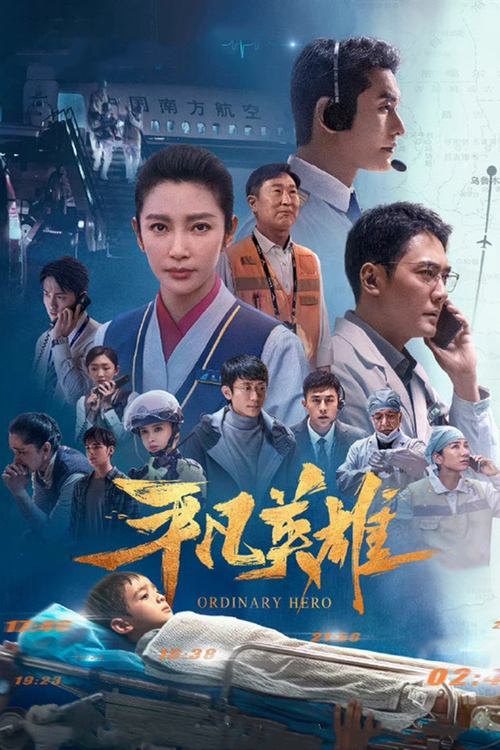
Ordinary Hero
The film is adapted from the "Life and Death Speed" rescue and treatment of a boy with a broken arm in Hetian, Xinjiang. Doctors, crew members, passengers, policemen and other people from all walks of life in Xinjiang crossed 1,400 kilometers, and the 8-hour relay of life created a miracle of life.
The film earned $32.9M at the global box office.
Plot Structure
Story beats plotted across runtime


Narrative Arc
Emotional journey through the story's key moments
Story Circle
Blueprint 15-beat structure
Arcplot Score Breakdown
Weighted: Precision (70%) + Arc (15%) + Theme (15%)
Ordinary Hero (2022) showcases strategically placed narrative architecture, characteristic of Tony Chan's storytelling approach. This structural analysis examines how the film's 15-point plot structure maps to proven narrative frameworks across 1 hour and 37 minutes. With an Arcplot score of 7.3, the film balances conventional beats with creative variation.
Structural Analysis
The Status Quo at 2 minutes (2% through the runtime) establishes Young Uyghur boy playing happily with family in rural Xinjiang, establishing the peaceful ordinary life before tragedy strikes.. The analysis reveals that this early placement immediately immerses viewers in the story world.
The inciting incident occurs at 11 minutes when The boy suffers a catastrophic accident severing his arm in farm machinery, shocking the family and community.. At 11% through the film, this Disruption aligns precisely with traditional story structure. This beat shifts the emotional landscape, launching the protagonist into the central conflict.
The First Threshold at 23 minutes marks the transition into Act II, occurring at 24% of the runtime. This indicates the protagonist's commitment to The decision is made to attempt the emergency transport to Urumqi despite enormous logistical challenges. The rescue mission officially begins., moving from reaction to action.
At 49 minutes, the Midpoint arrives at 50% of the runtime—precisely centered, creating perfect narrative symmetry. The analysis reveals that this crucial beat The boy arrives at Urumqi airport successfully, a seeming victory. However, doctors discover his condition is worse than expected—the window for reattachment is nearly closed., fundamentally raising what's at risk. The emotional intensity shifts, dividing the narrative into clear before-and-after phases.
The Collapse moment at 72 minutes (74% through) represents the emotional nadir. Here, The boy's heart stops during surgery. The team must resuscitate him, and the prospect of losing him—or at best, losing the arm—becomes devastatingly real., demonstrates the protagonist at their lowest point. This beat's placement in the final quarter sets up the climactic reversal.
The Second Threshold at 77 minutes initiates the final act resolution at 80% of the runtime. Dr. Li synthesizes a new surgical approach, drawing on both technical expertise and the inspiration from everyone's collective sacrifice. The team commits to one final attempt., demonstrating the transformation achieved throughout the journey.
Emotional Journey
Ordinary Hero's emotional architecture traces a deliberate progression across 15 carefully calibrated beats.
Narrative Framework
This structural analysis employs systematic plot point analysis that identifies crucial turning points. By mapping Ordinary Hero against these established plot points, we can identify how Tony Chan utilizes or subverts traditional narrative conventions. The plot point approach reveals not only adherence to structural principles but also creative choices that distinguish Ordinary Hero within the drama genre.
Tony Chan's Structural Approach
Among the 2 Tony Chan films analyzed on Arcplot, the average structural score is 6.9, demonstrating varied approaches to story architecture. Ordinary Hero represents one of the director's most structurally precise works. For comparative analysis, explore the complete Tony Chan filmography.
Comparative Analysis
Additional drama films include Eye for an Eye, South Pacific and Kiss of the Spider Woman. For more Tony Chan analyses, see The Bravest.
Plot Points by Act
Act I
SetupStatus Quo
Young Uyghur boy playing happily with family in rural Xinjiang, establishing the peaceful ordinary life before tragedy strikes.
Theme
A character remarks that 'ordinary people doing extraordinary things make the greatest heroes,' establishing the film's central theme about collective heroism.
Worldbuilding
Introduction to the rural Xinjiang setting, the boy's family life, and the remote medical facilities with limited capabilities.
Disruption
The boy suffers a catastrophic accident severing his arm in farm machinery, shocking the family and community.
Resistance
Local doctors debate whether transport is possible, family struggles with fear and uncertainty, emergency contacts are made to Urumqi specialists who explain the critical time window.
Act II
ConfrontationFirst Threshold
The decision is made to attempt the emergency transport to Urumqi despite enormous logistical challenges. The rescue mission officially begins.
Mirror World
Introduction of the Urumqi surgical team led by Dr. Li, who represents the dedication and skill needed, paralleling the family's love with professional commitment.
Premise
The race against time unfolds: coordinating ground transport, air traffic clearance, medical preparation. Ordinary citizens—drivers, police, airport staff—all mobilize to create a 'green channel' for the boy.
Midpoint
The boy arrives at Urumqi airport successfully, a seeming victory. However, doctors discover his condition is worse than expected—the window for reattachment is nearly closed.
Opposition
Surgical complications mount: tissue damage is severe, the boy's vitals become unstable, equipment malfunctions. The medical team faces multiple setbacks as time runs out.
Collapse
The boy's heart stops during surgery. The team must resuscitate him, and the prospect of losing him—or at best, losing the arm—becomes devastatingly real.
Crisis
Dr. Li and the team face their darkest moment of doubt. Outside, the family and all those who helped transport the boy wait in anguish, questioning if their efforts were enough.
Act III
ResolutionSecond Threshold
Dr. Li synthesizes a new surgical approach, drawing on both technical expertise and the inspiration from everyone's collective sacrifice. The team commits to one final attempt.
Synthesis
The surgical team executes the complex reattachment. The finale intercuts surgery with flashbacks to all the ordinary heroes who made this moment possible, bringing thematic resolution.
Transformation
The boy awakens, arm successfully reattached, moving his fingers. Final images show him recovered, playing again, while text reveals the real people who made this rescue possible—ordinary heroes.