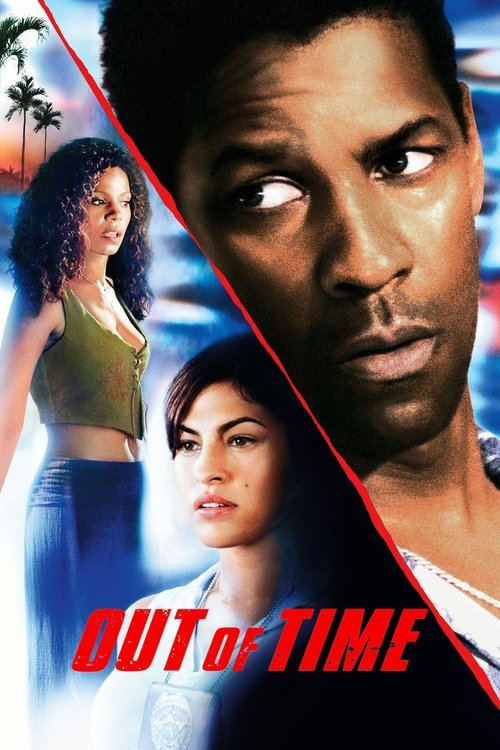
Out of Time
Matt Lee Whitlock, respected chief of police in small Banyan Key, Florida, must solve a vicious double homicide before he himself falls under suspicion. Matt Lee has to stay a few steps ahead of his own police force and everyone he's trusted in order to find out the truth.
Working with a moderate budget of $50.0M, the film achieved a respectable showing with $55.5M in global revenue (+11% profit margin).


Plot Structure
Story beats plotted across runtime


Narrative Arc
Emotional journey through the story's key moments
Story Circle
Blueprint 15-beat structure
Arcplot Score Breakdown
Weighted: Precision (70%) + Arc (15%) + Theme (15%)
Out of Time (2003) reveals strategically placed plot construction, characteristic of Carl Franklin's storytelling approach. This structural analysis examines how the film's 15-point plot structure maps to proven narrative frameworks across 1 hour and 45 minutes. With an Arcplot score of 7.4, the film balances conventional beats with creative variation.
Characters
Cast & narrative archetypes

Matt Lee Whitlock
Alex Diaz-Whitlock
Ann Merai Harrison
Chris Harrison
Chae
Tony Dalton
Main Cast & Characters
Matt Lee Whitlock
Played by Denzel Washington
The chief of police of Banyan Key, Florida, who becomes entangled in a dangerous scheme after embezzling DEA money to help his dying mistress, only to discover he's been set up.
Alex Diaz-Whitlock
Played by Eva Mendes
Matt's estranged wife and a homicide detective who unknowingly investigates a case that leads directly to her husband's crimes.
Ann Merai Harrison
Played by Sanaa Lathan
Matt's mistress who claims to be dying of cancer and manipulates him into stealing money for her supposed treatment, ultimately revealed as the mastermind of the scheme.
Chris Harrison
Played by Dean Cain
Ann's abusive husband who is part of the conspiracy to frame Matt and steal the DEA money.
Chae
Played by John Billingsley
Matt's loyal friend and colleague at the police department who helps him navigate the investigation while suspecting something is wrong.
Tony Dalton
Played by Robert Baker
An aggressive DEA agent who comes to Banyan Key to track down the missing drug money, adding pressure to Matt's desperate situation.
Structural Analysis
The Status Quo at 1 minutes (1% through the runtime) establishes Chief Matt Whitlock patrols the quiet Florida Keys town of Banyan Key, respected by the community and seemingly in control of his small-town life.. Notably, this early placement immediately immerses viewers in the story world.
The inciting incident occurs at 13 minutes when Ann reveals she has terminal cancer and needs $50,000 for experimental treatment. Matt, emotionally manipulated, decides to give her money from the police evidence locker.. At 13% through the film, this Disruption is delayed, allowing extended setup of the story world. This beat shifts the emotional landscape, launching the protagonist into the central conflict.
The First Threshold at 27 minutes marks the transition into Act II, occurring at 25% of the runtime. This reveals the protagonist's commitment to Ann and Chris Harrison's house explodes with both of them inside. Matt rushes to the scene, realizing his money is gone and he's now connected to a double homicide., moving from reaction to action.
At 53 minutes, the Midpoint arrives at 51% of the runtime—precisely centered, creating perfect narrative symmetry. The analysis reveals that this crucial beat Matt discovers Ann faked her cancer and was conning him all along with Chris. The bodies are identified, and he realizes he's been played. False defeat: he's now trapped in a murder he didn't commit., fundamentally raising what's at risk. The emotional intensity shifts, dividing the narrative into clear before-and-after phases.
The Collapse moment at 80 minutes (76% through) represents the emotional nadir. Here, Alex discovers the truth about Matt's affair and theft. She confronts him, and Matt realizes he's lost her trust forever. His marriage, career, and freedom are all collapsing simultaneously., demonstrates the protagonist at their lowest point. This beat's placement in the final quarter sets up the climactic reversal.
The Second Threshold at 84 minutes initiates the final act resolution at 80% of the runtime. Matt realizes Ann is still alive and staged everything. He chooses to stop running and instead gather evidence to prove his innocence and expose the real killers., demonstrating the transformation achieved throughout the journey.
Emotional Journey
Out of Time's emotional architecture traces a deliberate progression across 15 carefully calibrated beats.
Narrative Framework
This structural analysis employs proven narrative structure principles that track dramatic progression. By mapping Out of Time against these established plot points, we can identify how Carl Franklin utilizes or subverts traditional narrative conventions. The plot point approach reveals not only adherence to structural principles but also creative choices that distinguish Out of Time within the thriller genre.
Carl Franklin's Structural Approach
Among the 2 Carl Franklin films analyzed on Arcplot, the average structural score is 7.4, reflecting strong command of classical structure. Out of Time exemplifies the director's characteristic narrative technique. For comparative analysis, explore the complete Carl Franklin filmography.
Comparative Analysis
Additional thriller films include The Warriors, Thunderball and Rustom. For more Carl Franklin analyses, see High Crimes.
Plot Points by Act
Act I
SetupStatus Quo
Chief Matt Whitlock patrols the quiet Florida Keys town of Banyan Key, respected by the community and seemingly in control of his small-town life.
Theme
Matt's colleague warns him about the consequences of cutting corners and lying, foreshadowing the central theme: deception catches up with you, and one lie requires another.
Worldbuilding
Matt is having an affair with Ann Harrison, whose husband Chris is abusive. We learn Matt is divorcing his wife Alex, a medical examiner. Matt appears to have his situation under control despite the infidelity.
Disruption
Ann reveals she has terminal cancer and needs $50,000 for experimental treatment. Matt, emotionally manipulated, decides to give her money from the police evidence locker.
Resistance
Matt wrestles with the decision but proceeds to steal the drug money from evidence. He gives it to Ann, believing he's saving her life. He plans to replace it before anyone notices.
Act II
ConfrontationFirst Threshold
Ann and Chris Harrison's house explodes with both of them inside. Matt rushes to the scene, realizing his money is gone and he's now connected to a double homicide.
Mirror World
Matt must work directly with his estranged wife Alex, who will be conducting the autopsy. She represents truth and forensic evidence—everything that will expose his lies.
Premise
Matt frantically covers his tracks, manipulating evidence and lying to investigators. He must stay one step ahead of the investigation while pretending to lead it, creating an elaborate shell game of deception.
Midpoint
Matt discovers Ann faked her cancer and was conning him all along with Chris. The bodies are identified, and he realizes he's been played. False defeat: he's now trapped in a murder he didn't commit.
Opposition
FBI agents arrive to investigate, Alex grows suspicious of Matt's behavior, and evidence increasingly points to him. Every move to cover one lie creates new problems. The walls close in from all sides.
Collapse
Alex discovers the truth about Matt's affair and theft. She confronts him, and Matt realizes he's lost her trust forever. His marriage, career, and freedom are all collapsing simultaneously.
Crisis
Matt sits alone, knowing he can't keep running. He faces the reality that his deception has destroyed everything. He must decide whether to keep lying or face the truth.
Act III
ResolutionSecond Threshold
Matt realizes Ann is still alive and staged everything. He chooses to stop running and instead gather evidence to prove his innocence and expose the real killers.
Synthesis
Matt confronts Ann and Chris, using his detective skills to trap them. A violent confrontation ensues where he exposes their scheme, recovers evidence, and fights for his life. He finally stops lying and fights back with the truth.
Transformation
Matt stands vindicated as the real killers are exposed. Though he faces consequences for his theft, he's earned back Alex's respect by finally choosing truth over deception. He's a changed man who learned his lesson.