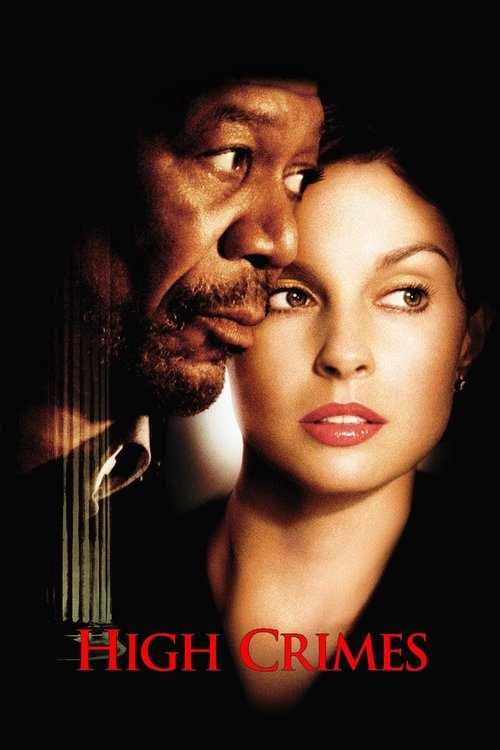
High Crimes
A female attorney learns that her husband is really a marine officer awol for fifteen years and accused of murdering fifteen civilians in El Salvador. Believing her husband when he tells her that he's being framed as part of a U.S. Military cover-up, the attorney defends him in a military court.
Working with a respectable budget of $42.0M, the film achieved a modest success with $63.8M in global revenue (+52% profit margin).


Plot Structure
Story beats plotted across runtime


Narrative Arc
Emotional journey through the story's key moments
Story Circle
Blueprint 15-beat structure
Arcplot Score Breakdown
Weighted: Precision (70%) + Arc (15%) + Theme (15%)
High Crimes (2002) exhibits deliberately positioned dramatic framework, characteristic of Carl Franklin's storytelling approach. This structural analysis examines how the film's 15-point plot structure maps to proven narrative frameworks across 1 hour and 55 minutes. With an Arcplot score of 7.4, the film balances conventional beats with creative variation.
Characters
Cast & narrative archetypes

Claire Kubik
Tom Kubik / Ronald Chapman
Charles Grimes
Brigadier General Marks
Major Waldron
Lieutenant Embry
Jackie Grimaldi
Main Cast & Characters
Claire Kubik
Played by Ashley Judd
A successful high-profile attorney whose life is shattered when her husband is arrested for murder and she must defend him in military court.
Tom Kubik / Ronald Chapman
Played by Jim Caviezel
Claire's husband who is revealed to be a former Marine living under witness protection, accused of murdering civilians in El Salvador.
Charles Grimes
Played by Morgan Freeman
A burned-out former JAG attorney with drinking problems who becomes Claire's co-counsel and brings crucial military law expertise.
Brigadier General Marks
Played by Bruce Davison
The military prosecutor determined to convict Tom, representing the establishment's interests in covering up the truth.
Major Waldron
Played by Adam Scott
A military officer involved in the prosecution who becomes crucial to uncovering the conspiracy.
Lieutenant Embry
Played by Tom Bower
A member of Tom's former unit whose testimony is critical to the case and the coverup.
Jackie Grimaldi
Played by Amanda Peet
Claire's sister who provides emotional support and reality checks throughout the ordeal.
Structural Analysis
The Status Quo at 1 minutes (1% through the runtime) establishes Claire Kubik, a successful defense attorney, enjoys a perfect life with her loving husband Tom in their beautiful home, celebrating Christmas together in domestic bliss.. The analysis reveals that this early placement immediately immerses viewers in the story world.
The inciting incident occurs at 14 minutes when FBI agents violently arrest Tom at gunpoint in their home, revealing his real name is Ron Chapman and he's wanted for a massacre of civilians in El Salvador as a Marine sergeant years ago.. At 12% through the film, this Disruption aligns precisely with traditional story structure. This beat shifts the emotional landscape, launching the protagonist into the central conflict.
The First Threshold at 29 minutes marks the transition into Act II, occurring at 25% of the runtime. This reveals the protagonist's commitment to Claire officially commits to defending Ron in the military court despite Charlie's warnings about the system being rigged, choosing loyalty to her husband over the mounting evidence and entering a dangerous world of military secrecy., moving from reaction to action.
At 58 minutes, the Midpoint arrives at 50% of the runtime—precisely centered, creating perfect narrative symmetry. Significantly, this crucial beat A key witness is murdered before he can testify, and Claire discovers Ron has been lying to her about crucial details of his past, raising stakes and destroying her trust while proving the conspiracy reaches the highest levels., fundamentally raising what's at risk. The emotional intensity shifts, dividing the narrative into clear before-and-after phases.
The Collapse moment at 86 minutes (75% through) represents the emotional nadir. Here, Ron is found guilty in the military tribunal and Claire confronts the devastating truth: Ron deliberately used her, married her as part of his cover, and manipulated her into defending him while concealing his actual crimes. Her entire life was a lie., demonstrates the protagonist at their lowest point. This beat's placement in the final quarter sets up the climactic reversal.
The Second Threshold at 92 minutes initiates the final act resolution at 80% of the runtime. Claire and Charlie uncover the final piece of evidence proving a high-ranking military officer orchestrated the cover-up and framed Ron. Claire realizes she must expose the truth not for Ron, but for justice itself and the innocent victims., demonstrating the transformation achieved throughout the journey.
Emotional Journey
High Crimes's emotional architecture traces a deliberate progression across 15 carefully calibrated beats.
Narrative Framework
This structural analysis employs systematic plot point analysis that identifies crucial turning points. By mapping High Crimes against these established plot points, we can identify how Carl Franklin utilizes or subverts traditional narrative conventions. The plot point approach reveals not only adherence to structural principles but also creative choices that distinguish High Crimes within the drama genre.
Carl Franklin's Structural Approach
Among the 2 Carl Franklin films analyzed on Arcplot, the average structural score is 7.4, reflecting strong command of classical structure. High Crimes exemplifies the director's characteristic narrative technique. For comparative analysis, explore the complete Carl Franklin filmography.
Comparative Analysis
Additional drama films include After Thomas, South Pacific and Dirty Dancing: Havana Nights. For more Carl Franklin analyses, see Out of Time.
Plot Points by Act
Act I
SetupStatus Quo
Claire Kubik, a successful defense attorney, enjoys a perfect life with her loving husband Tom in their beautiful home, celebrating Christmas together in domestic bliss.
Theme
Claire's colleague mentions that "everyone deserves a defense" and questions whether the truth can ever really be known in court - foreshadowing the film's exploration of truth, deception, and justice.
Worldbuilding
Establishing Claire's world as a skilled, principled attorney defending a young client; her happy marriage to Tom; their decision to try for a baby; and the seemingly perfect suburban life they've built together.
Disruption
FBI agents violently arrest Tom at gunpoint in their home, revealing his real name is Ron Chapman and he's wanted for a massacre of civilians in El Salvador as a Marine sergeant years ago.
Resistance
Claire struggles to process that her entire marriage was built on lies as Tom/Ron is held in military custody. She decides to defend him despite knowing nothing about military law, recruiting burned-out former JAG defender Charlie Grimes to help her navigate the shadowy military tribunal system.
Act II
ConfrontationFirst Threshold
Claire officially commits to defending Ron in the military court despite Charlie's warnings about the system being rigged, choosing loyalty to her husband over the mounting evidence and entering a dangerous world of military secrecy.
Mirror World
Claire's partnership with the cynical, alcoholic Charlie Grimes deepens as he becomes her guide through the corrupt military justice system, representing the thematic counterpoint about truth versus institutional power.
Premise
Claire and Charlie investigate the case, uncovering classified operations and government cover-ups. They face obstruction at every turn - witnesses recant, evidence disappears, and they discover the massacre may have been an illegal black ops mission that the military wants buried.
Midpoint
A key witness is murdered before he can testify, and Claire discovers Ron has been lying to her about crucial details of his past, raising stakes and destroying her trust while proving the conspiracy reaches the highest levels.
Opposition
The military prosecution tightens its grip with fabricated evidence while Claire's investigation reveals deeper betrayals. Ron continues to hide the truth, Claire and Charlie face threats and surveillance, and her marriage disintegrates as she realizes she never truly knew her husband.
Collapse
Ron is found guilty in the military tribunal and Claire confronts the devastating truth: Ron deliberately used her, married her as part of his cover, and manipulated her into defending him while concealing his actual crimes. Her entire life was a lie.
Crisis
Claire processes the emotional devastation of Ron's betrayal and the collapse of her marriage, questioning everything she believed about truth, justice, and her own judgment while deciding whether to walk away or pursue the real conspiracy.
Act III
ResolutionSecond Threshold
Claire and Charlie uncover the final piece of evidence proving a high-ranking military officer orchestrated the cover-up and framed Ron. Claire realizes she must expose the truth not for Ron, but for justice itself and the innocent victims.
Synthesis
Claire and Charlie execute a dangerous plan to expose the conspiracy, confronting the real perpetrators and bringing evidence to light. The military cover-up unravels, revealing institutional corruption and vindicating their investigation despite personal costs.
Transformation
Claire, now hardened and wiser, walks away from Ron and her old life with her integrity intact but her innocence lost, having learned that truth is more important than loyalty and that justice sometimes requires sacrifice.