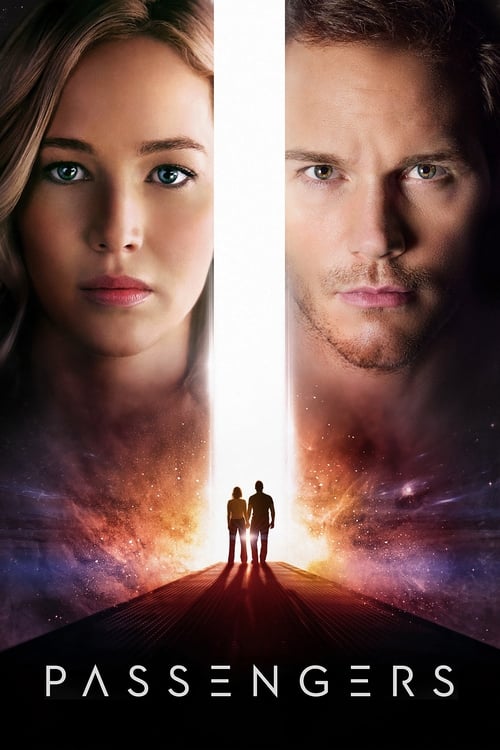
Passengers
A spacecraft traveling to a distant colony planet and transporting thousands of people has a malfunction in its sleep chambers. As a result, two passengers are awakened 90 years early.
Despite a significant budget of $110.0M, Passengers became a financial success, earning $303.1M worldwide—a 176% return.
Nominated for 2 Oscars. 2 wins & 12 nominations


Plot Structure
Story beats plotted across runtime


Narrative Arc
Emotional journey through the story's key moments
Story Circle
Blueprint 15-beat structure
Arcplot Score Breakdown
Weighted: Precision (70%) + Arc (15%) + Theme (15%)
Passengers (2016) exhibits meticulously timed narrative design, characteristic of Morten Tyldum's storytelling approach. This structural analysis examines how the film's 15-point plot structure maps to proven narrative frameworks across 1 hour and 56 minutes. With an Arcplot score of 7.2, the film balances conventional beats with creative variation.
Characters
Cast & narrative archetypes

Jim Preston
Aurora Lane
Arthur
Gus Mancuso
Main Cast & Characters
Jim Preston
Played by Chris Pratt
A mechanical engineer who wakes up 90 years early from hibernation on the starship Avalon, facing a lifetime of solitude before making a fateful decision that changes everything.
Aurora Lane
Played by Jennifer Lawrence
An ambitious journalist and writer from New York who planned to document the colony experience, but wakes to discover she has been robbed of her future by the man she falls in love with.
Arthur
Played by Michael Sheen
An android bartender programmed to serve and converse with passengers, who becomes Jim's sole companion during his year of isolation and inadvertently reveals Jim's secret to Aurora.
Gus Mancuso
Played by Laurence Fishburne
A deck chief who wakes due to a pod malfunction, providing crucial access and knowledge to save the ship before succumbing to multiple organ failure from his failing pod.
Structural Analysis
The Status Quo at 1 minutes (1% through the runtime) establishes The Avalon spacecraft glides through space on autopilot, 5,000 sleeping passengers journeying to Homestead II in a 120-year voyage. Everyone sleeps peacefully in hibernation pods.. Notably, this early placement immediately immerses viewers in the story world.
The inciting incident occurs at 14 minutes when After a year alone, Jim discovers Aurora Lane's pod. He researches her, becomes infatuated with her writing and videos, and faces the moral dilemma that will define the story: should he wake her and condemn her to die on the ship with him?.. At 12% through the film, this Disruption aligns precisely with traditional story structure. This beat shifts the emotional landscape, launching the protagonist into the central conflict.
The First Threshold at 31 minutes marks the transition into Act II, occurring at 27% of the runtime. This demonstrates the protagonist's commitment to Aurora wakes up. Jim has made the irreversible choice to condemn her to the same fate. He pretends to have just woken recently himself, and they begin to bond over their shared predicament., moving from reaction to action.
At 57 minutes, the Midpoint arrives at 50% of the runtime—precisely centered, creating perfect narrative symmetry. The analysis reveals that this crucial beat Crew member Gus Mancuso's pod malfunctions and he wakes up. This raises the stakes - the ship is experiencing system failures. Gus discovers critical malfunctions in the ship's systems that could kill everyone aboard., fundamentally raising what's at risk. The emotional intensity shifts, dividing the narrative into clear before-and-after phases.
The Collapse moment at 85 minutes (73% through) represents the emotional nadir. Here, Gus dies from his pod malfunction, leaving Jim and Aurora alone again. Aurora attacks Jim in grief and rage over his betrayal. The relationship is destroyed, and simultaneously, they discover the ship's reactor is failing and will kill all 5,000 passengers., demonstrates the protagonist at their lowest point. This beat's placement in the final quarter sets up the climactic reversal.
The Second Threshold at 92 minutes initiates the final act resolution at 80% of the runtime. Aurora realizes Jim is willing to sacrifice his life to save everyone. She chooses to help him despite his betrayal. They synthesize their skills: his mechanical knowledge and her courage. She understands love requires both sacrifice and forgiveness., demonstrating the transformation achieved throughout the journey.
Emotional Journey
Passengers's emotional architecture traces a deliberate progression across 15 carefully calibrated beats.
Narrative Framework
This structural analysis employs systematic plot point analysis that identifies crucial turning points. By mapping Passengers against these established plot points, we can identify how Morten Tyldum utilizes or subverts traditional narrative conventions. The plot point approach reveals not only adherence to structural principles but also creative choices that distinguish Passengers within the drama genre.
Morten Tyldum's Structural Approach
Among the 2 Morten Tyldum films analyzed on Arcplot, the average structural score is 7.0, demonstrating varied approaches to story architecture. Passengers represents one of the director's most structurally precise works. For comparative analysis, explore the complete Morten Tyldum filmography.
Comparative Analysis
Additional drama films include After Thomas, South Pacific and Dirty Dancing: Havana Nights. For more Morten Tyldum analyses, see The Imitation Game.
Plot Points by Act
Act I
SetupStatus Quo
The Avalon spacecraft glides through space on autopilot, 5,000 sleeping passengers journeying to Homestead II in a 120-year voyage. Everyone sleeps peacefully in hibernation pods.
Theme
Automated voice system explains the ship's journey and the promise of "a new life on a new world." The theme of isolation vs. connection, selfishness vs. sacrifice is embedded in the voyage's premise.
Worldbuilding
Jim Preston wakes up alone on the Avalon, 90 years too early. He explores the empty ship, tries to access restricted areas, attempts to contact Earth (receives messages decades old), and realizes he's trapped. He spends a year in complete isolation with only android bartender Arthur for company.
Disruption
After a year alone, Jim discovers Aurora Lane's pod. He researches her, becomes infatuated with her writing and videos, and faces the moral dilemma that will define the story: should he wake her and condemn her to die on the ship with him?
Resistance
Jim debates waking Aurora for months. He researches how to override her pod, walks away multiple times, struggles with the ethics. He eventually gives in to his loneliness and wakes her, then lies that her pod malfunctioned like his did.
Act II
ConfrontationFirst Threshold
Aurora wakes up. Jim has made the irreversible choice to condemn her to the same fate. He pretends to have just woken recently himself, and they begin to bond over their shared predicament.
Mirror World
Jim and Aurora's relationship deepens. Aurora represents the connection Jim desperately needed, and their romance begins. She embodies the thematic question: what would you sacrifice for love vs. what would you take from someone else?
Premise
Jim and Aurora fall in love. They enjoy the ship's amenities together, dance, swim, have romantic dinners. The premise delivers on the sci-fi romance in isolation. Aurora writes about their experience, finding meaning in their fate together.
Midpoint
Crew member Gus Mancuso's pod malfunctions and he wakes up. This raises the stakes - the ship is experiencing system failures. Gus discovers critical malfunctions in the ship's systems that could kill everyone aboard.
Opposition
The ship's failures escalate. Gus, Jim, and Aurora work desperately to diagnose problems. Arthur accidentally reveals to Aurora that Jim woke her intentionally. Aurora is devastated and furious. Gus's health deteriorates from his pod malfunction. The relationship collapses as ship systems fail.
Collapse
Gus dies from his pod malfunction, leaving Jim and Aurora alone again. Aurora attacks Jim in grief and rage over his betrayal. The relationship is destroyed, and simultaneously, they discover the ship's reactor is failing and will kill all 5,000 passengers.
Crisis
Jim and Aurora work in cold silence to save the ship, processing their emotional devastation. Jim prepares for a likely suicide mission to vent the reactor. Aurora must decide if she can forgive Jim or let him die.
Act III
ResolutionSecond Threshold
Aurora realizes Jim is willing to sacrifice his life to save everyone. She chooses to help him despite his betrayal. They synthesize their skills: his mechanical knowledge and her courage. She understands love requires both sacrifice and forgiveness.
Synthesis
Jim spacewalks to manually vent the reactor in a deadly procedure. Aurora assists from inside. Jim nearly dies in the vacuum of space. Aurora rescues him and performs CPR, reviving him. Jim then shows Aurora that the Autodoc can put one person back into hibernation - offering her the life he stole.
Transformation
88 years later, the crew wakes up to find the ship transformed into a garden paradise. Jim and Aurora chose to live out their lives together rather than sleep. The closing image shows they built a life of meaning, transforming isolation into connection and selfishness into shared sacrifice.