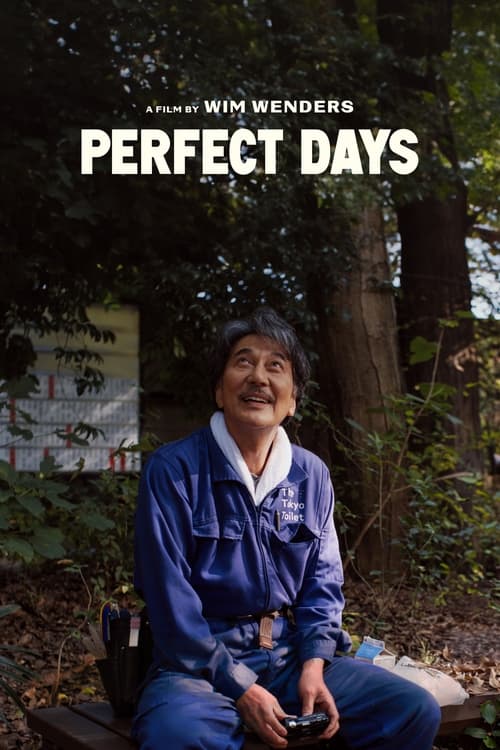
Perfect Days
Hirayama is content with his life as a toilet cleaner in Tokyo. Outside of his structured routine, he cherishes music on cassette tapes, books, and taking photos of trees. Through unexpected encounters, he reflects on finding beauty in the world.
Working with a tight budget of $14.0M, the film achieved a modest success with $24.1M in global revenue (+72% profit margin).
Nominated for 1 Oscar. 14 wins & 51 nominations


Plot Structure
Story beats plotted across runtime


Narrative Arc
Emotional journey through the story's key moments
Story Circle
Blueprint 15-beat structure
Arcplot Score Breakdown
Weighted: Precision (70%) + Arc (15%) + Theme (15%)
Perfect Days (2023) demonstrates strategically placed narrative design, characteristic of Wim Wenders's storytelling approach. This structural analysis examines how the film's 15-point plot structure maps to proven narrative frameworks across 2 hours and 4 minutes. With an Arcplot score of 6.9, the film balances conventional beats with creative variation.
Characters
Cast & narrative archetypes

Hirayama
Niko
Takashi
Aya
Keiko
Mama
The Homeless Man
Tomoyama
Main Cast & Characters
Hirayama
Played by Koji Yakusho
A solitary Tokyo toilet cleaner who finds profound contentment in his meticulously ordered daily routines, appreciating small moments of beauty in nature, music, and literature.
Niko
Played by Arisa Nakano
Hirayama's teenage niece who unexpectedly arrives at his apartment, disrupting his routines and revealing glimpses of his estranged family life.
Takashi
Played by Tokio Emoto
Hirayama's young and restless coworker who views the toilet cleaning job as temporary and is more focused on pursuing romantic interests than work.
Aya
Played by Aoi Yamada
A young woman who works at a local establishment and catches Takashi's romantic attention, briefly intersecting with Hirayama's world.
Keiko
Played by Yumi Aso
Hirayama's sister and Niko's mother, a wealthy woman who represents the life Hirayama left behind and the family rift that exists between them.
Mama
Played by Sayuri Ishikawa
The warm proprietress of a small bar Hirayama frequents, providing a space of quiet human connection in his otherwise solitary evenings.
The Homeless Man
Played by Min Tanaka
An elderly homeless man who inhabits the same parks as Hirayama, engaging in a recurring game of tic-tac-toe with shadows that speaks to shared solitude.
Tomoyama
Played by Koji Miura
Mama's ex-husband who appears at the bar, revealing a terminal illness and seeking some form of closure with his former wife.
Structural Analysis
The Status Quo at 1 minutes (1% through the runtime) establishes Hirayama wakes in his sparse apartment to sunlight through leaves. He folds his bedding with precision, dresses in his uniform, and begins his ritualized morning routine - a life of perfect order and solitude.. The analysis reveals that this early placement immediately immerses viewers in the story world.
The inciting incident occurs at 14 minutes when Takashi's girlfriend Aya suddenly appears at the work van, disrupting the comfortable routine. Her presence introduces chaos and desire into Hirayama's carefully controlled world, awakening what he has suppressed.. At 12% through the film, this Disruption aligns precisely with traditional story structure. This beat shifts the emotional landscape, launching the protagonist into the central conflict.
The First Threshold at 31 minutes marks the transition into Act II, occurring at 25% of the runtime. This indicates the protagonist's commitment to Hirayama's estranged niece Niko appears at his door late at night, having run away from home. He chooses to let her into his private world - the first true opening of his controlled existence to another person., moving from reaction to action.
At 61 minutes, the Midpoint arrives at 50% of the runtime—precisely centered, creating perfect narrative symmetry. Of particular interest, this crucial beat Hirayama takes Niko to his secret place - a bookstore where he trades paperbacks. She sees him light up with quiet joy. A false victory: it seems his philosophy is winning her over, that his chosen life can be shared and understood., fundamentally raising what's at risk. The emotional intensity shifts, dividing the narrative into clear before-and-after phases.
The Collapse moment at 92 minutes (74% through) represents the emotional nadir. Here, Alone after the confrontation with his sister, Hirayama breaks routine - he drinks heavily, skips his rituals. The death of his carefully maintained composure. His philosophy of presence crumbles when forced to face the past he fled., shows the protagonist at their lowest point. This beat's placement in the final quarter sets up the climactic reversal.
The Second Threshold at 99 minutes initiates the final act resolution at 80% of the runtime. Hirayama receives a photograph from Niko - a Polaroid she took of him smiling. The gift of being seen. He realizes his life is not about rejection of the past but acceptance of the present, including its pain and joy together., demonstrating the transformation achieved throughout the journey.
Emotional Journey
Perfect Days's emotional architecture traces a deliberate progression across 15 carefully calibrated beats.
Narrative Framework
This structural analysis employs structural analysis methodology used to understand storytelling architecture. By mapping Perfect Days against these established plot points, we can identify how Wim Wenders utilizes or subverts traditional narrative conventions. The plot point approach reveals not only adherence to structural principles but also creative choices that distinguish Perfect Days within the drama genre.
Wim Wenders's Structural Approach
Among the 3 Wim Wenders films analyzed on Arcplot, the average structural score is 6.9, demonstrating varied approaches to story architecture. Perfect Days represents one of the director's most structurally precise works. For comparative analysis, explore the complete Wim Wenders filmography.
Comparative Analysis
Additional drama films include After Thomas, South Pacific and Dirty Dancing: Havana Nights. For more Wim Wenders analyses, see Don't Come Knocking, Wings of Desire.
Plot Points by Act
Act I
SetupStatus Quo
Hirayama wakes in his sparse apartment to sunlight through leaves. He folds his bedding with precision, dresses in his uniform, and begins his ritualized morning routine - a life of perfect order and solitude.
Theme
Hirayama's colleague Takashi talks casually about dreams and "next time" while they work. The theme emerges: finding meaning and contentment in the present moment, in simple repetition, in what already is.
Worldbuilding
We observe Hirayama's complete daily ritual: cleaning Tokyo's public toilets with meticulous care, photographing trees with his film camera, eating at the same bathhouse, reading before sleep. A man who has deliberately chosen simplicity and presence.
Disruption
Takashi's girlfriend Aya suddenly appears at the work van, disrupting the comfortable routine. Her presence introduces chaos and desire into Hirayama's carefully controlled world, awakening what he has suppressed.
Resistance
Hirayama navigates the disruption of Aya's recurring presence. We see him wrestling internally with attraction and discipline, choosing to maintain his boundaries while small cracks appear in his routine.
Act II
ConfrontationFirst Threshold
Hirayama's estranged niece Niko appears at his door late at night, having run away from home. He chooses to let her into his private world - the first true opening of his controlled existence to another person.
Mirror World
Niko represents everything Hirayama has left behind - youth, family, spontaneity, the privileged life he abandoned. She mirrors his past and embodies the question: Did he choose peace or merely escape?
Premise
Hirayama shows Niko his world - the promise of the premise: can simple presence and ritual beauty be taught? They share meals, he photographs trees, she experiences his gentle routine. A tentative connection forms across the generational divide.
Midpoint
Hirayama takes Niko to his secret place - a bookstore where he trades paperbacks. She sees him light up with quiet joy. A false victory: it seems his philosophy is winning her over, that his chosen life can be shared and understood.
Opposition
Niko is retrieved by her mother - Hirayama's sister - creating painful confrontation with his past. His sister represents the wealthy life he rejected, and her judgment of his choices. The opposition is internal: his doubt about the life he's built.
Collapse
Alone after the confrontation with his sister, Hirayama breaks routine - he drinks heavily, skips his rituals. The death of his carefully maintained composure. His philosophy of presence crumbles when forced to face the past he fled.
Crisis
Hirayama moves through darkness. He wanders without purpose, breaks his patterns. In this void, he must face the question: Is his peace genuine or merely avoidance? Has he found enlightenment or just numbness?
Act III
ResolutionSecond Threshold
Hirayama receives a photograph from Niko - a Polaroid she took of him smiling. The gift of being seen. He realizes his life is not about rejection of the past but acceptance of the present, including its pain and joy together.
Synthesis
Hirayama returns to his routine, but changed. He cleans toilets with the same care, but now we see the fullness in it - he holds both sorrow and joy, past and present. The finale is the synthesis of acceptance: life as it is, in all its complexity.
Transformation
Driving his van, Hirayama's face shifts between tears and laughter, often simultaneously - the final image mirrors the opening but transformed. Same routine, same man, but now fully present to both suffering and beauty. Perfect days are not without pain.