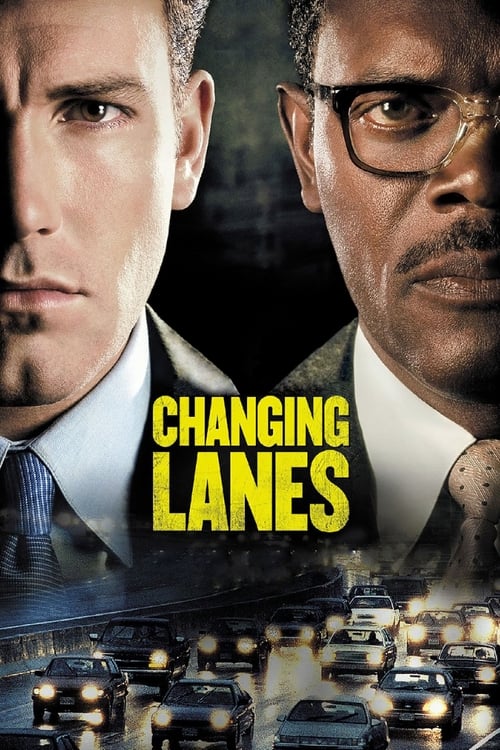
Changing Lanes
A rush-hour fender-bender on New York City's crowded FDR Drive, under most circumstances, wouldn't set off a chain reaction that could decimate two people's lives. But on this day, at this time, a minor collision will turn two complete strangers into vicious adversaries. Their means of destroying each other might be different, but their goals, ultimately, will be the same: Each will systematically try to dismantle the other's life in a reckless effort to reclaim something he has lost.
Despite a respectable budget of $45.0M, Changing Lanes became a financial success, earning $94.9M worldwide—a 111% return.


Plot Structure
Story beats plotted across runtime


Narrative Arc
Emotional journey through the story's key moments
Story Circle
Blueprint 15-beat structure
Arcplot Score Breakdown
Weighted: Precision (70%) + Arc (15%) + Theme (15%)
Changing Lanes (2002) showcases deliberately positioned story structure, characteristic of Roger Michell's storytelling approach. This structural analysis examines how the film's 15-point plot structure maps to proven narrative frameworks across 1 hour and 38 minutes. With an Arcplot score of 7.5, the film showcases strong structural fundamentals.
Characters
Cast & narrative archetypes

Gavin Banek
Doyle Gipson
Stephen Delano
Valerie Gipson
Michelle
Cynthia Delano
Main Cast & Characters
Gavin Banek
Played by Ben Affleck
A successful Wall Street attorney whose life unravels after a car accident when he desperately needs a crucial legal document.
Doyle Gipson
Played by Samuel L. Jackson
A recovering alcoholic insurance salesman fighting for custody of his sons whose life spirals after missing a critical court hearing.
Stephen Delano
Played by Sydney Pollack
Gavin's father-in-law and senior partner at the law firm, who mentors Gavin in ethically questionable practices.
Valerie Gipson
Played by Kim Staunton
Doyle's estranged wife who is moving to Oregon with their sons, triggering the custody battle.
Michelle
Played by Toni Collette
Gavin's wife and Stephen Delano's daughter, who becomes increasingly troubled by her husband's actions.
Cynthia Delano
Played by Marin Hinkle
Stephen's elderly client whose foundation is being defrauded by the law firm.
Structural Analysis
The Status Quo at 1 minutes (1% through the runtime) establishes Gavin Banek, a successful Wall Street lawyer, rushes through Manhattan on Good Friday morning, confident and in control of his privileged life. Doyle Gipson, a recovering alcoholic insurance salesman, drives his two sons to school, fighting to maintain custody and prove his stability.. Structural examination shows that this early placement immediately immerses viewers in the story world.
The inciting incident occurs at 10 minutes when On the FDR Drive, Gavin and Doyle collide in a minor fender bender. Gavin, desperate to reach court, offers Doyle a blank check and leaves him stranded. In his haste, Gavin leaves behind the crucial power of appointment document needed for court. Doyle, now late for his own custody hearing, is left on the highway.. At 10% through the film, this Disruption aligns precisely with traditional story structure. This beat shifts the emotional landscape, launching the protagonist into the central conflict.
The First Threshold at 23 minutes marks the transition into Act II, occurring at 24% of the runtime. This shows the protagonist's commitment to Doyle, devastated by losing custody and enraged at Gavin's callous treatment, makes an active choice: he will not return the file. Gavin, unable to reach Doyle by legitimate means, chooses to use his firm's connections to attack Doyle's life—accessing his credit records illegally and destroying his credit rating., moving from reaction to action.
At 48 minutes, the Midpoint arrives at 49% of the runtime—precisely centered, creating perfect narrative symmetry. Structural examination shows that this crucial beat False defeat/stakes raised: Doyle, pushed to his breaking point, buys alcohol and stands on the brink of destroying his sobriety. Gavin discovers the foundation case is actually a fraud—his firm has been stealing from the charity. Both men see clearly what they've become, and the destruction spreads to innocent people around them., fundamentally raising what's at risk. The emotional intensity shifts, dividing the narrative into clear before-and-after phases.
The Collapse moment at 70 minutes (72% through) represents the emotional nadir. Here, All is lost: Doyle's bank account is emptied, leaving him completely destroyed financially. He breaks into Gavin's home and contemplates violence. Gavin, confronted by his father-in-law about the fraud, faces the death of his career and integrity. Both men hit absolute bottom—Doyle ready to commit assault, Gavin having lost his moral compass entirely., shows the protagonist at their lowest point. This beat's placement in the final quarter sets up the climactic reversal.
The Second Threshold at 77 minutes initiates the final act resolution at 78% of the runtime. Synthesis/revelation: Both men separately choose redemption. Gavin decides to expose his firm's fraud and return the foundation's money, willing to sacrifice his career for integrity. Doyle chooses to return the file and abandon revenge, recognizing that his sobriety and values matter more than vengeance. Each finds strength in moral clarity., demonstrating the transformation achieved throughout the journey.
Emotional Journey
Changing Lanes's emotional architecture traces a deliberate progression across 15 carefully calibrated beats.
Narrative Framework
This structural analysis employs structural analysis methodology used to understand storytelling architecture. By mapping Changing Lanes against these established plot points, we can identify how Roger Michell utilizes or subverts traditional narrative conventions. The plot point approach reveals not only adherence to structural principles but also creative choices that distinguish Changing Lanes within the thriller genre.
Roger Michell's Structural Approach
Among the 6 Roger Michell films analyzed on Arcplot, the average structural score is 7.0, reflecting strong command of classical structure. Changing Lanes represents one of the director's most structurally precise works. For comparative analysis, explore the complete Roger Michell filmography.
Comparative Analysis
Additional thriller films include The Warriors, Thunderball and Rustom. For more Roger Michell analyses, see Persuasion, My Cousin Rachel and Morning Glory.
Plot Points by Act
Act I
SetupStatus Quo
Gavin Banek, a successful Wall Street lawyer, rushes through Manhattan on Good Friday morning, confident and in control of his privileged life. Doyle Gipson, a recovering alcoholic insurance salesman, drives his two sons to school, fighting to maintain custody and prove his stability.
Theme
Gavin's mentor tells him, "The road to hell is paved with good intentions." This establishes the film's central theme: how quickly ethical people can compromise their values when pressed, and whether the ends justify the means.
Worldbuilding
Parallel lives established: Gavin preparing for a crucial court hearing on a foundation case, navigating his law firm's questionable ethics. Doyle heading to family court to prove he deserves joint custody of his sons. Both men are trying to do the right thing within broken systems.
Disruption
On the FDR Drive, Gavin and Doyle collide in a minor fender bender. Gavin, desperate to reach court, offers Doyle a blank check and leaves him stranded. In his haste, Gavin leaves behind the crucial power of appointment document needed for court. Doyle, now late for his own custody hearing, is left on the highway.
Resistance
Gavin discovers the missing file and desperately tries to reach Doyle. Doyle arrives late to court and loses his case—the judge denies his custody petition. Both men face the consequences of the accident: Gavin needs the file back immediately; Doyle has lost everything that mattered. Gavin's firm suggests unethical solutions.
Act II
ConfrontationFirst Threshold
Doyle, devastated by losing custody and enraged at Gavin's callous treatment, makes an active choice: he will not return the file. Gavin, unable to reach Doyle by legitimate means, chooses to use his firm's connections to attack Doyle's life—accessing his credit records illegally and destroying his credit rating.
Mirror World
Gavin's wife and Doyle's AA sponsor serve as moral mirrors. Gavin's wife questions his ethics and integrity. Doyle's sponsor warns him that revenge will lead him back to drinking. Both relationships represent the better angels of their nature and the theme of choosing principle over expediency.
Premise
Escalating warfare: Gavin sabotages Doyle's bank account and credit. Doyle faxes inflammatory materials to Gavin's office. Gavin has Doyle's driver's license suspended. Each man discovers how far he's willing to go, sinking deeper into moral compromise. The premise explores: what happens when decent people abandon their principles?
Midpoint
False defeat/stakes raised: Doyle, pushed to his breaking point, buys alcohol and stands on the brink of destroying his sobriety. Gavin discovers the foundation case is actually a fraud—his firm has been stealing from the charity. Both men see clearly what they've become, and the destruction spreads to innocent people around them.
Opposition
The war intensifies and darkens. Doyle plans to physically confront Gavin. Gavin's marriage crumbles as his wife sees his moral deterioration. Doyle nearly drinks but pours it out. Gavin orders a computer hacker to drain Doyle's accounts. Both men spiral deeper into darkness, their better instincts losing ground to vengeance.
Collapse
All is lost: Doyle's bank account is emptied, leaving him completely destroyed financially. He breaks into Gavin's home and contemplates violence. Gavin, confronted by his father-in-law about the fraud, faces the death of his career and integrity. Both men hit absolute bottom—Doyle ready to commit assault, Gavin having lost his moral compass entirely.
Crisis
Dark night: Doyle, weapon in hand, stalks Gavin but stops himself. Gavin sits alone with the weight of his choices. Both men reflect on who they've become—this Good Friday has been their crucifixion. The AA serenity prayer and themes of redemption echo. They must each decide: remain destroyed or find redemption.
Act III
ResolutionSecond Threshold
Synthesis/revelation: Both men separately choose redemption. Gavin decides to expose his firm's fraud and return the foundation's money, willing to sacrifice his career for integrity. Doyle chooses to return the file and abandon revenge, recognizing that his sobriety and values matter more than vengeance. Each finds strength in moral clarity.
Synthesis
Final acts of redemption: Gavin confesses the fraud to the court and attempts to make things right. Doyle returns the file to Gavin at the courthouse. Gavin uses his firm's resources one last time—to restore Doyle's credit and accounts. They meet face to face and find mutual understanding and forgiveness. Both choose principle over self-interest.
Transformation
Closing image: Gavin and Doyle shake hands on the courthouse steps, two men transformed by their worst day. Where the opening showed them as strangers on divergent paths, they end as equals who've discovered their shared humanity. Both have sacrificed material success for moral integrity and emerged as better men.