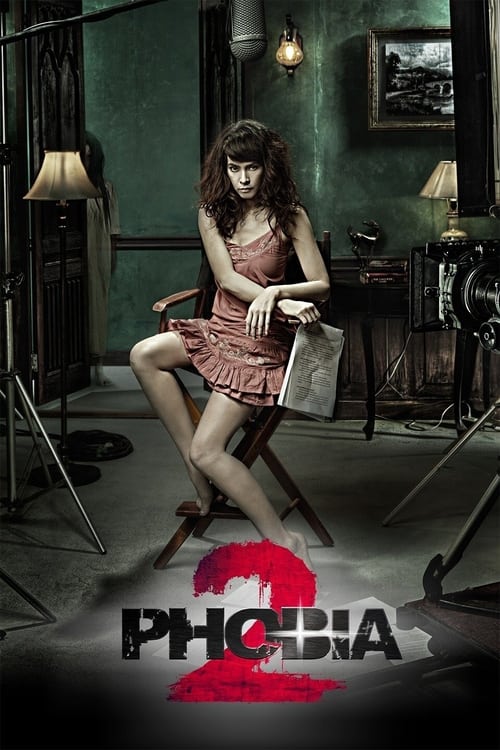
Phobia 2
An anthology of five macabre short stories about hungry ghosts, comatose brain dead, a group of bright-eyed actors, an unscrupulous car salesman, and careless backpack tourists.
The film earned $5.0M at the global box office.

Plot Structure
Story beats plotted across runtime


Narrative Arc
Emotional journey through the story's key moments
Story Circle
Blueprint 15-beat structure
Arcplot Score Breakdown
Weighted: Precision (70%) + Arc (15%) + Theme (15%)
Phobia 2 (2009) reveals meticulously timed narrative architecture, characteristic of Songyos Sugmakanan's storytelling approach. This structural analysis examines how the film's 15-point plot structure maps to proven narrative frameworks across 2 hours and 5 minutes. With an Arcplot score of 7.2, the film balances conventional beats with creative variation.
Characters
Cast & narrative archetypes

Pey
Abbot
Arthit
The Patient
Nuch
Jonas
Nop
Nop's Wife
The Director
The Actress
Main Cast & Characters
Pey
Played by Jirayu La-ongmanee
A rebellious teenager sent to a Buddhist monastery after involvement in criminal activity. His guilt and fear manifest as supernatural encounters with his victim's spirit.
Abbot
Played by Somchai Kemglad
The wise head monk who guides Pey through his spiritual crisis and helps him confront his guilt.
Arthit
Played by Worrawech Danuwong
A young man recovering in a hospital ward after a motorcycle accident. He becomes trapped in terror when supernatural events unfold around him and his mysterious roommate.
The Patient
Played by Withawat Thaenthong
Arthit's comatose hospital roommate whose condition hides a dark supernatural connection to recent deaths.
Nuch
Played by Nicole Theriault
A Japanese-Thai hitchhiker who picks up two foreign backpackers, only to discover her passengers harbor deadly secrets.
Jonas
Played by Jaturong Mokjok
A European backpacker traveling through Thailand whose charming exterior conceals violent and predatory intentions.
Nop
Played by Pachara Chirathivat
A used car salesman with questionable ethics who unknowingly purchases a vehicle with a horrific supernatural history attached to it.
Nop's Wife
Played by Marsha Wattanapanich
Nop's pregnant wife who becomes increasingly disturbed by the supernatural occurrences linked to her husband's new car purchase.
The Director
Played by Pongsatorn Jongwilak
A horror film director filming on set who becomes the victim of the very genre he creates when real supernatural terror invades his production.
The Actress
Played by Panward Hemmanee
An actress on a horror film set who struggles to distinguish between staged scares and genuine supernatural threats.
Structural Analysis
The Status Quo at 1 minutes (1% through the runtime) establishes Opening of "Novice" segment: A young man prepares to become a Buddhist monk, establishing the ordinary world of temple life and ritual.. Significantly, this early placement immediately immerses viewers in the story world.
The inciting incident occurs at 16 minutes when The novice monk encounters his first supernatural manifestation in the temple, disrupting the peaceful religious routine and introducing genuine terror.. At 12% through the film, this Disruption aligns precisely with traditional story structure. This beat shifts the emotional landscape, launching the protagonist into the central conflict.
The First Threshold at 31 minutes marks the transition into Act II, occurring at 25% of the runtime. This illustrates the protagonist's commitment to The hospital patient in "Ward" chooses to investigate the supernatural activity in his room despite warnings, actively entering the world of horror rather than remaining passive., moving from reaction to action.
At 63 minutes, the Midpoint arrives at 50% of the runtime—precisely centered, creating perfect narrative symmetry. Notably, this crucial beat The "Salvage" segment begins with a car accident and body disposal, raising stakes significantly as characters cross moral lines, transforming from victims to perpetrators confronting supernatural justice., fundamentally raising what's at risk. The emotional intensity shifts, dividing the narrative into clear before-and-after phases.
The Collapse moment at 93 minutes (75% through) represents the emotional nadir. Here, The final revelation in "Salvage" delivers devastating supernatural justice, representing the darkest moment as characters face the ultimate consequence of their actions - a literal "whiff of death."., demonstrates the protagonist at their lowest point. This beat's placement in the final quarter sets up the climactic reversal.
The Second Threshold at 101 minutes initiates the final act resolution at 81% of the runtime. The film crew discovers their horror movie shoot is bleeding into reality, forcing them to confront that the supernatural cannot be controlled or contained by fiction., demonstrating the transformation achieved throughout the journey.
Emotional Journey
Phobia 2's emotional architecture traces a deliberate progression across 15 carefully calibrated beats.
Narrative Framework
This structural analysis employs a 15-point narrative structure framework that maps key story moments. By mapping Phobia 2 against these established plot points, we can identify how Songyos Sugmakanan utilizes or subverts traditional narrative conventions. The plot point approach reveals not only adherence to structural principles but also creative choices that distinguish Phobia 2 within the thriller genre.
Comparative Analysis
Additional thriller films include The Warriors, Thunderball and Rustom.
Plot Points by Act
Act I
SetupStatus Quo
Opening of "Novice" segment: A young man prepares to become a Buddhist monk, establishing the ordinary world of temple life and ritual.
Theme
A monk warns about karma and supernatural consequences for those who disrespect sacred traditions, stating the thematic core about facing one's fears and guilt.
Worldbuilding
Introduction to anthology format and establishment of temple setting, hospital environment, rural Thailand, and the film's structure of escalating supernatural encounters across different contexts.
Disruption
The novice monk encounters his first supernatural manifestation in the temple, disrupting the peaceful religious routine and introducing genuine terror.
Resistance
Transition through "Novice" conclusion and into "Ward" segment; characters debate whether to confront or flee supernatural threats, establishing patterns of fear response that will recur.
Act II
ConfrontationFirst Threshold
The hospital patient in "Ward" chooses to investigate the supernatural activity in his room despite warnings, actively entering the world of horror rather than remaining passive.
Mirror World
Introduction of the relationship dynamics in "Backpackers" - the group of friends represents different responses to fear, mirroring the theme of how we face the unknown.
Premise
The anthology delivers on its horror premise: creative supernatural encounters including hospital hauntings, vehicular terror with backpackers, and escalating dread across multiple scenarios.
Midpoint
The "Salvage" segment begins with a car accident and body disposal, raising stakes significantly as characters cross moral lines, transforming from victims to perpetrators confronting supernatural justice.
Opposition
The guilt-ridden characters in "Salvage" face intensifying supernatural retribution; their attempts to hide their crime only deepen the horror as the oppositional force grows stronger.
Collapse
The final revelation in "Salvage" delivers devastating supernatural justice, representing the darkest moment as characters face the ultimate consequence of their actions - a literal "whiff of death."
Crisis
Transition into "In the End" segment; the film crew setting creates meta-commentary on fear itself as characters process the nature of terror and reality.
Act III
ResolutionSecond Threshold
The film crew discovers their horror movie shoot is bleeding into reality, forcing them to confront that the supernatural cannot be controlled or contained by fiction.
Synthesis
The finale delivers the anthology's climactic meta-horror revelation, where the boundary between film-within-film and reality collapses, synthesizing all previous themes about fear, guilt, and consequences.
Transformation
The closing twist reveals that even the audience-surrogate characters cannot escape supernatural horror, transforming the viewing experience itself into part of the nightmare cycle.