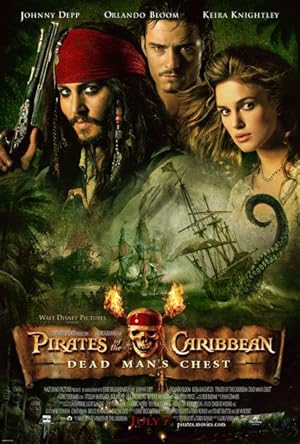
Pirates of the Caribbean: Dead Man's Chest
Once again we're plunged into the world of sword fights and "savvy" pirates. Captain Jack Sparrow is reminded he owes a debt to Davy Jones, who captains the flying Dutchman, a ghostly ship, with a crew from hell. Facing the "locker" Jack must find the heart of Davy Jones but to save himself he must get the help of quick-witted Will Turner and Elizabeth Swan. If that's not complicated enough, Will and Elizabeth are sentenced to hang, unless Will can get Lord Cutler Beckett Jack's compass. Will is forced to join another crazy adventure with Jack.
Despite a major studio investment of $200.0M, Pirates of the Caribbean: Dead Man's Chest became a financial success, earning $1066.2M worldwide—a 433% return. This commercial performance validated the ambitious narrative scope, confirming that audiences embrace fresh perspective even at blockbuster scale.
1 Oscar. 45 wins & 54 nominations


Plot Structure
Story beats plotted across runtime


Narrative Arc
Emotional journey through the story's key moments
Story Circle
Blueprint 15-beat structure
Arcplot Score Breakdown
Weighted: Precision (70%) + Arc (15%) + Theme (15%)
Pirates of the Caribbean: Dead Man's Chest (2006) showcases carefully calibrated narrative design, characteristic of Gore Verbinski's storytelling approach. This structural analysis examines how the film's 15-point plot structure maps to proven narrative frameworks across 2 hours and 31 minutes. With an Arcplot score of 6.3, the film takes an unconventional approach to traditional narrative frameworks.
Characters
Cast & narrative archetypes

Captain Jack Sparrow
Will Turner
Elizabeth Swann
Davy Jones
Lord Cutler Beckett
James Norrington
Tia Dalma
Bootstrap Bill Turner
Joshamee Gibbs
Main Cast & Characters
Captain Jack Sparrow
Played by Johnny Depp
Eccentric and cunning pirate captain who owes a blood debt to Davy Jones and must find the Dead Man's Chest to save his soul.
Will Turner
Played by Orlando Bloom
Noble blacksmith turned pirate who seeks Jack's compass to free himself and Elizabeth from execution.
Elizabeth Swann
Played by Keira Knightley
Governor's daughter whose wedding is interrupted by arrest, forcing her into the pirate world to save Will.
Davy Jones
Played by Bill Nighy
Supernatural captain of the Flying Dutchman who collects souls and commands the Kraken, bound by his own tragic love story.
Lord Cutler Beckett
Played by Tom Hollander
Ruthless East India Trading Company official who seeks the heart of Davy Jones to control the seas.
James Norrington
Played by Jack Davenport
Disgraced former Commodore who lost everything pursuing Jack and now seeks redemption through any means.
Tia Dalma
Played by Naomie Harris
Mysterious voodoo priestess who provides cryptic guidance and has a deep connection to the supernatural world.
Bootstrap Bill Turner
Played by Stellan Skarsgard
Will's father, damned to serve aboard the Flying Dutchman, torn between his eternal servitude and love for his son.
Joshamee Gibbs
Played by Kevin McNally
Jack's loyal first mate and superstitious sailor who stands by his captain through every misadventure.
Structural Analysis
The Status Quo at 2 minutes (1% through the runtime) establishes Elizabeth's wedding day interrupted by Lord Beckett's arrest warrant. The opening establishes a world where Will and Elizabeth are supposed to marry, but forces beyond their control (the East India Trading Company) disrupt their ordinary happiness.. Of particular interest, this early placement immediately immerses viewers in the story world.
The inciting incident occurs at 19 minutes when Davy Jones marks Jack with the Black Spot, declaring his debt due. Jack has three days before the Kraken comes to drag him to the locker. This external supernatural threat makes Jack's carefree pirate life impossible to continue.. At 13% through the film, this Disruption is delayed, allowing extended setup of the story world. This beat shifts the emotional landscape, launching the protagonist into the central conflict.
The First Threshold at 38 minutes marks the transition into Act II, occurring at 25% of the runtime. This shows the protagonist's commitment to Will chooses to board the Flying Dutchman, actively deciding to enter Jones' cursed world by joining his crew. This is Will's deliberate choice to pursue the key to the Dead Man's Chest, launching him into the supernatural Act 2., moving from reaction to action.
At 76 minutes, the Midpoint arrives at 50% of the runtime—precisely centered, creating perfect narrative symmetry. Of particular interest, this crucial beat Jack opens the Dead Man's Chest and confirms Jones' heart is inside. False victory—they have the chest and seemingly control Jones' fate. The stakes raise as everyone realizes what's at stake; Jack believes he can escape his debt, but this only intensifies the pursuit., fundamentally raising what's at risk. The emotional intensity shifts, dividing the narrative into clear before-and-after phases.
The Collapse moment at 114 minutes (75% through) represents the emotional nadir. Here, Jack abandons the crew to save himself, rowing away alone while the Kraken destroys the Pearl. This is Jack's lowest moral point—he chooses self-preservation over honor. His selfishness appears complete; he has "died" as a hero and revealed himself as a coward., demonstrates the protagonist at their lowest point. This beat's placement in the final quarter sets up the climactic reversal.
The Second Threshold at 121 minutes initiates the final act resolution at 80% of the runtime. Jack returns to the Pearl, choosing to face the Kraken rather than live as a coward. He synthesizes his survival instincts with newfound honor. This realization—that some debts must be paid, that freedom without honor is meaningless—propels him to the final confrontation., demonstrating the transformation achieved throughout the journey.
Emotional Journey
Pirates of the Caribbean: Dead Man's Chest's emotional architecture traces a deliberate progression across 15 carefully calibrated beats.
Narrative Framework
This structural analysis employs proven narrative structure principles that track dramatic progression. By mapping Pirates of the Caribbean: Dead Man's Chest against these established plot points, we can identify how Gore Verbinski utilizes or subverts traditional narrative conventions. The plot point approach reveals not only adherence to structural principles but also creative choices that distinguish Pirates of the Caribbean: Dead Man's Chest within the action genre.
Gore Verbinski's Structural Approach
Among the 9 Gore Verbinski films analyzed on Arcplot, the average structural score is 7.1, reflecting strong command of classical structure. Pirates of the Caribbean: Dead Man's Chest takes a more unconventional approach compared to the director's typical style. For comparative analysis, explore the complete Gore Verbinski filmography.
Comparative Analysis
Additional action films include The Bad Guys, Puss in Boots and Venom: The Last Dance. For more Gore Verbinski analyses, see MouseHunt, Pirates of the Caribbean: The Curse of the Black Pearl and A Cure for Wellness.
Plot Points by Act
Act I
SetupStatus Quo
Elizabeth's wedding day interrupted by Lord Beckett's arrest warrant. The opening establishes a world where Will and Elizabeth are supposed to marry, but forces beyond their control (the East India Trading Company) disrupt their ordinary happiness.
Theme
Gibbs warns Jack: "The world used to be a bigger place... The world's still the same, there's just less in it." The theme: freedom vs. obligation, and how debts (literal and moral) bind us. No man is truly free when he owes something.
Worldbuilding
Establishment of three parallel situations: Elizabeth and Will imprisoned for helping Jack escape; Jack attempting to settle his blood debt with Davy Jones; the East India Trading Company seeking control of the seas. The stakes and rules of this world are laid out.
Disruption
Davy Jones marks Jack with the Black Spot, declaring his debt due. Jack has three days before the Kraken comes to drag him to the locker. This external supernatural threat makes Jack's carefree pirate life impossible to continue.
Resistance
Jack seeks Tia Dalma for guidance about Jones' heart; Will is recruited by Beckett to find Jack's compass in exchange for clemency; Elizabeth escapes prison with her father's help. Multiple characters debate their options and seek mentors/information before committing to action.
Act II
ConfrontationFirst Threshold
Will chooses to board the Flying Dutchman, actively deciding to enter Jones' cursed world by joining his crew. This is Will's deliberate choice to pursue the key to the Dead Man's Chest, launching him into the supernatural Act 2.
Mirror World
Will meets Bootstrap Bill on the Flying Dutchman, his cursed father who has given up hope. Bootstrap represents what happens when you surrender to your debts and obligations—he embodies the thematic question of whether freedom is worth fighting for.
Premise
The "fun and games" of adventure: Will infiltrating Jones' crew, Jack pursuing the chest through trickery and deals, Elizabeth disguising herself and commandeering ships. The premise of swashbuckling treasure hunting plays out with all parties seeking the key and chest.
Midpoint
Jack opens the Dead Man's Chest and confirms Jones' heart is inside. False victory—they have the chest and seemingly control Jones' fate. The stakes raise as everyone realizes what's at stake; Jack believes he can escape his debt, but this only intensifies the pursuit.
Opposition
Triple-cross chaos as Jack, Will, and Norrington all fight for the heart for different reasons. The Kraken attacks. Jones tightens his grip. Jack's selfishness alienates Elizabeth. Will discovers Jack's willingness to sacrifice others. Everything gets harder as moral compromises pile up.
Collapse
Jack abandons the crew to save himself, rowing away alone while the Kraken destroys the Pearl. This is Jack's lowest moral point—he chooses self-preservation over honor. His selfishness appears complete; he has "died" as a hero and revealed himself as a coward.
Crisis
The crew faces certain death from the Kraken with no weapons or hope. Elizabeth grapples with guilt over her feelings. The emotional darkness of hopelessness pervades as they prepare to die. Will and Elizabeth share what they believe is a final moment.
Act III
ResolutionSecond Threshold
Jack returns to the Pearl, choosing to face the Kraken rather than live as a coward. He synthesizes his survival instincts with newfound honor. This realization—that some debts must be paid, that freedom without honor is meaningless—propels him to the final confrontation.
Synthesis
Jack faces the Kraken directly, fighting with courage. Elizabeth chains him to the mast, making the choice for him in a morally complex moment. The crew escapes while Jack is dragged to the locker. Norrington delivers the heart to Beckett. All plot threads resolve.
Transformation
The crew toasts "Captain Jack Sparrow" with genuine respect—he died a hero in their eyes. Contrast to opening: Jack is now honored rather than hunted, dead rather than alive, but finally free of his moral debt. Elizabeth transformed by her dark choice. Will committed despite betrayal.