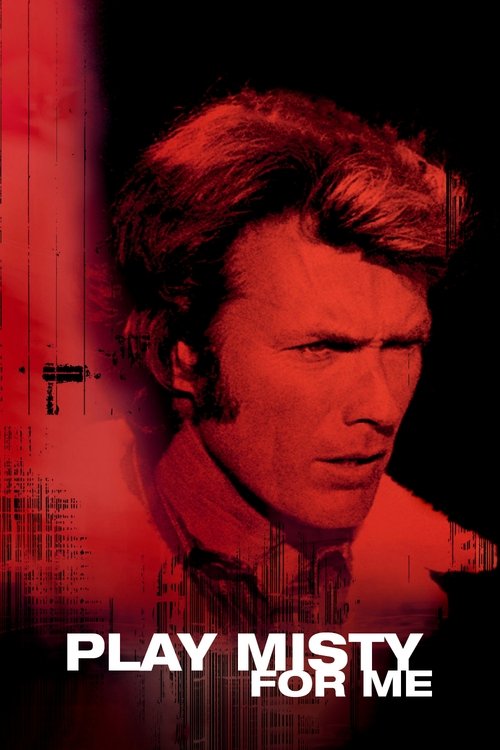
Play Misty for Me
A brief fling between a male disc jockey and an obsessed female fan takes a frightening, and perhaps even deadly turn when another woman enters the picture.
Despite its minimal budget of $725K, Play Misty for Me became a box office phenomenon, earning $10.6M worldwide—a remarkable 1362% return. The film's unique voice engaged audiences, showing that strong storytelling can transcend budget limitations.


Plot Structure
Story beats plotted across runtime


Narrative Arc
Emotional journey through the story's key moments
Story Circle
Blueprint 15-beat structure
Arcplot Score Breakdown
Weighted: Precision (70%) + Arc (15%) + Theme (15%)
Play Misty for Me (1971) exemplifies strategically placed story structure, characteristic of Clint Eastwood's storytelling approach. This structural analysis examines how the film's 15-point plot structure maps to proven narrative frameworks across 1 hour and 42 minutes. With an Arcplot score of 7.5, the film showcases strong structural fundamentals.
Characters
Cast & narrative archetypes

Dave Garver
Evelyn Draper
Tobie Williams
Al Monte
Sergeant McCallum
Frank Devereaux
Main Cast & Characters
Dave Garver
Played by Clint Eastwood
A laid-back late-night radio DJ in Carmel, California, whose casual one-night stand with a listener spirals into a nightmare of obsession and violence.
Evelyn Draper
Played by Jessica Walter
An unstable, obsessive woman who becomes fixated on Dave after a one-night stand, escalating from persistent calls to violent stalking.
Tobie Williams
Played by Donna Mills
Dave's ex-girlfriend, an artist and teacher who returns to reconcile with him, becoming an unwitting target of Evelyn's jealousy.
Al Monte
Played by James McEachin
Dave's friend and the bartender at The Sardine Factory who first introduces Dave to Evelyn.
Sergeant McCallum
Played by John Larch
A police detective who investigates Evelyn's harassment of Dave and later the violent attacks.
Frank Devereaux
Played by Jack Ging
The station manager at KRML radio who offers Dave a potential job opportunity hosting a jazz festival.
Structural Analysis
The Status Quo at 1 minutes (1% through the runtime) establishes Dave Garver hosts his late-night jazz radio show in Carmel, living a carefree bachelor lifestyle as a popular DJ with casual romantic encounters and no commitments.. Notably, this early placement immediately immerses viewers in the story world.
The inciting incident occurs at 12 minutes when Dave meets Evelyn Draper at a bar, the woman who calls in requesting "Misty." What seems like a harmless one-night stand turns unsettling when she becomes possessive and refuses to accept it as casual.. At 12% through the film, this Disruption aligns precisely with traditional story structure. This beat shifts the emotional landscape, launching the protagonist into the central conflict.
The First Threshold at 26 minutes marks the transition into Act II, occurring at 25% of the runtime. This reveals the protagonist's commitment to Dave actively chooses to pursue Tobie seriously and attempts to definitively end things with Evelyn, but Evelyn escalates by showing up at his home uninvited, marking the point of no return into a dangerous new reality., moving from reaction to action.
At 50 minutes, the Midpoint arrives at 49% of the runtime—precisely centered, creating perfect narrative symmetry. Of particular interest, this crucial beat Evelyn attempts suicide by slashing her wrists at Dave's house, forcing him into a false defeat where he must involve the police and mental health authorities, believing the situation is finally being handled professionally., fundamentally raising what's at risk. The emotional intensity shifts, dividing the narrative into clear before-and-after phases.
The Collapse moment at 76 minutes (74% through) represents the emotional nadir. Here, Dave discovers that his friend Sergeant McCallum has been murdered by Evelyn, a literal death that reveals the full extent of her psychosis and Dave's complete loss of control over the situation., reveals the protagonist at their lowest point. This beat's placement in the final quarter sets up the climactic reversal.
The Second Threshold at 82 minutes initiates the final act resolution at 80% of the runtime. Dave pieces together that Evelyn has infiltrated Tobie's life under the guise of friendship and races to Tobie's cliffside home, committing fully to protecting what matters rather than running from commitment., demonstrating the transformation achieved throughout the journey.
Emotional Journey
Play Misty for Me's emotional architecture traces a deliberate progression across 15 carefully calibrated beats.
Narrative Framework
This structural analysis employs proven narrative structure principles that track dramatic progression. By mapping Play Misty for Me against these established plot points, we can identify how Clint Eastwood utilizes or subverts traditional narrative conventions. The plot point approach reveals not only adherence to structural principles but also creative choices that distinguish Play Misty for Me within the drama genre.
Clint Eastwood's Structural Approach
Among the 32 Clint Eastwood films analyzed on Arcplot, the average structural score is 6.5, demonstrating varied approaches to story architecture. Play Misty for Me represents one of the director's most structurally precise works. For comparative analysis, explore the complete Clint Eastwood filmography.
Comparative Analysis
Additional drama films include After Thomas, South Pacific and Dirty Dancing: Havana Nights. For more Clint Eastwood analyses, see True Crime, Million Dollar Baby and The Gauntlet.
Plot Points by Act
Act I
SetupStatus Quo
Dave Garver hosts his late-night jazz radio show in Carmel, living a carefree bachelor lifestyle as a popular DJ with casual romantic encounters and no commitments.
Theme
Al Monte warns Dave about getting involved with women who might want more than casual relationships, stating "You never know what kind of nuts are out there," foreshadowing the dangers of Dave's uncommitted lifestyle.
Worldbuilding
Introduction to Dave's world: his radio show where a mysterious woman caller repeatedly requests "Misty," his on-and-off relationship with Tobie, his friendship with Al, and the beautiful Carmel setting that represents his laid-back California lifestyle.
Disruption
Dave meets Evelyn Draper at a bar, the woman who calls in requesting "Misty." What seems like a harmless one-night stand turns unsettling when she becomes possessive and refuses to accept it as casual.
Resistance
Dave tries to manage Evelyn's increasing obsession while pursuing reconciliation with Tobie. He debates how to handle Evelyn's unwanted attention, attempts to set boundaries, but struggles to fully extricate himself from the situation.
Act II
ConfrontationFirst Threshold
Dave actively chooses to pursue Tobie seriously and attempts to definitively end things with Evelyn, but Evelyn escalates by showing up at his home uninvited, marking the point of no return into a dangerous new reality.
Mirror World
Dave and Tobie reconnect meaningfully, representing the committed relationship and emotional maturity Dave needs to embrace—the antithesis of his casual lifestyle that attracted Evelyn.
Premise
The escalating stalker thriller unfolds: Evelyn's increasingly unhinged behavior, including vandalizing Dave's home, attacking his maid Birdie, and attempting suicide, while Dave tries to build a life with Tobie and advance his career.
Midpoint
Evelyn attempts suicide by slashing her wrists at Dave's house, forcing him into a false defeat where he must involve the police and mental health authorities, believing the situation is finally being handled professionally.
Opposition
Evelyn is institutionalized and Dave believes he's safe, allowing him to deepen his relationship with Tobie. However, Evelyn is released and secretly insinuates herself into their lives, befriending Tobie while plotting revenge.
Collapse
Dave discovers that his friend Sergeant McCallum has been murdered by Evelyn, a literal death that reveals the full extent of her psychosis and Dave's complete loss of control over the situation.
Crisis
Dave realizes Tobie is in mortal danger and that his casual approach to relationships has led to this nightmare. He confronts his responsibility and the potential loss of the woman he truly loves.
Act III
ResolutionSecond Threshold
Dave pieces together that Evelyn has infiltrated Tobie's life under the guise of friendship and races to Tobie's cliffside home, committing fully to protecting what matters rather than running from commitment.
Synthesis
The violent finale at Tobie's home: Dave arrives to find Evelyn has tied up Tobie and her roommate. A brutal fight ensues across the house, culminating in Evelyn's death as she falls from the balcony onto the rocky shore below.
Transformation
Dave and Tobie embrace in the aftermath, both traumatized but alive. Dave has transformed from a commitment-phobic playboy into someone who fought for love, learning that real relationships require courage and responsibility.