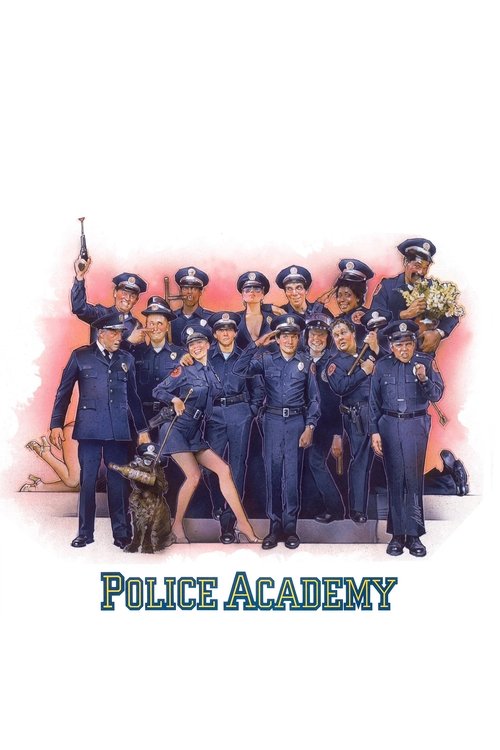
Police Academy
New rules enforced by the Lady Mayoress mean that sex, weight, height and intelligence need no longer be a factor for joining the Police Force. This opens the floodgates for all and sundry to enter the Police Academy, much to the chagrin of the instructors. Not everyone is there through choice, though. Social misfit Mahoney has been forced to sign up as the only alternative to a jail sentence and it doesn't take long before he falls foul of the boorish Lieutenant Harris. But before long, Mahoney realises that he is enjoying being a police cadet and decides he wants to stay... while Harris decides he wants Mahoney out!
Despite its modest budget of $4.5M, Police Academy became a box office phenomenon, earning $81.2M worldwide—a remarkable 1704% return. The film's innovative storytelling connected with viewers, confirming that strong storytelling can transcend budget limitations.
2 wins & 2 nominations


Plot Structure
Story beats plotted across runtime


Narrative Arc
Emotional journey through the story's key moments
Story Circle
Blueprint 15-beat structure
Arcplot Score Breakdown
Weighted: Precision (70%) + Arc (15%) + Theme (15%)
Police Academy (1984) reveals precise dramatic framework, characteristic of Hugh Wilson's storytelling approach. This structural analysis examines how the film's 15-point plot structure maps to proven narrative frameworks across 1 hour and 37 minutes. With an Arcplot score of 7.3, the film balances conventional beats with creative variation.
Characters
Cast & narrative archetypes

Carey Mahoney
Moses Hightower
Larvell Jones
Eugene Tackleberry
Laverne Hooks
George Martin
Leslie Barbara
Karen Thompson
Commandant Eric Lassard
Lt. Thaddeus Harris
Main Cast & Characters
Carey Mahoney
Played by Steve Guttenberg
A wisecracking troublemaker forced to join the police academy as an alternative to jail, who uses charm and cunning to survive training while secretly developing a sense of duty.
Moses Hightower
Played by Bubba Smith
A gentle giant florist who joins the academy seeking a career change, possessing incredible physical strength but a peaceful demeanor.
Larvell Jones
Played by Michael Winslow
An eccentric recruit with an extraordinary talent for vocal sound effects and mimicry, using his unique abilities in creative ways.
Eugene Tackleberry
Played by David Graf
A gun-obsessed, overly enthusiastic recruit who takes law enforcement extremely seriously and approaches every situation with military-level intensity.
Laverne Hooks
Played by Marion Ramsey
A shy, soft-spoken woman whose quiet voice belies an inner strength that emerges when she's pushed to her limits.
George Martin
Played by Andrew Rubin
A handsome, smooth-talking cadet who is more interested in romancing women than police work.
Leslie Barbara
Played by Donovan Scott
An overweight, timid recruit who lacks confidence but proves his worth when it matters most.
Karen Thompson
Played by Kim Cattrall
An intelligent and capable female recruit who becomes Mahoney's love interest while proving herself as a competent officer.
Commandant Eric Lassard
Played by George Gaynes
The well-meaning but oblivious head of the police academy who remains blissfully unaware of the chaos around him.
Lt. Thaddeus Harris
Played by G.W. Bailey
An ambitious, tyrannical training officer who despises the new open-enrollment policy and schemes to wash out the misfit recruits.
Structural Analysis
The Status Quo at 1 minutes (1% through the runtime) establishes Mahoney is a street-smart slacker getting by on schemes and charm, hustling parking spots and avoiding real responsibility.. The analysis reveals that this early placement immediately immerses viewers in the story world.
The inciting incident occurs at 12 minutes when Mahoney is arrested for his parking scam. Given a choice: jail or join the police academy under the new policy. His carefree life is disrupted.. At 13% through the film, this Disruption is delayed, allowing extended setup of the story world. This beat shifts the emotional landscape, launching the protagonist into the central conflict.
The First Threshold at 25 minutes marks the transition into Act II, occurring at 25% of the runtime. This reveals the protagonist's commitment to Mahoney chooses to stay and fight back against Harris instead of quitting. He actively commits to the academy and defending his fellow recruits., moving from reaction to action.
At 49 minutes, the Midpoint arrives at 51% of the runtime—precisely centered, creating perfect narrative symmetry. Notably, this crucial beat Harris escalates his campaign to expel the misfits. He frames them or sets impossible tasks. The stakes raise from simple pranks to possible expulsion. False defeat., fundamentally raising what's at risk. The emotional intensity shifts, dividing the narrative into clear before-and-after phases.
The Collapse moment at 72 minutes (75% through) represents the emotional nadir. Here, The cadets' final evaluation is sabotaged by Harris. Their dreams of graduation appear dead. Mahoney feels responsible for getting everyone's hopes up., demonstrates the protagonist at their lowest point. This beat's placement in the final quarter sets up the climactic reversal.
The Second Threshold at 78 minutes initiates the final act resolution at 80% of the runtime. A real emergency breaks out (riot/crisis). The cadets realize they can use their unique skills for actual police work. Mahoney synthesizes his street smarts with his training., demonstrating the transformation achieved throughout the journey.
Emotional Journey
Police Academy's emotional architecture traces a deliberate progression across 15 carefully calibrated beats.
Narrative Framework
This structural analysis employs systematic plot point analysis that identifies crucial turning points. By mapping Police Academy against these established plot points, we can identify how Hugh Wilson utilizes or subverts traditional narrative conventions. The plot point approach reveals not only adherence to structural principles but also creative choices that distinguish Police Academy within the comedy genre.
Hugh Wilson's Structural Approach
Among the 5 Hugh Wilson films analyzed on Arcplot, the average structural score is 7.1, reflecting strong command of classical structure. Police Academy represents one of the director's most structurally precise works. For comparative analysis, explore the complete Hugh Wilson filmography.
Comparative Analysis
Additional comedy films include The Bad Guys, Ella Enchanted and The Evening Star. For more Hugh Wilson analyses, see The First Wives Club, Blast from the Past and Dudley Do-Right.
Plot Points by Act
Act I
SetupStatus Quo
Mahoney is a street-smart slacker getting by on schemes and charm, hustling parking spots and avoiding real responsibility.
Theme
The police captain tells Mahoney: "You can't run from responsibility forever." Theme of growing up and finding purpose is stated.
Worldbuilding
Introduction to the world of misfits and authority. We meet the incompetent leadership, diverse recruits, and establish the new open-enrollment policy that allows anyone into the academy.
Disruption
Mahoney is arrested for his parking scam. Given a choice: jail or join the police academy under the new policy. His carefree life is disrupted.
Resistance
Mahoney resists the academy, planning to get kicked out. He meets fellow misfits, clashes with the tyrannical Lieutenant Harris, and debates whether to quit or sabotage himself out.
Act II
ConfrontationFirst Threshold
Mahoney chooses to stay and fight back against Harris instead of quitting. He actively commits to the academy and defending his fellow recruits.
Mirror World
Mahoney connects with Karen Thompson, a fellow cadet who represents order and genuine duty. She shows him what real commitment looks like.
Premise
The fun and games of misfit cadets in training. Pranks on Harris, comedic training montages, developing camaraderie, and the promise of the premise: watching lovable underdogs navigate police academy.
Midpoint
Harris escalates his campaign to expel the misfits. He frames them or sets impossible tasks. The stakes raise from simple pranks to possible expulsion. False defeat.
Opposition
Harris intensifies pressure on the cadets. Several nearly quit. Mahoney's leadership is tested. The group faces their toughest challenges and begins to fracture under the strain.
Collapse
The cadets' final evaluation is sabotaged by Harris. Their dreams of graduation appear dead. Mahoney feels responsible for getting everyone's hopes up.
Crisis
The group sits in despair. Mahoney questions whether he was wrong to make them believe. Dark night of the soul where they must decide if they're real cops or just playing dress-up.
Act III
ResolutionSecond Threshold
A real emergency breaks out (riot/crisis). The cadets realize they can use their unique skills for actual police work. Mahoney synthesizes his street smarts with his training.
Synthesis
The climactic response to the emergency. Each cadet uses their unique abilities to save the day. They prove they belong. Harris is exposed or defeated. They earn their badges legitimately.
Transformation
Graduation ceremony. Mahoney in full uniform, accepting responsibility and purpose. The slacker has become a leader. Mirror of the opening image but transformed.