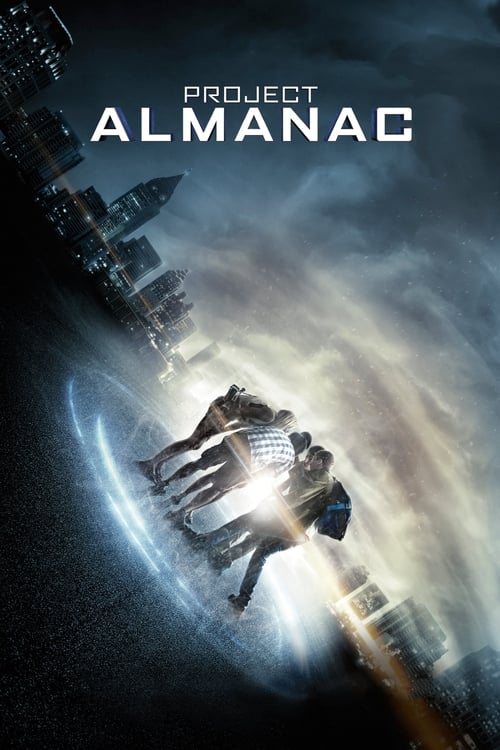
Project Almanac
A group of teens discover secret plans of a time machine, and construct one. However, things start to get out of control.
Despite its tight budget of $12.0M, Project Almanac became a box office success, earning $33.2M worldwide—a 177% return.


Plot Structure
Story beats plotted across runtime


Narrative Arc
Emotional journey through the story's key moments
Story Circle
Blueprint 15-beat structure
Arcplot Score Breakdown
Weighted: Precision (70%) + Arc (15%) + Theme (15%)
Project Almanac (2015) reveals strategically placed narrative design, characteristic of Dean Israelite's storytelling approach. This structural analysis examines how the film's 15-point plot structure maps to proven narrative frameworks across 1 hour and 46 minutes. With an Arcplot score of 6.6, the film balances conventional beats with creative variation.
Characters
Cast & narrative archetypes

David Raskin
Jessie Pierce
Adam Le
Quinn Goldberg
Christina Raskin
Main Cast & Characters
David Raskin
Played by Jonny Weston
Brilliant high school senior who discovers his late father's time machine blueprints and leads the group in building it.
Jessie Pierce
Played by Sofia Black-D'Elia
David's crush and popular girl who joins the time travel experiments, becoming his love interest.
Adam Le
Played by Allen Evangelista
David's best friend and tech-savvy partner who helps build the time machine and documents everything.
Quinn Goldberg
Played by Sam Lerner
Member of the group with a fun-loving personality who eagerly participates in the time travel adventures.
Christina Raskin
Played by Ginny Gardner
David's younger sister who films the group's activities and discovers the time machine project.
Structural Analysis
The Status Quo at 1 minutes (1% through the runtime) establishes David films his MIT admissions video, showcasing his inventions and dreams. A smart but ordinary teenager in his basement workshop, hoping for a scholarship he can't afford without help.. Notably, this early placement immediately immerses viewers in the story world.
The inciting incident occurs at 12 minutes when David sees himself in the mirror of a video from 10 years ago - filmed just moments ago. This temporal impossibility proves his father was working on time travel, offering both answers about his death and a path forward.. At 12% through the film, this Disruption aligns precisely with traditional story structure. This beat shifts the emotional landscape, launching the protagonist into the central conflict.
The First Threshold at 26 minutes marks the transition into Act II, occurring at 24% of the runtime. This indicates the protagonist's commitment to The group successfully activates the time machine for the first time, sending a toy car back in time. They make the active choice to test it on themselves, despite the risks. David decides they will travel back 24 hours., moving from reaction to action.
At 52 minutes, the Midpoint arrives at 50% of the runtime—precisely centered, creating perfect narrative symmetry. Significantly, this crucial beat False victory turns to defeat: After David uses time travel to manufacture his perfect relationship with Jessie, small changes begin creating larger consequences. A plane crash kills dozens - a disaster that didn't happen in the original timeline., fundamentally raising what's at risk. The emotional intensity shifts, dividing the narrative into clear before-and-after phases.
The Collapse moment at 79 minutes (75% through) represents the emotional nadir. Here, Jessie dies in a car accident caused by the temporal distortions. David's selfish use of time travel to win her love has literally killed her. He's lost everything - his friends, his love, and caused untold destruction trying to play god., indicates the protagonist at their lowest point. This beat's placement in the final quarter sets up the climactic reversal.
The Second Threshold at 84 minutes initiates the final act resolution at 80% of the runtime. David makes the selfless choice to jump back alone to the first activation of the time machine, planning to destroy it and prevent all the tragedies - even though it means losing Jessie and his MIT dreams forever., demonstrating the transformation achieved throughout the journey.
Emotional Journey
Project Almanac's emotional architecture traces a deliberate progression across 15 carefully calibrated beats.
Narrative Framework
This structural analysis employs a 15-point narrative structure framework that maps key story moments. By mapping Project Almanac against these established plot points, we can identify how Dean Israelite utilizes or subverts traditional narrative conventions. The plot point approach reveals not only adherence to structural principles but also creative choices that distinguish Project Almanac within the science fiction genre.
Dean Israelite's Structural Approach
Among the 2 Dean Israelite films analyzed on Arcplot, the average structural score is 7.0, reflecting strong command of classical structure. Project Almanac takes a more unconventional approach compared to the director's typical style. For comparative analysis, explore the complete Dean Israelite filmography.
Comparative Analysis
Additional science fiction films include The Postman, Mad Max 2 and AVP: Alien vs. Predator. For more Dean Israelite analyses, see Power Rangers.
Plot Points by Act
Act I
SetupStatus Quo
David films his MIT admissions video, showcasing his inventions and dreams. A smart but ordinary teenager in his basement workshop, hoping for a scholarship he can't afford without help.
Theme
David's sister Christina warns him about being "careful what you wish for" when discussing their father's mysterious death and the secrets in the basement. Foreshadows the danger of tampering with time.
Worldbuilding
David gets into MIT but can't afford it. At his birthday party, they find his father's old belongings in the basement, including a mysterious machine and a video camera showing 7-year-old David at his own birthday party - filmed today.
Disruption
David sees himself in the mirror of a video from 10 years ago - filmed just moments ago. This temporal impossibility proves his father was working on time travel, offering both answers about his death and a path forward.
Resistance
David and his friends (Quinn and Adam) obsessively work to decode the blueprints and build the temporal displacement device. They debate whether it's real, possible, or dangerous. Christina and Jessie get pulled into the project.
Act II
ConfrontationFirst Threshold
The group successfully activates the time machine for the first time, sending a toy car back in time. They make the active choice to test it on themselves, despite the risks. David decides they will travel back 24 hours.
Mirror World
David and Jessie connect romantically during their first temporal experiments. She represents living authentically in the moment, while David becomes increasingly obsessed with controlling and perfecting events through time manipulation.
Premise
The "fun and games" of time travel: acing tests, winning the lottery, attending Lollapalooza, getting revenge on bullies. The group enjoys consequence-free wish fulfillment, using time travel for increasingly personal gains.
Midpoint
False victory turns to defeat: After David uses time travel to manufacture his perfect relationship with Jessie, small changes begin creating larger consequences. A plane crash kills dozens - a disaster that didn't happen in the original timeline.
Opposition
Reality deteriorates as temporal paradoxes accumulate. Quinn suffers a severe accident. David's relationship with Jessie falls apart. His attempts to fix problems create worse ones. The group fractures as they realize every change has devastating ripple effects.
Collapse
Jessie dies in a car accident caused by the temporal distortions. David's selfish use of time travel to win her love has literally killed her. He's lost everything - his friends, his love, and caused untold destruction trying to play god.
Crisis
David spirals in grief and guilt, reviewing all the footage of their jumps. He realizes the only way to fix everything is to prevent the time machine from ever being used. He must sacrifice everything he gained.
Act III
ResolutionSecond Threshold
David makes the selfless choice to jump back alone to the first activation of the time machine, planning to destroy it and prevent all the tragedies - even though it means losing Jessie and his MIT dreams forever.
Synthesis
David travels back to the first successful test, sabotages the machine, and destroys his father's blueprints. He ensures the group never travels in time. Reality resets to a timeline where none of their jumps occurred.
Transformation
David, back in the reset timeline, sees Jessie alive and well at school. He approaches her authentically this time, without manipulation or time travel. The camera - his constant companion - is set aside as he chooses to live in the present moment.