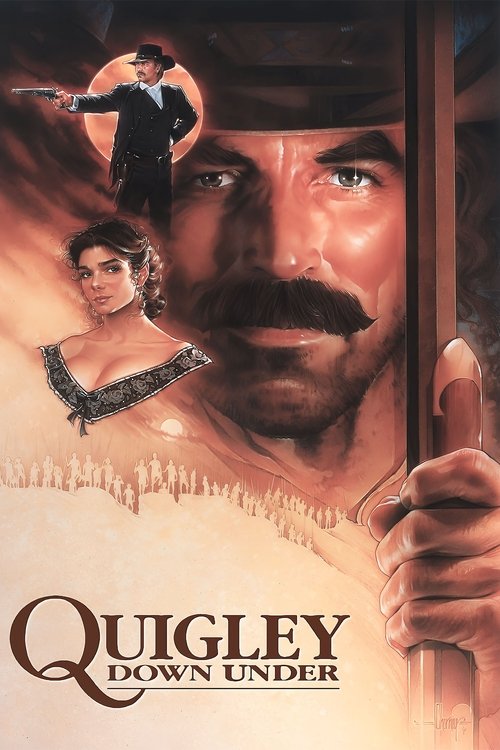
Quigley Down Under
American Matt Quigley answers Australian land baron Elliott Marston's ad for a sharpshooter to kill the dingoes on his property. But when Quigley finds out that Marston's real target is the aborigines, Quigley hits the road. Now, even American expatriate Crazy Cora can't keep Quigley safe in his cat-and-mouse game with the homicidal Marston.
The film earned $21.4M at the global box office.
2 wins & 1 nomination


Plot Structure
Story beats plotted across runtime


Narrative Arc
Emotional journey through the story's key moments
Story Circle
Blueprint 15-beat structure
Arcplot Score Breakdown
Weighted: Precision (70%) + Arc (15%) + Theme (15%)
Quigley Down Under (1990) demonstrates carefully calibrated narrative architecture, characteristic of Simon Wincer's storytelling approach. This structural analysis examines how the film's 15-point plot structure maps to proven narrative frameworks across 1 hour and 59 minutes. With an Arcplot score of 6.9, the film balances conventional beats with creative variation.
Characters
Cast & narrative archetypes

Matthew Quigley
Crazy Cora
Elliott Marston
Major Ashley Pitt
Main Cast & Characters
Matthew Quigley
Played by Tom Selleck
An American sharpshooter hired to work in Australia who discovers his employer's true intentions and becomes a protector of the oppressed.
Crazy Cora
Played by Laura San Giacomo
A traumatized woman living in the Outback who believes Quigley is her lost husband Roy, gradually healing through their journey together.
Elliott Marston
Played by Alan Rickman
A wealthy Australian rancher who hires Quigley to kill Aborigines, representing colonial tyranny and moral corruption.
Major Ashley Pitt
Played by Chris Haywood
A British military officer caught between duty to Marston and his own conscience regarding treatment of Aborigines.
Structural Analysis
The Status Quo at 1 minutes (1% through the runtime) establishes Quigley arrives in Fremantle, Australia as a confident American sharpshooter, hired for a mysterious job. He's self-assured, skilled, and focused solely on his craft.. Of particular interest, this early placement immediately immerses viewers in the story world.
The inciting incident occurs at 14 minutes when Marston reveals the true job: using Quigley's long-range rifle to hunt and kill Aborigines. Quigley's professional opportunity becomes a moral crisis. His assumptions about honorable employment are shattered.. At 12% through the film, this Disruption aligns precisely with traditional story structure. This beat shifts the emotional landscape, launching the protagonist into the central conflict.
The First Threshold at 31 minutes marks the transition into Act II, occurring at 26% of the runtime. This indicates the protagonist's commitment to Quigley actively chooses to rescue Aborigines being hunted by Marston's men. Instead of fleeing Australia, he commits to fighting Marston and protecting the innocent. This is his point of no return., moving from reaction to action.
At 60 minutes, the Midpoint arrives at 50% of the runtime—precisely centered, creating perfect narrative symmetry. Notably, this crucial beat Quigley and Cora share an intimate moment; she begins to heal and see him as himself (not her dead husband). False victory: Quigley feels he's winning against Marston and connecting emotionally. But stakes rise as Marston intensifies his pursuit., fundamentally raising what's at risk. The emotional intensity shifts, dividing the narrative into clear before-and-after phases.
The Collapse moment at 89 minutes (75% through) represents the emotional nadir. Here, Quigley is captured by Marston's forces and faces execution. Cora witnesses the violence. The whiff of death: Quigley appears defeated, his protective mission has failed, and those he cares about are in mortal danger., demonstrates the protagonist at their lowest point. This beat's placement in the final quarter sets up the climactic reversal.
The Second Threshold at 95 minutes initiates the final act resolution at 80% of the runtime. Quigley escapes and retrieves his rifle. He synthesizes his sharpshooting skills with his newfound moral clarity and emotional connections. He's no longer just a hired gun—he's a protector fighting for justice and those he loves., demonstrating the transformation achieved throughout the journey.
Emotional Journey
Quigley Down Under's emotional architecture traces a deliberate progression across 15 carefully calibrated beats.
Narrative Framework
This structural analysis employs proven narrative structure principles that track dramatic progression. By mapping Quigley Down Under against these established plot points, we can identify how Simon Wincer utilizes or subverts traditional narrative conventions. The plot point approach reveals not only adherence to structural principles but also creative choices that distinguish Quigley Down Under within the western genre.
Simon Wincer's Structural Approach
Among the 6 Simon Wincer films analyzed on Arcplot, the average structural score is 7.0, reflecting strong command of classical structure. Quigley Down Under takes a more unconventional approach compared to the director's typical style. For comparative analysis, explore the complete Simon Wincer filmography.
Comparative Analysis
Additional western films include All the Pretty Horses, Shenandoah and Lone Star. For more Simon Wincer analyses, see The Phantom, Free Willy and D.A.R.Y.L..
Plot Points by Act
Act I
SetupStatus Quo
Quigley arrives in Fremantle, Australia as a confident American sharpshooter, hired for a mysterious job. He's self-assured, skilled, and focused solely on his craft.
Theme
Cora tells Quigley "You're a good man, Roy" (mistaking him for her dead husband). The theme emerges: what makes a good man isn't his skill with weapons, but his moral choices and capacity to protect the vulnerable.
Worldbuilding
Quigley travels to Marston's ranch, encountering Crazy Cora and Australian culture. We learn he's been hired for his legendary marksmanship. The world of 1860s Australia is established: beautiful but harsh, with tension between settlers and Aborigines.
Disruption
Marston reveals the true job: using Quigley's long-range rifle to hunt and kill Aborigines. Quigley's professional opportunity becomes a moral crisis. His assumptions about honorable employment are shattered.
Resistance
Quigley refuses and confronts Marston's men, demonstrating he won't compromise his principles. After a brutal beating, he and Cora are left to die in the outback. He debates whether to head back to America or stay and fight.
Act II
ConfrontationFirst Threshold
Quigley actively chooses to rescue Aborigines being hunted by Marston's men. Instead of fleeing Australia, he commits to fighting Marston and protecting the innocent. This is his point of no return.
Mirror World
Quigley begins caring for Cora despite her trauma-induced delusions. She represents emotional vulnerability and connection—everything his gunslinger persona has avoided. The Aborigines also accept him, creating a makeshift family.
Premise
Quigley uses his sharpshooting skills to protect Aborigines and sabotage Marston's operations. The "promise of the premise" delivers: spectacular long-range shooting, outback adventure, growing bond with Cora, and cat-and-mouse games with Marston's forces.
Midpoint
Quigley and Cora share an intimate moment; she begins to heal and see him as himself (not her dead husband). False victory: Quigley feels he's winning against Marston and connecting emotionally. But stakes rise as Marston intensifies his pursuit.
Opposition
Marston's men close in systematically. Quigley's allies are endangered. Cora's trauma resurfaces. The Aborigines face increasing danger. Marston proves more ruthless and strategic than anticipated, turning Quigley's tactics against him.
Collapse
Quigley is captured by Marston's forces and faces execution. Cora witnesses the violence. The whiff of death: Quigley appears defeated, his protective mission has failed, and those he cares about are in mortal danger.
Crisis
In captivity, Quigley faces his darkest moment. He reflects on his choices and what truly matters. Cora must also face her trauma. Both process their pain and find resolve—she to act courageously, he to finish what he started.
Act III
ResolutionSecond Threshold
Quigley escapes and retrieves his rifle. He synthesizes his sharpshooting skills with his newfound moral clarity and emotional connections. He's no longer just a hired gun—he's a protector fighting for justice and those he loves.
Synthesis
Quigley returns to Marston's ranch for the final confrontation. He systematically defeats Marston's men, then faces Marston in a showdown. Despite his rifle expertise, he beats Marston with a pistol—proving his worth isn't just his specialty weapon but his character.
Transformation
Quigley prepares to leave Australia with Cora, who has healed and accepted her husband's death. The final image mirrors the opening: Quigley with his rifle, but now transformed from a solitary gunman into a man of principle with emotional connections and purpose beyond skill.