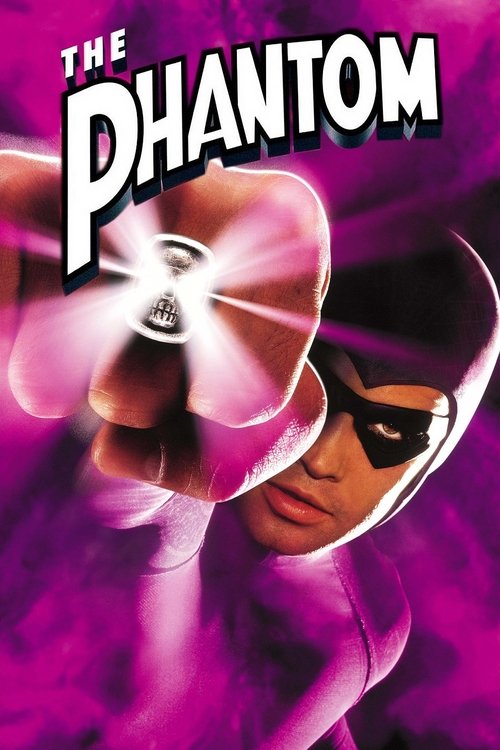
The Phantom
The 21st successor to the role of Bengalla's resident superhero must travel to New York to prevent a rich madman from obtaining three magic skulls that would give him the secret to ultimate power.
The film box office disappointment against its respectable budget of $45.0M, earning $17.3M globally (-62% loss). While initial box office returns were modest, the film has gained appreciation for its fresh perspective within the adventure genre.


Plot Structure
Story beats plotted across runtime


Narrative Arc
Emotional journey through the story's key moments
Story Circle
Blueprint 15-beat structure
Arcplot Score Breakdown
Weighted: Precision (70%) + Arc (15%) + Theme (15%)
The Phantom (1996) showcases strategically placed narrative architecture, characteristic of Simon Wincer's storytelling approach. This structural analysis examines how the film's 15-point plot structure maps to proven narrative frameworks across 1 hour and 40 minutes. With an Arcplot score of 7.3, the film balances conventional beats with creative variation.
Structural Analysis
The Status Quo at 1 minutes (1% through the runtime) establishes Opening narration establishes the legend of "The Ghost Who Walks" - a purple-clad hero whose spirit passes from father to son for 400 years, protecting the innocent in the Bengali jungle.. The analysis reveals that this early placement immediately immerses viewers in the story world.
The inciting incident occurs at 11 minutes when Diana Palmer is kidnapped by sky pirates working for Drax while investigating a story, disrupting both her world and forcing the Phantom into action when the pirates invade his jungle domain.. At 11% through the film, this Disruption aligns precisely with traditional story structure. This beat shifts the emotional landscape, launching the protagonist into the central conflict.
The First Threshold at 25 minutes marks the transition into Act II, occurring at 25% of the runtime. This reveals the protagonist's commitment to The Phantom makes the active choice to leave his jungle sanctuary and travel to New York City to stop Drax's plot to obtain all three Skulls of Touganda, which together grant ultimate power., moving from reaction to action.
At 50 minutes, the Midpoint arrives at 50% of the runtime—precisely centered, creating perfect narrative symmetry. The analysis reveals that this crucial beat False defeat: Drax obtains the second Skull of Touganda and reveals he knows the location of the third. The stakes raise dramatically as Drax gains power and the Phantom realizes he's racing against time. Sala is killed by Drax's forces., fundamentally raising what's at risk. The emotional intensity shifts, dividing the narrative into clear before-and-after phases.
The Collapse moment at 73 minutes (73% through) represents the emotional nadir. Here, Diana is captured by Drax and taken to his secret island base. The Phantom is seemingly killed in the confrontation, falling from a great height. The "whiff of death" - both the apparent death of the hero and the capture of the woman he loves., indicates the protagonist at their lowest point. This beat's placement in the final quarter sets up the climactic reversal.
The Second Threshold at 79 minutes initiates the final act resolution at 79% of the runtime. The Phantom gains crucial insight about defeating Drax: the Skulls' power can be turned against their user. He combines his Phantom abilities with the knowledge Diana provided about Drax's organization, synthesizing both identities for the final assault., demonstrating the transformation achieved throughout the journey.
Emotional Journey
The Phantom's emotional architecture traces a deliberate progression across 15 carefully calibrated beats.
Narrative Framework
This structural analysis employs structural analysis methodology used to understand storytelling architecture. By mapping The Phantom against these established plot points, we can identify how Simon Wincer utilizes or subverts traditional narrative conventions. The plot point approach reveals not only adherence to structural principles but also creative choices that distinguish The Phantom within the adventure genre.
Simon Wincer's Structural Approach
Among the 6 Simon Wincer films analyzed on Arcplot, the average structural score is 7.0, reflecting strong command of classical structure. The Phantom represents one of the director's most structurally precise works. For comparative analysis, explore the complete Simon Wincer filmography.
Comparative Analysis
Additional adventure films include The Black Stallion, The Bad Guys and Puss in Boots. For more Simon Wincer analyses, see Quigley Down Under, Free Willy and D.A.R.Y.L..
Plot Points by Act
Act I
SetupStatus Quo
Opening narration establishes the legend of "The Ghost Who Walks" - a purple-clad hero whose spirit passes from father to son for 400 years, protecting the innocent in the Bengali jungle.
Theme
Kit Walker's father, the dying 20th Phantom, tells young Kit: "The Phantom is sworn to fight all forms of piracy, greed, cruelty and injustice." This establishes the thematic core of legacy and duty vs. personal desire.
Worldbuilding
Establishes 1938 New York, introduces Diana Palmer as adventurous newspaper heiress, shows villain Xander Drax seeking mystical Skulls of Touganda, and Kit Walker living dual life as the Phantom in Bengali jungle with Devil the wolf and Hero the horse.
Disruption
Diana Palmer is kidnapped by sky pirates working for Drax while investigating a story, disrupting both her world and forcing the Phantom into action when the pirates invade his jungle domain.
Resistance
The Phantom rescues Diana from the pirates. She doesn't recognize him as her childhood friend Kit Walker. He debates whether to pursue the larger conspiracy or remain in the jungle. His guide/mentor figure is the spirit of his father and the Phantom legacy itself.
Act II
ConfrontationFirst Threshold
The Phantom makes the active choice to leave his jungle sanctuary and travel to New York City to stop Drax's plot to obtain all three Skulls of Touganda, which together grant ultimate power.
Mirror World
Kit reunites with Diana Palmer in New York as his civilian self. Their romantic subplot begins, representing the life he could have if he abandoned his Phantom identity - the central thematic tension between duty and personal happiness.
Premise
Fish-out-of-water fun as the jungle hero navigates 1930s New York. The Phantom investigates Drax's criminal empire, battles henchmen, performs heroic feats, while Kit Walker courts Diana, creating dramatic irony as she falls for both identities.
Midpoint
False defeat: Drax obtains the second Skull of Touganda and reveals he knows the location of the third. The stakes raise dramatically as Drax gains power and the Phantom realizes he's racing against time. Sala is killed by Drax's forces.
Opposition
Drax closes in on the final skull. His forces intensify attacks on the Phantom. Diana is put in increasing danger. The Phantom's dual identity becomes harder to maintain. Drax's supernatural advantage grows as he masters the skulls' power.
Collapse
Diana is captured by Drax and taken to his secret island base. The Phantom is seemingly killed in the confrontation, falling from a great height. The "whiff of death" - both the apparent death of the hero and the capture of the woman he loves.
Crisis
The Phantom survives but must regroup. He faces his dark night realizing he cannot win through strength alone. He must embrace both his Phantom legacy AND his human connection to Diana to succeed.
Act III
ResolutionSecond Threshold
The Phantom gains crucial insight about defeating Drax: the Skulls' power can be turned against their user. He combines his Phantom abilities with the knowledge Diana provided about Drax's organization, synthesizing both identities for the final assault.
Synthesis
The finale: The Phantom infiltrates Drax's island fortress, battles through his forces, confronts Drax who now wields the combined power of all three skulls. Epic confrontation where the Phantom destroys the skulls and defeats Drax, saving Diana and the world.
Transformation
Closing image mirrors the opening: The Phantom returns to his jungle home, but transformed. Diana now knows his dual identity and accepts both. He has integrated his duty as the Phantom with his human need for love, no longer torn between two worlds.