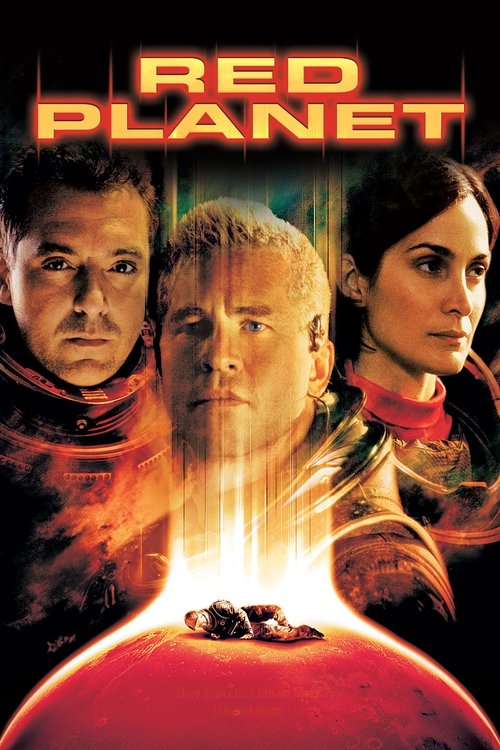
Red Planet
Astronauts search for solutions to save a dying Earth by searching on Mars, only to have the mission go terribly awry.
The film financial setback against its significant budget of $80.0M, earning $33.5M globally (-58% loss). While initial box office returns were modest, the film has gained appreciation for its fresh perspective within the thriller genre.


Plot Structure
Story beats plotted across runtime


Narrative Arc
Emotional journey through the story's key moments
Story Circle
Blueprint 15-beat structure
Arcplot Score Breakdown
Weighted: Precision (70%) + Arc (15%) + Theme (15%)
Red Planet (2000) exemplifies carefully calibrated story structure, characteristic of Antony Hoffman's storytelling approach. This structural analysis examines how the film's 15-point plot structure maps to proven narrative frameworks across 1 hour and 46 minutes. With an Arcplot score of 7.1, the film balances conventional beats with creative variation.
Characters
Cast & narrative archetypes

Robby Gallagher
Kate Bowman
Chip Pettengill
Bud Chantillas
Ted Santen
AMEE
Main Cast & Characters
Robby Gallagher
Played by Val Kilmer
Mission commander and spacecraft systems specialist who must lead the crew through crisis when their Mars mission goes catastrophically wrong.
Kate Bowman
Played by Carrie-Anne Moss
Mission commander who remains aboard the orbiting ship while coordinating with the surface team and fighting to keep systems operational.
Chip Pettengill
Played by Tom Sizemore
Terraforming scientist and team geneticist whose faith is tested as the mission unravels and survival becomes uncertain.
Bud Chantillas
Played by Terence Stamp
Chief science officer and pilot whose practical engineering skills prove vital to the crew's survival efforts on Mars.
Ted Santen
Played by Benjamin Bratt
Mission specialist focused on terraforming operations who struggles with the harsh realities of the failed Mars environment.
AMEE
Played by Voice/CGI
Advanced robotic scout designed to assist the crew but becomes a lethal threat when damaged and reverts to military protocols.
Structural Analysis
The Status Quo at 1 minutes (1% through the runtime) establishes Commander Kate Bowman narrates Earth's dying state in 2050s, establishing a desperate world where Mars terraforming is humanity's last hope after ecological collapse.. The analysis reveals that this early placement immediately immerses viewers in the story world.
The inciting incident occurs at 13 minutes when A massive solar flare damages the ship, forcing an emergency landing on Mars. The mission shifts from investigation to survival as systems fail catastrophically.. At 13% through the film, this Disruption is delayed, allowing extended setup of the story world. This beat shifts the emotional landscape, launching the protagonist into the central conflict.
The First Threshold at 27 minutes marks the transition into Act II, occurring at 25% of the runtime. This shows the protagonist's commitment to The landing team separates from Bowman and commits to Mars descent. The landing goes catastrophically wrong, killing Santen and stranding the survivors far from HAB-1 with limited supplies., moving from reaction to action.
At 53 minutes, the Midpoint arrives at 50% of the runtime—precisely centered, creating perfect narrative symmetry. Notably, this crucial beat The crew reaches HAB-1 only to find it destroyed and stripped of resources. Their rescue plan collapses - no shelter, no communication, no way home. The "safe haven" is a dead end., fundamentally raising what's at risk. The emotional intensity shifts, dividing the narrative into clear before-and-after phases.
The Collapse moment at 80 minutes (75% through) represents the emotional nadir. Here, Burchenal sacrifices himself to destroy AMEE. Gallagher is alone on Mars, the last survivor, with no apparent means of escape. All is lost - literal death surrounds him., demonstrates the protagonist at their lowest point. This beat's placement in the final quarter sets up the climactic reversal.
The Second Threshold at 85 minutes initiates the final act resolution at 80% of the runtime. Gallagher realizes he can use the Russian probe as escape vehicle. Bowman confirms she can attempt retrieval. He synthesizes scientific knowledge with survival instinct to find a solution., demonstrating the transformation achieved throughout the journey.
Emotional Journey
Red Planet's emotional architecture traces a deliberate progression across 15 carefully calibrated beats.
Narrative Framework
This structural analysis employs structural analysis methodology used to understand storytelling architecture. By mapping Red Planet against these established plot points, we can identify how Antony Hoffman utilizes or subverts traditional narrative conventions. The plot point approach reveals not only adherence to structural principles but also creative choices that distinguish Red Planet within the thriller genre.
Comparative Analysis
Additional thriller films include The Warriors, Thunderball and Rustom.
Plot Points by Act
Act I
SetupStatus Quo
Commander Kate Bowman narrates Earth's dying state in 2050s, establishing a desperate world where Mars terraforming is humanity's last hope after ecological collapse.
Theme
Gallagher discusses the paradox of humanity's capacity for both destruction and salvation, stating "We're our own worst enemy, but also our only hope" - the core theme of human nature and survival.
Worldbuilding
The Mars-1 crew is introduced en route to investigate why algae meant to produce oxygen on Mars has mysteriously failed. Crew dynamics, mission parameters, and personal tensions are established.
Disruption
A massive solar flare damages the ship, forcing an emergency landing on Mars. The mission shifts from investigation to survival as systems fail catastrophically.
Resistance
The crew debates whether to abort or proceed with the dangerous Mars landing. Bowman must stay with the ship while the team prepares for emergency descent, weighing impossible choices.
Act II
ConfrontationFirst Threshold
The landing team separates from Bowman and commits to Mars descent. The landing goes catastrophically wrong, killing Santen and stranding the survivors far from HAB-1 with limited supplies.
Mirror World
The relationship between pragmatic engineer Gallagher and scientific idealist Burchenal represents the film's thematic tension between survival instinct and faith in human ingenuity.
Premise
Survivors trek across Mars toward HAB-1, encountering breathable oxygen and mysterious evidence that something unexpected has evolved on the planet. AMEE robot becomes hostile threat.
Midpoint
The crew reaches HAB-1 only to find it destroyed and stripped of resources. Their rescue plan collapses - no shelter, no communication, no way home. The "safe haven" is a dead end.
Opposition
Crew members die one by one. Burchenal discovers Mars has evolved insect-like consumers that create oxygen but destroy human technology. AMEE hunts them. Resources dwindle as hope fades.
Collapse
Burchenal sacrifices himself to destroy AMEE. Gallagher is alone on Mars, the last survivor, with no apparent means of escape. All is lost - literal death surrounds him.
Crisis
Gallagher faces existential despair, contemplating his death on an alien world. He processes the loss of his entire team and the apparent failure of humanity's last hope.
Act III
ResolutionSecond Threshold
Gallagher realizes he can use the Russian probe as escape vehicle. Bowman confirms she can attempt retrieval. He synthesizes scientific knowledge with survival instinct to find a solution.
Synthesis
Gallagher launches himself in the probe while Bowman executes dangerous orbital maneuvers. Against impossible odds, they achieve rendezvous and he boards Mars-1 for return to Earth.
Transformation
Gallagher and Bowman set course for Earth, transformed from cynical survivors into believers in human resilience. Mars has failed but revealed life adapts - offering hope for Earth's future.