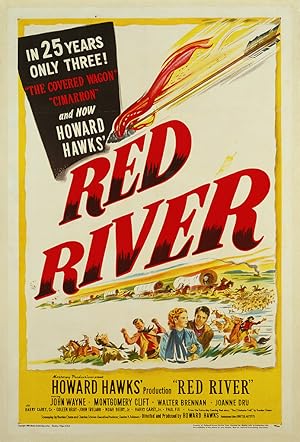
Red River
Dunson leads a cattle drive, the culmination of over 14 years of work, to its destination in Missouri. But his tyrannical behavior along the way causes a mutiny, led by his adopted son.
Despite its small-scale budget of $3.0M, Red River became a commercial success, earning $9.0M worldwide—a 200% return. The film's bold vision resonated with audiences, confirming that strong storytelling can transcend budget limitations.
Nominated for 2 Oscars. 2 wins & 4 nominations


Plot Structure
Story beats plotted across runtime


Narrative Arc
Emotional journey through the story's key moments
Story Circle
Blueprint 15-beat structure
Arcplot Score Breakdown
Weighted: Precision (70%) + Arc (15%) + Theme (15%)
Red River (1948) exemplifies meticulously timed plot construction, characteristic of Howard Hawks's storytelling approach. This structural analysis examines how the film's 15-point plot structure maps to proven narrative frameworks across 2 hours and 13 minutes. With an Arcplot score of 7.5, the film showcases strong structural fundamentals.
Characters
Cast & narrative archetypes

Thomas Dunson
Matthew Garth
Tess Millay
Groot Nadine
Cherry Valance
Main Cast & Characters
Thomas Dunson
Played by John Wayne
Ruthless cattle baron who builds an empire through determination and force, becomes increasingly tyrannical on the trail drive.
Matthew Garth
Played by Montgomery Clift
Dunson's adopted son who grows from loyal protégé to challenger, forced to mutiny against his father figure's brutality.
Tess Millay
Played by Joanne Dru
Strong-willed woman traveling with a wagon train who falls for Matt and helps reconcile him with Dunson.
Groot Nadine
Played by Walter Brennan
Dunson's loyal cook and old friend who serves as conscience and witness to his descent into tyranny.
Cherry Valance
Played by John Ireland
Professional gunfighter and gambler who joins the drive and becomes Matt's ally and friend.
Structural Analysis
The Status Quo at 2 minutes (1% through the runtime) establishes Thomas Dunson leaves a wagon train in 1851 to claim land in Texas, establishing his stubborn, independent character. He leaves behind Fen, the woman who loves him.. Significantly, this early placement immediately immerses viewers in the story world.
The inciting incident occurs at 15 minutes when Dunson learns his cattle are worthless in Texas—no buyers, no money. He faces financial ruin after 14 years of building his empire. The status quo is shattered.. At 11% through the film, this Disruption aligns precisely with traditional story structure. This beat shifts the emotional landscape, launching the protagonist into the central conflict.
The First Threshold at 32 minutes marks the transition into Act II, occurring at 24% of the runtime. This demonstrates the protagonist's commitment to The cattle drive begins. Dunson crosses his own threshold by leaving his land behind and committing to the perilous journey. There is no turning back—they must reach Missouri or lose everything., moving from reaction to action.
At 66 minutes, the Midpoint arrives at 50% of the runtime—precisely centered, creating perfect narrative symmetry. The analysis reveals that this crucial beat Dunson announces he will hang two men for attempted desertion. The stakes raise dramatically—this is no longer about cattle, but about Dunson's descent into despotism. Matthew realizes Dunson has become the threat., fundamentally raising what's at risk. The emotional intensity shifts, dividing the narrative into clear before-and-after phases.
The Collapse moment at 97 minutes (73% through) represents the emotional nadir. Here, Matthew reaches Abilene and successfully sells the cattle, but Dunson is coming to kill him. Despite his success, Matthew faces the whiff of death—his surrogate father intends to murder him. The mission is complete but the cost may be his life., indicates the protagonist at their lowest point. This beat's placement in the final quarter sets up the climactic reversal.
The Second Threshold at 106 minutes initiates the final act resolution at 80% of the runtime. Tess confronts both men, shaming them for their stubborn pride. She forces them to recognize they love each other. This outside perspective breaks the cycle—synthesis of Dunson's strength and Matthew's compassion becomes possible., demonstrating the transformation achieved throughout the journey.
Emotional Journey
Red River's emotional architecture traces a deliberate progression across 15 carefully calibrated beats.
Narrative Framework
This structural analysis employs systematic plot point analysis that identifies crucial turning points. By mapping Red River against these established plot points, we can identify how Howard Hawks utilizes or subverts traditional narrative conventions. The plot point approach reveals not only adherence to structural principles but also creative choices that distinguish Red River within the drama genre.
Howard Hawks's Structural Approach
Among the 7 Howard Hawks films analyzed on Arcplot, the average structural score is 7.0, reflecting strong command of classical structure. Red River represents one of the director's most structurally precise works. For comparative analysis, explore the complete Howard Hawks filmography.
Comparative Analysis
Additional drama films include After Thomas, South Pacific and Dirty Dancing: Havana Nights. For more Howard Hawks analyses, see Man's Favorite Sport?, Bringing Up Baby and Rio Bravo.
Plot Points by Act
Act I
SetupStatus Quo
Thomas Dunson leaves a wagon train in 1851 to claim land in Texas, establishing his stubborn, independent character. He leaves behind Fen, the woman who loves him.
Theme
Groot tells Dunson about the need for flexibility and warns him: "You're gonna need that boy (Matthew) before you're through." The theme of rigidity versus adaptability is stated.
Worldbuilding
Dunson and Groot establish their claim to Texas land. They encounter young Matthew Garth, sole survivor of an Indian attack. Fourteen years pass; they build a vast cattle empire but have no market due to post-Civil War economic collapse.
Disruption
Dunson learns his cattle are worthless in Texas—no buyers, no money. He faces financial ruin after 14 years of building his empire. The status quo is shattered.
Resistance
Dunson conceives the dangerous plan to drive 10,000 head of cattle to Missouri. Matthew debates the route—Dunson insists on the untested Chisholm Trail. The men prepare, hire drovers, and gather supplies despite warnings and doubts.
Act II
ConfrontationFirst Threshold
The cattle drive begins. Dunson crosses his own threshold by leaving his land behind and committing to the perilous journey. There is no turning back—they must reach Missouri or lose everything.
Mirror World
Matthew's compassionate leadership contrasts with Dunson's tyranny. After Dunson nearly hangs deserters, Matthew shows mercy and wisdom, embodying the alternative path—leadership through respect rather than fear.
Premise
The promise of the Western: stampedes, river crossings, Indian attacks, cooking over campfires. The drive faces external obstacles while Dunson grows increasingly tyrannical, creating internal conflict within the group.
Midpoint
Dunson announces he will hang two men for attempted desertion. The stakes raise dramatically—this is no longer about cattle, but about Dunson's descent into despotism. Matthew realizes Dunson has become the threat.
Opposition
Matthew leads a mutiny, taking control of the herd. Dunson vows to hunt Matthew down and kill him. The opposition intensifies as Dunson pursues them. Matthew meets Tess Millay, who represents love and domesticity—everything the trail isn't.
Collapse
Matthew reaches Abilene and successfully sells the cattle, but Dunson is coming to kill him. Despite his success, Matthew faces the whiff of death—his surrogate father intends to murder him. The mission is complete but the cost may be his life.
Crisis
Matthew waits in Abilene, refusing to flee or draw on Dunson. He processes what it means to face the man who raised him, knowing Dunson's pride will demand blood. Tess arrives, determined to intervene.
Act III
ResolutionSecond Threshold
Tess confronts both men, shaming them for their stubborn pride. She forces them to recognize they love each other. This outside perspective breaks the cycle—synthesis of Dunson's strength and Matthew's compassion becomes possible.
Synthesis
Dunson and Matthew fight but cannot kill each other. Dunson finally acknowledges Matthew as his equal and heir. They agree to add Matthew's "M" to the Red River brand, symbolizing shared legacy and reconciliation.
Transformation
The Red River D brand becomes "Red River D and M." Dunson, once rigid and alone, accepts partnership. Matthew, once subordinate, claims his place as equal. The stubborn man learned to bend; the compassionate son learned to stand firm.