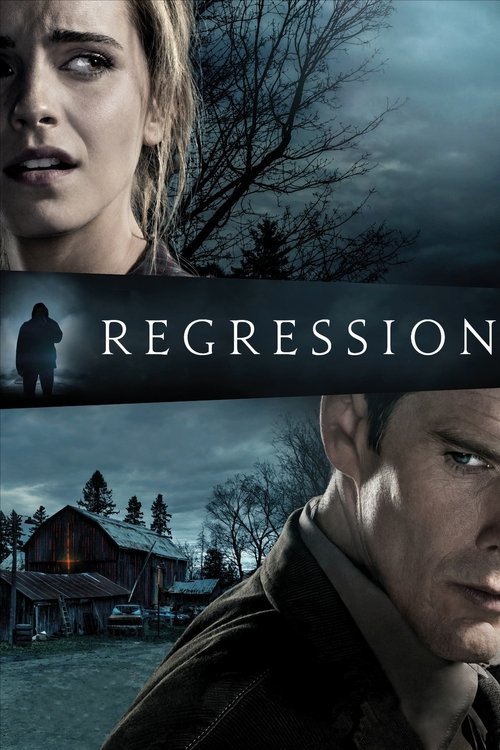
Regression
Minnesota, 1990. Detective Bruce Kenner investigates the case of young Angela, who accuses her father, John Gray, of an unspeakable crime. When John unexpectedly and without recollection admits guilt, renowned psychologist Dr. Raines is brought in to help him relive his memories and what they discover unmasks a horrifying nationwide mystery.
The film struggled financially against its mid-range budget of $20.0M, earning $17.7M globally (-12% loss).
1 win & 2 nominations


Plot Structure
Story beats plotted across runtime


Narrative Arc
Emotional journey through the story's key moments
Story Circle
Blueprint 15-beat structure
Arcplot Score Breakdown
Weighted: Precision (70%) + Arc (15%) + Theme (15%)
Regression (2015) reveals precise dramatic framework, characteristic of Alejandro Amenábar's storytelling approach. This structural analysis examines how the film's 15-point plot structure maps to proven narrative frameworks across 1 hour and 46 minutes. With an Arcplot score of 7.2, the film balances conventional beats with creative variation.
Characters
Cast & narrative archetypes

Bruce Kenner
Angela Gray
Professor Kenneth Raines
John Gray
Rose Gray
Main Cast & Characters
Bruce Kenner
Played by Ethan Hawke
A detective investigating a case of alleged satanic ritual abuse in 1990 Minnesota.
Angela Gray
Played by Emma Watson
A young woman who accuses her father of abuse and claims involvement in satanic rituals.
Professor Kenneth Raines
Played by David Thewlis
A psychologist who uses regression therapy to help recover repressed memories.
John Gray
Played by David Dencik
Angela's father who confesses to crimes he cannot remember committing.
Rose Gray
Played by Dale Dickey
Angela's grandmother and John's mother who becomes implicated in the investigation.
Structural Analysis
The Status Quo at 1 minutes (1% through the runtime) establishes Detective Bruce Kenner works routine cases in small-town Minnesota, 1990. He's a methodical investigator in a quiet community where serious crimes are rare.. Significantly, this early placement immediately immerses viewers in the story world.
The inciting incident occurs at 13 minutes when John Gray confesses to sexually abusing his daughter Angela, but claims he has no memory of it. Angela accuses him but both seem confused about the details.. At 12% through the film, this Disruption aligns precisely with traditional story structure. This beat shifts the emotional landscape, launching the protagonist into the central conflict.
The First Threshold at 26 minutes marks the transition into Act II, occurring at 25% of the runtime. This demonstrates the protagonist's commitment to Kenner decides to fully commit to the investigation using regression hypnosis therapy with John Gray, entering the world of recovered memories and satanic panic., moving from reaction to action.
At 53 minutes, the Midpoint arrives at 50% of the runtime—precisely centered, creating perfect narrative symmetry. The analysis reveals that this crucial beat Kenner begins experiencing his own disturbing visions and nightmares about the cult. He realizes he may have been a victim himself, raising the stakes personally. False defeat as he loses objectivity., fundamentally raising what's at risk. The emotional intensity shifts, dividing the narrative into clear before-and-after phases.
The Collapse moment at 79 minutes (74% through) represents the emotional nadir. Here, Kenner's investigation falls apart when key evidence is revealed as fabricated. The case collapses and he faces the death of his certainty about what is real and what is false memory., demonstrates the protagonist at their lowest point. This beat's placement in the final quarter sets up the climactic reversal.
The Second Threshold at 85 minutes initiates the final act resolution at 80% of the runtime. Kenner discovers the truth: Angela fabricated the initial accusations, and the regression therapy created false memories in everyone, including himself. He sees how suggestion and belief created the entire narrative., demonstrating the transformation achieved throughout the journey.
Emotional Journey
Regression's emotional architecture traces a deliberate progression across 15 carefully calibrated beats.
Narrative Framework
This structural analysis employs structural analysis methodology used to understand storytelling architecture. By mapping Regression against these established plot points, we can identify how Alejandro Amenábar utilizes or subverts traditional narrative conventions. The plot point approach reveals not only adherence to structural principles but also creative choices that distinguish Regression within the horror genre.
Alejandro Amenábar's Structural Approach
Among the 5 Alejandro Amenábar films analyzed on Arcplot, the average structural score is 7.2, reflecting strong command of classical structure. Regression represents one of the director's most structurally precise works. For comparative analysis, explore the complete Alejandro Amenábar filmography.
Comparative Analysis
Additional horror films include Thinner, A Nightmare on Elm Street and Mary Reilly. For more Alejandro Amenábar analyses, see The Others, The Sea Inside and Agora.
Plot Points by Act
Act I
SetupStatus Quo
Detective Bruce Kenner works routine cases in small-town Minnesota, 1990. He's a methodical investigator in a quiet community where serious crimes are rare.
Theme
Professor Kenneth Raines discusses how memory is unreliable and can be implanted or constructed: "The mind is capable of creating false memories that feel completely real."
Worldbuilding
Establishment of 1990 Minnesota setting, Detective Kenner's methodical approach, introduction of the Gray family dynamics, and the conservative religious community backdrop.
Disruption
John Gray confesses to sexually abusing his daughter Angela, but claims he has no memory of it. Angela accuses him but both seem confused about the details.
Resistance
Kenner debates whether to pursue the case, consults with Professor Raines about recovered memory therapy, and begins investigating the possibility of satanic ritual abuse.
Act II
ConfrontationFirst Threshold
Kenner decides to fully commit to the investigation using regression hypnosis therapy with John Gray, entering the world of recovered memories and satanic panic.
Mirror World
Angela reveals detailed "memories" of satanic ritual abuse. Her testimony becomes the emotional and thematic counterpoint, representing the danger of believing everything we remember.
Premise
Investigation deepens as more people "recover" memories of satanic cult involvement. Kenner uncovers apparent evidence, interviews suspects, and the case expands to implicate community members.
Midpoint
Kenner begins experiencing his own disturbing visions and nightmares about the cult. He realizes he may have been a victim himself, raising the stakes personally. False defeat as he loses objectivity.
Opposition
Kenner becomes increasingly paranoid and obsessed. The case spirals as more "victims" come forward. He sees cult symbols everywhere and suspects community leaders. His grip on reality weakens.
Collapse
Kenner's investigation falls apart when key evidence is revealed as fabricated. The case collapses and he faces the death of his certainty about what is real and what is false memory.
Crisis
Kenner struggles with the realization that he helped create false memories in witnesses and himself. He questions everything he believed about the case and his own past trauma.
Act III
ResolutionSecond Threshold
Kenner discovers the truth: Angela fabricated the initial accusations, and the regression therapy created false memories in everyone, including himself. He sees how suggestion and belief created the entire narrative.
Synthesis
Kenner works to undo the damage, confronts Angela about the false accusations, and attempts to restore truth. He must accept that memory and belief can create powerful but false realities.
Transformation
Kenner sits alone, forever changed by the experience. He understands that certainty is an illusion and that the mind can deceive us completely. The final image shows him haunted and uncertain.