Reign Over Me
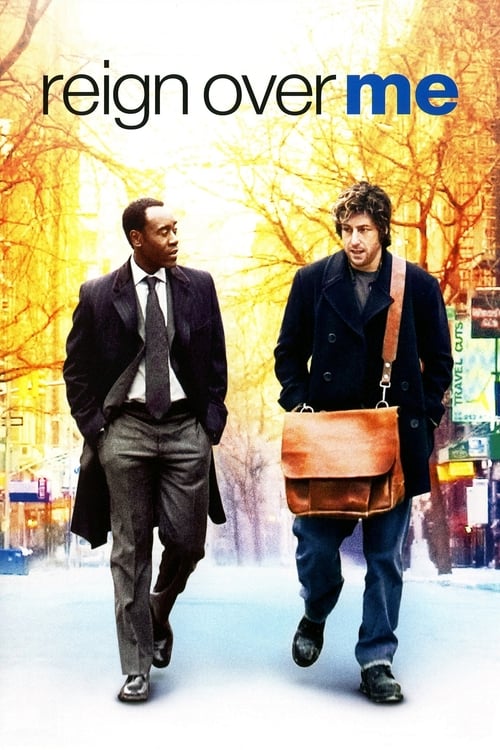
A man who lost his family in the September 11 attack on New York City runs into his old college roommate. Rekindling the friendship is the one thing that appears able to help the man recover from his grief.
Working with a moderate budget of $20.0M, the film achieved a modest success with $22.2M in global revenue (+11% profit margin).


Plot Structure
Story beats plotted across runtime


Narrative Arc
Emotional journey through the story's key moments
Story Circle
Blueprint 15-beat structure
Arcplot Score Breakdown
Weighted: Precision (70%) + Arc (15%) + Theme (15%)
Reign Over Me (2007) demonstrates strategically placed plot construction, characteristic of Mike Binder's storytelling approach. This structural analysis examines how the film's 15-point plot structure maps to proven narrative frameworks across 2 hours and 4 minutes. With an Arcplot score of 6.8, the film balances conventional beats with creative variation.
Characters
Cast & narrative archetypes

Charlie Fineman
Dr. Alan Johnson
Janeane Johnson
Angela Oakhurst
Dr. Angela Corcoran
Judge Raines
Sugarman
Ginger Timplemen
Main Cast & Characters
Charlie Fineman
Played by Adam Sandler
A former dentist who lost his entire family in 9/11 and has retreated into a cocoon of grief, spending his days renovating his kitchen and playing video games to avoid his traumatic memories.
Dr. Alan Johnson
Played by Don Cheadle
A successful dentist who reconnects with his old college roommate Charlie and tries to help him process his grief while struggling with his own unfulfilling marriage and career dissatisfaction.
Janeane Johnson
Played by Jada Pinkett Smith
Alan's controlling wife who feels threatened by his renewed friendship with Charlie and worries about the time he spends away from their family.
Angela Oakhurst
Played by Liv Tyler
A troubled patient of Alan's who develops an attraction to him and becomes involved in Charlie's story as a potential romantic interest.
Dr. Angela Corcoran
Played by Liv Tyler
A compassionate psychiatrist who Alan consults about Charlie's condition and eventually takes on Charlie as a patient to help him work through his trauma.
Judge Raines
Played by Donald Sutherland
The sympathetic judge who presides over the hearing to determine Charlie's mental competency and whether he should be institutionalized.
Sugarman
Played by Robert Klein
Charlie's former father-in-law who is pursuing legal action to have Charlie committed, believing he needs institutional care.
Ginger Timplemen
Played by Saffron Burrows
Charlie's former mother-in-law who, along with her husband, wants Charlie institutionalized so they can maintain some connection to their deceased daughter.
Structural Analysis
The Status Quo at 1 minutes (1% through the runtime) establishes Alan Johnson commutes through New York, living a successful but emotionally distant life as a dentist with a stable practice, marriage, and children. His comfortable existence feels hollow and routine.. Of particular interest, this early placement immediately immerses viewers in the story world.
The inciting incident occurs at 14 minutes when Alan spots Charlie, his former college roommate, on the street. Charlie appears disheveled and doesn't recognize Alan, turning away. This encounter disrupts Alan's routine and ignites his curiosity about his old friend's condition.. At 12% through the film, this Disruption aligns precisely with traditional story structure. This beat shifts the emotional landscape, launching the protagonist into the central conflict.
The First Threshold at 30 minutes marks the transition into Act II, occurring at 25% of the runtime. This demonstrates the protagonist's commitment to Alan makes the active choice to pursue a friendship with Charlie, spending time with him playing video games and hanging out. He commits to entering Charlie's world of avoidance and grief, despite the emotional complexity., moving from reaction to action.
At 61 minutes, the Midpoint arrives at 50% of the runtime—precisely centered, creating perfect narrative symmetry. Significantly, this crucial beat Charlie has a violent breakdown in public, destroying his kitchen and being unable to control his rage. Alan witnesses the true depth of Charlie's trauma. The stakes are raised: this isn't just hanging out anymore; Charlie is truly broken and dangerous to himself., fundamentally raising what's at risk. The emotional intensity shifts, dividing the narrative into clear before-and-after phases.
The Collapse moment at 92 minutes (74% through) represents the emotional nadir. Here, Charlie, confronted by his in-laws and Alan about facing reality, explodes in rage and threatens people with a gun on the street. He's arrested. Alan's attempt to help has seemingly made everything worse. Both men hit rock bottom: Charlie faces institutionalization, Alan faces consequences., shows the protagonist at their lowest point. This beat's placement in the final quarter sets up the climactic reversal.
The Second Threshold at 98 minutes initiates the final act resolution at 79% of the runtime. Alan advocates for Charlie in court, and Charlie finally opens up to Dr. Oakhurst, speaking his family's names and remembering them for the first time. This breakthrough combines Alan's loyalty with Charlie's willingness to finally face his grief. New hope emerges., demonstrating the transformation achieved throughout the journey.
Emotional Journey
Reign Over Me's emotional architecture traces a deliberate progression across 15 carefully calibrated beats.
Narrative Framework
This structural analysis employs a 15-point narrative structure framework that maps key story moments. By mapping Reign Over Me against these established plot points, we can identify how Mike Binder utilizes or subverts traditional narrative conventions. The plot point approach reveals not only adherence to structural principles but also creative choices that distinguish Reign Over Me within the drama genre.
Mike Binder's Structural Approach
Among the 3 Mike Binder films analyzed on Arcplot, the average structural score is 6.8, demonstrating varied approaches to story architecture. Reign Over Me takes a more unconventional approach compared to the director's typical style. For comparative analysis, explore the complete Mike Binder filmography.
Comparative Analysis
Additional drama films include After Thomas, South Pacific and Dirty Dancing: Havana Nights. For more Mike Binder analyses, see Black or White, The Upside of Anger.
Plot Points by Act
Act I
SetupStatus Quo
Alan Johnson commutes through New York, living a successful but emotionally distant life as a dentist with a stable practice, marriage, and children. His comfortable existence feels hollow and routine.
Theme
Alan's wife Janeane says people need to talk about their problems and connect with others. She encourages Alan to reach out and communicate, establishing the film's theme about confronting grief and human connection.
Worldbuilding
Introduction to Alan's structured world: his dental practice, demanding partners, pushy patient Donna, and well-meaning but controlling wife. Meanwhile, Charlie Fineman rides through the city on a scooter, isolated and lost in his own world, playing video games and listening to music.
Disruption
Alan spots Charlie, his former college roommate, on the street. Charlie appears disheveled and doesn't recognize Alan, turning away. This encounter disrupts Alan's routine and ignites his curiosity about his old friend's condition.
Resistance
Alan pursues Charlie, eventually breaking through his wall. Charlie reveals fragments of his traumatized state. Alan debates whether to get involved, discussing it with Janeane. He learns Charlie lost his entire family on 9/11 and has blocked out all memories of them.
Act II
ConfrontationFirst Threshold
Alan makes the active choice to pursue a friendship with Charlie, spending time with him playing video games and hanging out. He commits to entering Charlie's world of avoidance and grief, despite the emotional complexity.
Mirror World
Charlie's relationship with Alan becomes the mirror that will teach both men what they need. Charlie represents grief and isolation; Alan represents emotional numbness and avoidance in different form. Their rekindled friendship becomes the vehicle for healing.
Premise
The "fun and games" of their friendship: playing video games, listening to music, going out at night. Alan finds escape from his controlled life; Charlie finds companionship without pressure. Alan also deals with Donna's advances and begins treating Charlie like a patient-project.
Midpoint
Charlie has a violent breakdown in public, destroying his kitchen and being unable to control his rage. Alan witnesses the true depth of Charlie's trauma. The stakes are raised: this isn't just hanging out anymore; Charlie is truly broken and dangerous to himself.
Opposition
Pressure intensifies from all sides: Charlie's in-laws threaten legal action for custody/psychiatric commitment, Alan's partners confront him about Donna, Janeane feels shut out, and Charlie continues to resist all attempts at help. Angela Oakhurst (therapist) enters but Charlie rejects treatment.
Collapse
Charlie, confronted by his in-laws and Alan about facing reality, explodes in rage and threatens people with a gun on the street. He's arrested. Alan's attempt to help has seemingly made everything worse. Both men hit rock bottom: Charlie faces institutionalization, Alan faces consequences.
Crisis
Charlie is held for psychiatric evaluation. Alan processes the devastation and his own failures. In the darkness, both men must face whether healing is possible or if the grief is too overwhelming. Alan contemplates whether he's helped or hurt his friend.
Act III
ResolutionSecond Threshold
Alan advocates for Charlie in court, and Charlie finally opens up to Dr. Oakhurst, speaking his family's names and remembering them for the first time. This breakthrough combines Alan's loyalty with Charlie's willingness to finally face his grief. New hope emerges.
Synthesis
The court hearing where Charlie testifies and demonstrates genuine progress. The judge rules in Charlie's favor for outpatient treatment. Charlie and Alan reconcile their friendship on new, healthier terms. Alan also resolves his own life issues with authenticity. Both men move forward.
Transformation
Charlie and Alan talk on a rooftop, with Charlie now able to remember and speak about his family. The final image shows both men transformed: Charlie beginning to live with his grief rather than hide from it, Alan having found genuine connection and purpose. They remain friends, both more whole.