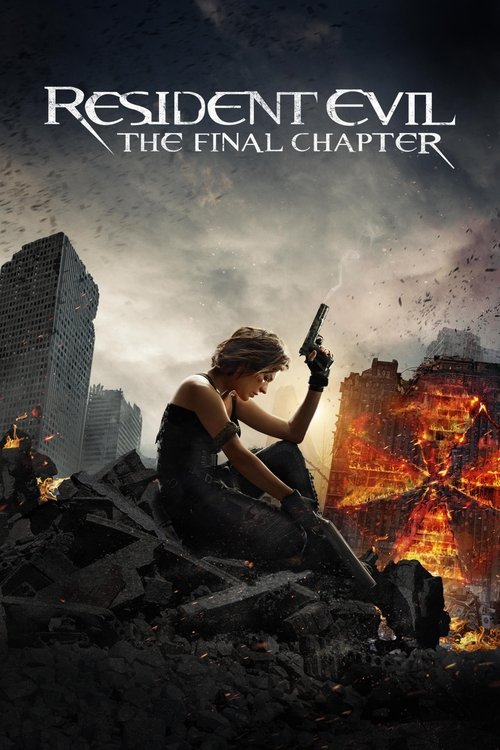
Resident Evil: The Final Chapter
Picking up immediately after the events in Resident Evil: Retribution, Alice is the only survivor of what was meant to be humanity's final stand against the undead. Now, she must return to where the nightmare began - The Hive in Raccoon City, where the Umbrella Corporation is gathering its forces for a final strike against the only remaining survivors of the apocalypse.
Despite a mid-range budget of $40.0M, Resident Evil: The Final Chapter became a box office phenomenon, earning $312.2M worldwide—a remarkable 681% return.
2 wins & 3 nominations


Plot Structure
Story beats plotted across runtime


Narrative Arc
Emotional journey through the story's key moments
Story Circle
Blueprint 15-beat structure
Arcplot Score Breakdown
Weighted: Precision (70%) + Arc (15%) + Theme (15%)
Resident Evil: The Final Chapter (2016) exhibits meticulously timed narrative architecture, characteristic of Paul W. S. Anderson's storytelling approach. This structural analysis examines how the film's 15-point plot structure maps to proven narrative frameworks across 1 hour and 47 minutes. With an Arcplot score of 7.4, the film balances conventional beats with creative variation.
Characters
Cast & narrative archetypes

Alice
Dr. Isaacs
Claire Redfield
The Red Queen
Wesker
Main Cast & Characters
Alice
Played by Milla Jovovich
Enhanced super-soldier seeking revenge against Umbrella Corporation while racing to save humanity from extinction
Dr. Isaacs
Played by Iain Glen
Mad scientist and Umbrella executive obsessed with perfecting the T-virus and eliminating Alice
Claire Redfield
Played by Ali Larter
Hardened survivor and resistance leader helping Alice in the final assault on The Hive
The Red Queen
Played by Ever Anderson
Artificial intelligence with conflicted programming, ultimately reveals the truth to Alice
Wesker
Played by Shawn Roberts
Former Umbrella operative who manipulates Alice while pursuing his own survival agenda
Structural Analysis
The Status Quo at 1 minutes (1% through the runtime) establishes Alice awakens alone in the rubble of Washington D.C., the sole survivor of humanity's last stand against the undead horde, surrounded by destruction and death.. Significantly, this early placement immediately immerses viewers in the story world.
The inciting incident occurs at 13 minutes when The Red Queen gives Alice an ultimatum: she has exactly 48 hours to infiltrate The Hive and release the antivirus before Umbrella destroys the last remaining human settlements, making this humanity's final chance for survival.. At 12% through the film, this Disruption aligns precisely with traditional story structure. This beat shifts the emotional landscape, launching the protagonist into the central conflict.
The First Threshold at 27 minutes marks the transition into Act II, occurring at 25% of the runtime. This shows the protagonist's commitment to Alice reunites with Claire Redfield and her group of survivors in Raccoon City, choosing to join forces with them for the assault on The Hive rather than continuing alone - committing to fight alongside humanity rather than for it., moving from reaction to action.
At 54 minutes, the Midpoint arrives at 50% of the runtime—precisely centered, creating perfect narrative symmetry. Significantly, this crucial beat Alice discovers the truth about her identity: she is a clone of Alicia Marcus, the daughter of Umbrella's co-founder. Her entire existence is based on someone else's life, fundamentally shaking her understanding of who she is., fundamentally raising what's at risk. The emotional intensity shifts, dividing the narrative into clear before-and-after phases.
The Collapse moment at 80 minutes (75% through) represents the emotional nadir. Here, Alice is captured by Dr. Isaacs after watching most of her team die. Beaten and restrained, she faces the mastermind of the apocalypse with seemingly no way to complete her mission. Hope appears lost., indicates the protagonist at their lowest point. This beat's placement in the final quarter sets up the climactic reversal.
The Second Threshold at 86 minutes initiates the final act resolution at 80% of the runtime. The dying Alicia Marcus uses her executive authority to fire Wesker, releasing the Red Queen from Umbrella control. With this alliance, Alice gains access to The Hive's systems and a path to the antivirus., demonstrating the transformation achieved throughout the journey.
Emotional Journey
Resident Evil: The Final Chapter's emotional architecture traces a deliberate progression across 15 carefully calibrated beats.
Narrative Framework
This structural analysis employs systematic plot point analysis that identifies crucial turning points. By mapping Resident Evil: The Final Chapter against these established plot points, we can identify how Paul W. S. Anderson utilizes or subverts traditional narrative conventions. The plot point approach reveals not only adherence to structural principles but also creative choices that distinguish Resident Evil: The Final Chapter within the action genre.
Paul W. S. Anderson's Structural Approach
Among the 10 Paul W. S. Anderson films analyzed on Arcplot, the average structural score is 7.2, reflecting strong command of classical structure. Resident Evil: The Final Chapter represents one of the director's most structurally precise works. For comparative analysis, explore the complete Paul W. S. Anderson filmography.
Comparative Analysis
Additional action films include The Bad Guys, Puss in Boots and Venom: The Last Dance. For more Paul W. S. Anderson analyses, see AVP: Alien vs. Predator, Mortal Kombat and Monster Hunter.
Plot Points by Act
Act I
SetupStatus Quo
Alice awakens alone in the rubble of Washington D.C., the sole survivor of humanity's last stand against the undead horde, surrounded by destruction and death.
Theme
The Red Queen reveals that an airborne antivirus exists that could end the T-virus pandemic, but Alice must return to where it all began - establishing that true humanity can be restored even after becoming something else.
Worldbuilding
The post-apocalyptic world is established through narration and visuals: humanity is nearly extinct, Umbrella controls the remaining resources, and the undead have overrun everything. Alice's mission parameters are set - 48 hours to reach Raccoon City and The Hive.
Disruption
The Red Queen gives Alice an ultimatum: she has exactly 48 hours to infiltrate The Hive and release the antivirus before Umbrella destroys the last remaining human settlements, making this humanity's final chance for survival.
Resistance
Alice journeys toward Raccoon City, battling Umbrella's forces including a convoy led by Dr. Isaacs and his religious zealot army. She questions whether she can trust the Red Queen and debates the possibility of success against impossible odds.
Act II
ConfrontationFirst Threshold
Alice reunites with Claire Redfield and her group of survivors in Raccoon City, choosing to join forces with them for the assault on The Hive rather than continuing alone - committing to fight alongside humanity rather than for it.
Mirror World
Alice bonds with Claire's survivor group including Doc, Abigail, Christian, and Cobalt. This found family represents the human connections Alice has always struggled with, showing her what she's truly fighting to save.
Premise
The team infiltrates The Hive, navigating deadly traps including laser grids, turbine fans, and creature attacks. Each obstacle claims members of the group as they push deeper into Umbrella's underground fortress.
Midpoint
Alice discovers the truth about her identity: she is a clone of Alicia Marcus, the daughter of Umbrella's co-founder. Her entire existence is based on someone else's life, fundamentally shaking her understanding of who she is.
Opposition
Dr. Isaacs and Albert Wesker close in as Alice's team suffers devastating losses. The real Dr. Isaacs is revealed to be alive, the clone having been a decoy. Umbrella's elite forces systematically eliminate survivors as the team approaches the antivirus.
Collapse
Alice is captured by Dr. Isaacs after watching most of her team die. Beaten and restrained, she faces the mastermind of the apocalypse with seemingly no way to complete her mission. Hope appears lost.
Crisis
In captivity, Alice confronts the full horror of Umbrella's plan: the corporation deliberately caused the apocalypse to cleanse humanity and rebuild the world with their chosen elite. She must reconcile her clone nature with her desire to save humanity.
Act III
ResolutionSecond Threshold
The dying Alicia Marcus uses her executive authority to fire Wesker, releasing the Red Queen from Umbrella control. With this alliance, Alice gains access to The Hive's systems and a path to the antivirus.
Synthesis
Alice battles Dr. Isaacs in a brutal confrontation throughout The Hive. Wesker is crushed by blast doors. Claire defeats Isaacs' clone. Alice releases the antivirus, which begins spreading globally to destroy the T-virus and end the pandemic.
Transformation
Alice rides through a healing world as the antivirus spreads. She now carries Alicia's childhood memories, making her complete - both clone and original, both weapon and human. She continues her mission to hunt down remaining Umbrella forces.