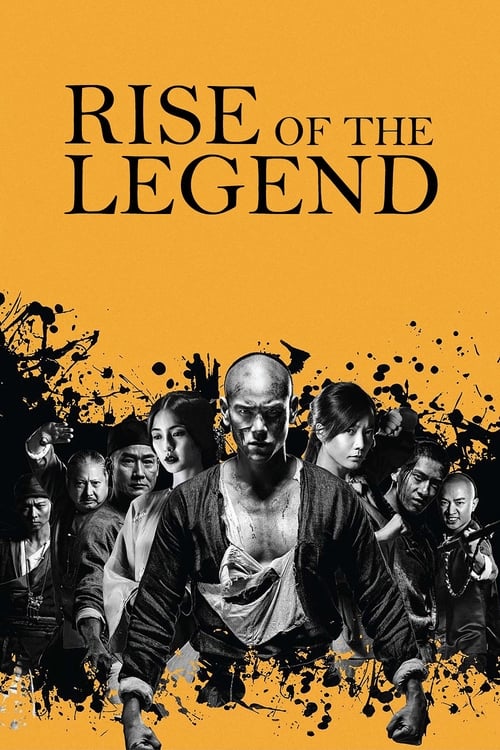
Rise of the Legend
In 1868 during the late Qing Dynasty, rampant corruption on the Imperial Court inflicts much suffering in people's lives. For years, the Black Tiger’s fearsome boss Lei Gong has been trying to get rid of the leader of the Northern Sea. One of his latest recruits is Fei, a fearless fighter who takes the Northern Sea leader’s head after a fierce fight. Just as Lei Gong believes he has total control of the port, a new gang called the Orphans rises in power. Led by Fei’s childhood friend Huo, the Orphans are out to eliminate all the criminal power from the port…
The film earned $30.9M at the global box office.
5 wins & 14 nominations


Plot Structure
Story beats plotted across runtime


Narrative Arc
Emotional journey through the story's key moments
Story Circle
Blueprint 15-beat structure
Arcplot Score Breakdown
Weighted: Precision (70%) + Arc (15%) + Theme (15%)
Rise of the Legend (2014) demonstrates deliberately positioned narrative design, characteristic of Roy Chow Hin-Yeung's storytelling approach. This structural analysis examines how the film's 15-point plot structure maps to proven narrative frameworks across 2 hours and 11 minutes. With an Arcplot score of 6.5, the film balances conventional beats with creative variation.
Characters
Cast & narrative archetypes

Wong Fei-hung
Master Lei Gong
Master Lui
Fiery
Chun
North Evil
Main Cast & Characters
Wong Fei-hung
Played by Eddie Peng
A young laborer who works undercover in the Black Tiger gang to avenge his father and protect the innocent workers of Guangzhou.
Master Lei Gong
Played by Tony Leung Ka-fai
Wong Fei-hung's adoptive father and martial arts master who was killed by the Black Tiger gang, setting the hero's journey in motion.
Master Lui
Played by Sammo Hung
The ruthless leader of the Black Tiger gang who controls the docks and exploits laborers through violence and intimidation.
Fiery
Played by Jing Boran
A strong-willed young woman who works at the docks and becomes Wong Fei-hung's love interest and ally in his fight against the gang.
Chun
Played by Wang Luodan
A fellow laborer and Wong Fei-hung's close friend who supports him in the underground resistance against the Black Tiger gang.
North Evil
Played by Byron Mann
A high-ranking enforcer in the Black Tiger gang known for his brutal fighting skills and loyalty to Master Lui.
Structural Analysis
The Status Quo at 1 minutes (1% through the runtime) establishes Young Wong Fei-hung works as a slave laborer in the brutal Black Crow gang's compound, carrying baskets under the watchful eyes of armed guards in a harsh, oppressive environment.. Structural examination shows that this early placement immediately immerses viewers in the story world.
The inciting incident occurs at 16 minutes when Fei-hung witnesses Master Lui being publicly executed by the Black Crow gang, losing his mentor and father figure who had been teaching him martial arts and wisdom.. At 12% through the film, this Disruption aligns precisely with traditional story structure. This beat shifts the emotional landscape, launching the protagonist into the central conflict.
The First Threshold at 32 minutes marks the transition into Act II, occurring at 25% of the runtime. This demonstrates the protagonist's commitment to Fei-hung deliberately starts a fight to demonstrate his fighting prowess, successfully gaining the attention of the gang leadership and earning his way into the Black Crow organization as a fighter., moving from reaction to action.
At 66 minutes, the Midpoint arrives at 50% of the runtime—precisely centered, creating perfect narrative symmetry. Significantly, this crucial beat Fei-hung becomes the champion fighter and trusted lieutenant of the gang, achieving a false victory as he's now positioned exactly where he needs to be, but at the cost of getting deeper into the criminal world., fundamentally raising what's at risk. The emotional intensity shifts, dividing the narrative into clear before-and-after phases.
The Collapse moment at 99 minutes (75% through) represents the emotional nadir. Here, Fei-hung's closest ally is killed, his cover is blown, and he's brutally beaten and left for dead, losing everything he's worked for and facing the death of his mission and nearly himself., indicates the protagonist at their lowest point. This beat's placement in the final quarter sets up the climactic reversal.
The Second Threshold at 105 minutes initiates the final act resolution at 80% of the runtime. Fei-hung realizes he must fight not for personal revenge but to free the people from oppression, synthesizing his master's wisdom with his warrior skills to become a true hero rather than just an avenger., demonstrating the transformation achieved throughout the journey.
Emotional Journey
Rise of the Legend's emotional architecture traces a deliberate progression across 15 carefully calibrated beats.
Narrative Framework
This structural analysis employs systematic plot point analysis that identifies crucial turning points. By mapping Rise of the Legend against these established plot points, we can identify how Roy Chow Hin-Yeung utilizes or subverts traditional narrative conventions. The plot point approach reveals not only adherence to structural principles but also creative choices that distinguish Rise of the Legend within the drama genre.
Comparative Analysis
Additional drama films include After Thomas, South Pacific and Dirty Dancing: Havana Nights.
Plot Points by Act
Act I
SetupStatus Quo
Young Wong Fei-hung works as a slave laborer in the brutal Black Crow gang's compound, carrying baskets under the watchful eyes of armed guards in a harsh, oppressive environment.
Theme
Master Lui warns that "violence begets violence" and questions whether revenge truly brings peace, establishing the central moral conflict between justice and vengeance.
Worldbuilding
Introduction to 1868 Guangzhou under Black Crow gang control: Fei-hung's brutal life as a laborer, the murder of his father and friends years ago, his secret martial arts training, and the gang's iron grip on the dock workers through fear and violence.
Disruption
Fei-hung witnesses Master Lui being publicly executed by the Black Crow gang, losing his mentor and father figure who had been teaching him martial arts and wisdom.
Resistance
Fei-hung debates his path forward, secretly gathering allies among the workers, training harder, and planning his infiltration of the gang's inner circle while maintaining his cover as a simple laborer.
Act II
ConfrontationFirst Threshold
Fei-hung deliberately starts a fight to demonstrate his fighting prowess, successfully gaining the attention of the gang leadership and earning his way into the Black Crow organization as a fighter.
Mirror World
Fei-hung encounters Orchid, a courtesan with her own agenda, who becomes his romantic interest and thematic mirror, showing him that survival and resistance can take many forms beyond violence.
Premise
Fei-hung rises through the gang ranks, wins brutal fighting tournaments, gains the trust of gang leaders, and navigates the dangerous inner politics while secretly working to undermine them from within.
Midpoint
Fei-hung becomes the champion fighter and trusted lieutenant of the gang, achieving a false victory as he's now positioned exactly where he needs to be, but at the cost of getting deeper into the criminal world.
Opposition
The gang leadership grows suspicious, internal betrayals emerge, Fei-hung's true identity is at risk of exposure, and the violence escalates as rival factions clash and innocent people suffer.
Collapse
Fei-hung's closest ally is killed, his cover is blown, and he's brutally beaten and left for dead, losing everything he's worked for and facing the death of his mission and nearly himself.
Crisis
Fei-hung recovers from his injuries and wrestles with Master Lui's teachings about violence versus justice, questioning whether his path of vengeance has only perpetuated the cycle of violence.
Act III
ResolutionSecond Threshold
Fei-hung realizes he must fight not for personal revenge but to free the people from oppression, synthesizing his master's wisdom with his warrior skills to become a true hero rather than just an avenger.
Synthesis
Fei-hung rallies the oppressed workers, leads a full-scale uprising against the Black Crow gang, defeats the gang leaders in climactic combat, and liberates the docks from tyranny.
Transformation
Wong Fei-hung stands as a master and protector of the people, no longer a vengeful slave but a legendary hero who has transformed suffering into justice and violence into protection.